The United States is pressuring Mexico in negotiations to revise the US-Mexico-Canada Agreement, planning new rules of origin for AI hardware such as chips and servers to limit the share of components from outside North America and prevent Chinese companies from using Mexico as a route to evade tariffs. The rules would reference the automotive sector's 75% North American component threshold for tariff exemption and could spill over into automotive intelligence segments such as automotive chips. In the first half of this year, Mexico exported $83 billion of AI data center servers, 94% to the United States, up more than 170% year on year. Mexico has agreed to raise tariffs on China but opposes mandatory US-made components. Negotiations are expected to begin as early as next week in Washington.
According to foreign media reports, the U.S. government is pressing Mexican officials in negotiations to revise the United States-Mexico-Canada Agreement (USMCA), demanding new rules of origin targeting artificial intelligence hardware that would cap the "share of components from outside North America" in products such as chips and servers, in order to prevent Chinese companies from using Mexico as a route to evade tariffs. People familiar with the matter said the proposal is still at an early stage, and the U.S. side has not yet specified the North American or U.S. domestic component ratios for each industry, nor provided a transition period.
Starting with AI Hardware: Rule Template Points to the Auto Industry
The benchmark for this round of negotiations is not subtle: the U.S. side wants AI equipment and other industries to adopt the same rules of origin procurement rules as the auto industry—automotive products must source at least 75% of their components from North American suppliers to enjoy duty-free treatment.
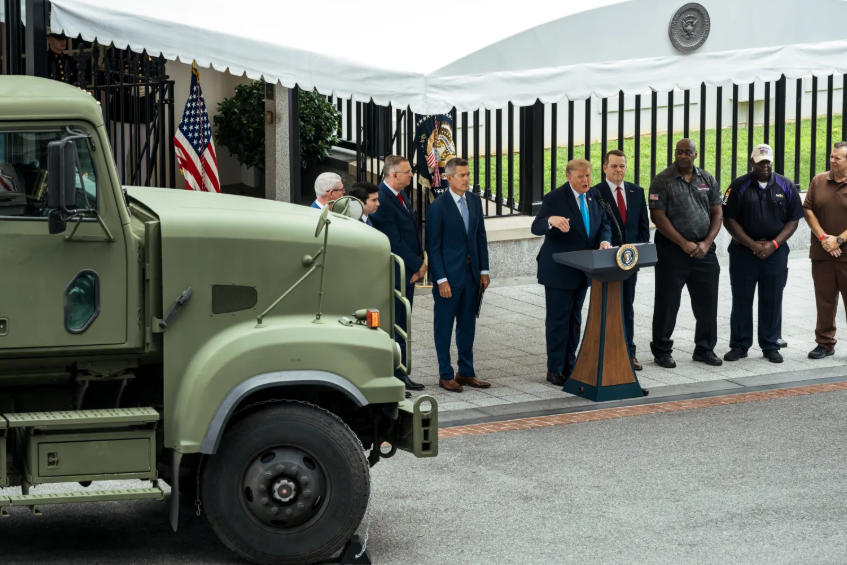
U.S. Trade Representative Jamieson Greer said at the Aspen Security Forum in July that he would push to expand rules of origin to other strategic industries such as electronics and pharmaceuticals, and said USMCA rules of origin could be tightened for all these categories.
Supporting this demand is a change in trade structure. S&P Global data shows that in the first half of this year, Mexico exported $83 billion worth of servers used for AI data centers, 94% of which went to the United States, a year-on-year increase of more than 170%. AI hardware has jumped to become Mexico's largest export commodity to the United States this year, with export value exceeding that of automobiles. Daniel Covarrubias, a trade expert at Texas A&M International University, said that the annual import value of computer products at the Laredo land border crossing rose from nearly $6 billion in 2021-2023 to $13.4 billion in 2024 and $30.8 billion in 2025.

Automotive Intelligentization Segments May Be Included in Expanded Scope
For the auto industry, the key variable is the direction of rule spillover. According to The Wall Street Journal, although this measure directly targets AI hardware, the relevant rules may in the future expand to electronic devices, medical equipment, and automotive intelligentization components. Cross-border supply chains involving domain controllers, automotive chips, AI servers, and intelligent driving computing platforms could all be affected.
This means that Chinese component companies' earlier nearshore capacity layouts around Mexico will need to recalculate their compliance assumptions. At present, automobiles, auto parts, and high-end chips have already been subject to additional tariffs, but most ordinary semiconductors used for AI construction can still enter the United States duty-free. This differential treatment is precisely the starting point of the rule discussions.
Mexico's Dilemma: Tariff Increases Are Negotiable, but Mandatory U.S.-Made Components Are Hard to Accept
Mexico has long viewed China as a trade competitor. Mexican officials have agreed to raise tariffs on Chinese imports and prevent goods from being transshipped and then exported duty-free to the United States. But Mexico wants to avoid special rules mandating the inclusion of U.S.-made components, and industry associations have warned that adding procurement rules of origin for emerging industries will likely increase administrative procedures and raise product costs. U.S. Republican Senator Bernie Moreno of Ohio has communicated with Mexican industry associations about the possibility. The White House, the U.S. Department of Commerce, and the Office of the U.S. Trade Representative all did not respond to requests for comment.
Capacity Already Established in Mexico Faces Recalculation
【Main text】(Part 2 of 2, 2 of 2 total; please translate only this segment, keep the Markdown structure and format markers, and output the same JSON)
Against the backdrop of U.S. tariffs on China and an overall decline in imports from China, Taiwanese companies such as Foxconn are leveraging Mexico's massive production capacity to make AI servers and components for U.S. tech companies such as Nvidia. Once the new rules take effect, these companies will be affected, to a degree that depends on the share of North American content in their component procurement.
A new round of negotiations between U.S. and Mexican trade officials is expected to take place as early as next week in Washington, and the two sides also plan to discuss lowering U.S. tariffs on steel, aluminum and automobiles. Jay Gerard, senior vice president of Worldwide Logistics Group, said that as imports of technology products continue to grow and the true country of origin becomes increasingly blurred, a certain degree of scrutiny was to be expected.
Adjustments to North American supply chains are not one-way. According to supplier executives, Stellantis has asked suppliers to assess the potential cost of moving heavy-duty Ram pickup production from its Saltillo plant in Mexico to its Warren, Michigan plant — still a preliminary assessment. The Land Rover Defender pickup, meanwhile, will be produced by Stellantis in the United States in order to avoid the 25% tariff on imported pickups.
Automakers' Hedging: Markets and Capacity Diversify in Tandem
Amid uncertainty surrounding the USMCA, automakers have begun to voice concerns. According to reports, foreign automakers such as Nissan, Hyundai and Toyota have privately warned the Trump administration that if the USMCA is not renewed or is substantially weakened, they may pull their cheapest models from the U.S. market. Currently, eight of the ten cheapest new cars in the United States are produced by foreign automakers.
Chinese automakers' localization in other markets is still advancing. Geely is considering producing its flagship body-on-frame plug-in hybrid SUV at Ford's plant in Spain to circumvent the EU's impending tariffs on China-made plug-in hybrids; the vehicle, internally codenamed KO11, was unveiled in China in July this year as the Galaxy Warship 700 and is expected to enter Europe in 2028. Renault and Geely said on September 15 that they will make a new round of investment of 319 million euros in Brazil through a joint venture, bringing their total investment in Brazil from 2025 to 2027 to 899 million euros.
Regional policies are not only tightening in one direction. Thailand's finance minister said the country is considering raising the excise tax on fully imported EVs from the current roughly 10% to about 30%, with a final plan possibly announced this month. The intent is to push companies from "import and sell" toward local assembly and manufacturing, which will affect the pace of product introduction and investment in Thailand by Chinese brands, Japanese automakers and other foreign companies.
The Rules Are Still at an Early Stage, and the Variables Have Yet to Converge
Based on available information, the new AI hardware rules of origin remain at the proposal stage; the U.S. side has not given sector-specific North American local content ratios, nor has it set a transition period. The related requirements could also complicate subsequent negotiations with Canada — Canada and the United States have yet to start formal USMCA talks, and the two sides are locked in an escalating tariff dispute.
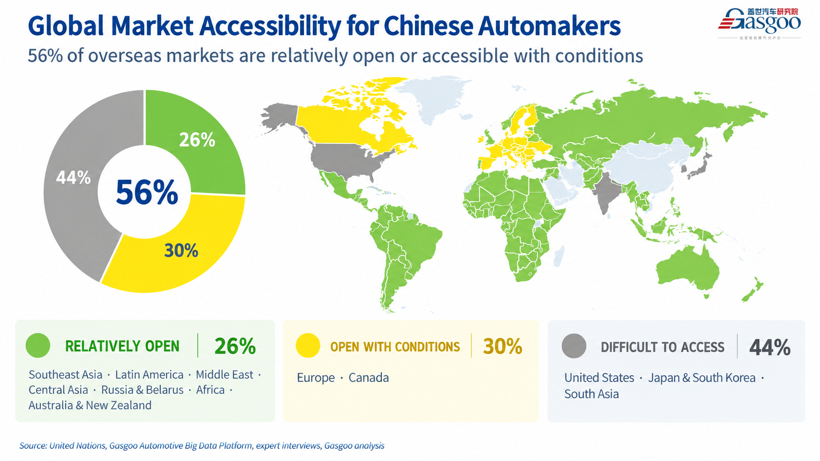
For Chinese automakers and supply chain companies, the path into the U.S. market via Mexico has not been closed in the short term, but compliance costs and policy uncertainty have clearly risen. If areas such as domain controllers, automotive chips and intelligent-driving computing platforms are included in regional value content assessments, the previous logic of nearshoring will need to be reassessed; at the same time, building localized production capacity in Brazil, Southeast Asia and Europe is becoming a parallel option.