According to Reuters, on September 11 Trump said he did not oppose Chinese automakers building factories in the US, provided they hire American workers, but opposed producing finished vehicles in Mexico and re-exporting them to the US, and denied allowing Chinese cars to be sold in the US. US regulations in early 2025 effectively prohibit Chinese automakers from selling or producing passenger vehicles in the US, with tariffs on Chinese electric vehicles exceeding 100%; the Alliance for Automotive Innovation is pushing Congress for a permanent ban, hoping to pass it by the end of December. US-Mexico negotiations are planned to be reached before the November 2026 midterm elections, with tariffs, local content ratios and Chinese companies' investment in Mexico becoming variables, and both North American paths for Chinese automakers facing uncertainty.
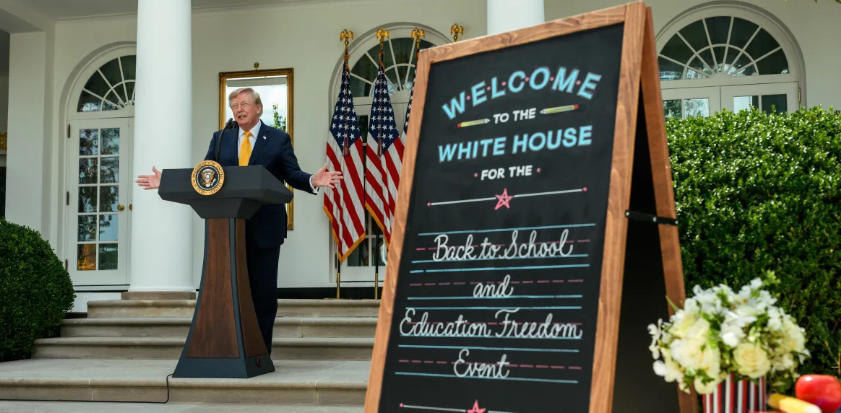
According to Reuters, on September 11, U.S. President Trump said in an interview on Fox News’ “The Ingraham Angle” that despite widespread opposition from U.S. lawmakers and domestic automakers, he does not oppose Chinese automakers building factories and manufacturing cars in the United States.
Trump said: “If Chinese companies want to come to the United States to open factories and build cars here, I have no problem with that.” He added: “Japanese companies did just that, and they hire workers in our country. The key is to hire Americans.” At the same time, he made clear that he does not want Chinese automakers to produce cars in Mexico and then export finished vehicles to the United States, saying, “I am not rejecting Chinese cars.”
Two boundaries set by the remarks
From this interview, Trump’s remarks set two boundaries for Chinese automakers’ North American plans: building factories in the United States was not ruled out verbally, on the condition of hiring American workers; the route of producing in Mexico and then exporting finished vehicles to the U.S. was explicitly called out in opposition.
Notably, Trump also denied claims that he planned to allow Chinese cars to be sold in the United States. On September 9, U.S. Democratic Senator from Michigan Elissa Slotkin said there were rumors that Trump planned to allow Chinese cars to be sold in the United States under the framework of a major deal, calling it “a strategic mistake.” Trump responded that the claim was completely a “false rumor,” and said he had consistently kept Chinese cars out of the U.S. market.

The current policy foundation: bans, high tariffs, and legislative lobbying
Corporate-level judgments need to be viewed within the existing institutional framework. Source material shows that the U.S. government issued a regulation in early 2025 that effectively banned all Chinese automakers from selling or producing passenger vehicles in the United States; the United States also imposes tariffs of more than 100% on Chinese electric vehicles.
Resistance from the industry side is equally clear. Last week, an industry organization representing almost all mainstream automakers urged Congress to legislate as soon as possible to permanently ban Chinese vehicles from entering the U.S. market. The organization is the Alliance for Automotive Innovation, whose members include GM, Ford, Toyota, Volkswagen, Hyundai, Honda, Stellantis and other automakers; it called for passage of the bill by the end of December. In a letter to congressional leaders, the alliance’s CEO John Bozzella wrote: “Right now, Chinese automakers are dumping subsidized vehicles equipped with connected software and hardware around the world.”
This means that even if the executive branch sends a signal of “not opposing factory construction,” congressional legislation and industry lobbying still form another independent constraint line, and the direction of the two lines is not necessarily synchronized.
Three auto variables in U.S.-Mexico negotiations
Directly related to the above remarks are the U.S.-Mexico trade negotiations being advanced at the same time. According to source material, the United States and Mexico are striving to reach a bilateral trade arrangement before the U.S. midterm elections on November 3, 2026. Key negotiating items in the automotive sector include: U.S. tariffs on Mexican cars, the proportion of U.S.-made components in North American vehicles, and Chinese companies’ investment and supply chain footprint in Mexico.
Reports indicate that the United States may consider lowering some tariffs on Mexican cars, but at the same time require a higher U.S. domestic content ratio. If the two sides reach a new arrangement, Mexico’s finished vehicle exports, parts procurement, and Chinese automakers’ investment model in Mexico could all be reassessed.

The North American manufacturing network is being rewritten
Several recent developments in the North American automotive industry chain reflect from the side that policy and tariffs are reshaping manufacturing layouts.
General Motors is developing next-generation batteries in the United States. Kurt Kelty, the company’s vice president of batteries and sustainability, said: “We are building a battery supply chain here in the United States, and we expect that in two or three years, these batteries will be produced domestically. That is the goal we are pursuing—once our products enter the market, we can have a domestic supply source.”
Stellantis has signed a memorandum of understanding with Canadian armored vehicle manufacturer Roshel to explore the sale of the idle Brampton assembly plant. Roshel plans to convert the plant into a defense manufacturing hub and give priority to rehiring some laid-off workers. If the deal is completed, Brampton will become a typical case of a North American auto plant shifting from traditional passenger vehicle manufacturing to defense manufacturing.
Stellantis CEO Antonio Filosa said at an analyst meeting that the global auto market has now clearly split: the United States and the rest of the world; the company is facing the problem of differences between the U.S. trade and policy environment and the rest of the world, especially Europe, particularly in how automakers cooperate with Chinese companies.
In the intelligentization segment, Hyundai Motor Group has postponed mass production of its self-developed driver assistance system to the end of 2029, two years later than originally planned, and in the meantime has turned to Nvidia to accelerate deployment.
Risks and feasibility of the two paths
Based on available information, the two paths for Chinese automakers to enter the North American market—the United States and Mexico—have different constraints.
On building factories in the United States, the executive branch’s remarks provide a window for discussion, but with the precondition of hiring American workers; meanwhile, the regulation introduced in early 2025 effectively prohibits Chinese automakers from selling or producing passenger vehicles in the United States, and the industry alliance is pushing Congress to permanently ban Chinese vehicles from entering the U.S. market through legislation, hoping to complete this by the end of December. The gap between policy rhetoric and the legislative process constitutes the main uncertainty.
On the route through Mexico, the re-export model has been explicitly opposed; more critically, if the U.S.-Mexico negotiations lower tariffs while raising the U.S. domestic content ratio and making arrangements for Chinese companies’ investment and supply chain footprint in Mexico, the existing investment model may be reassessed. The feasibility of this path depends heavily on the negotiation outcome.
For companies going global, points to watch include: whether the U.S.-Mexico bilateral arrangement can be implemented before the November 2026 midterm elections and its specific requirements for rules of origin; the progress in Congress of the permanent ban bill pushed by the Alliance for Automotive Innovation; and the maturity of the domestic battery and component supply system within two to three years. At a stage when there is a time lag between policy signals and institutional implementation, assessing risks across multiple paths and in phases may be more prudent than betting on a single path.