Stellantis signed a memorandum of understanding with Canadian armored vehicle maker Roshel to sell the idle Brampton vehicle assembly plant near Toronto. The plant ceased production in late 2023 and once employed about 3,000 unionized workers. Its planned production of the Jeep Compass SUV was cancelled due to U.S. automotive tariffs. Roshel is bidding for a military contract worth up to C$4.9 billion and says that if it wins, it can recall about 1,000 workers and support an annual average of 4,530 direct and indirect jobs over three years. The deal still depends on labor negotiations with Unifor and Canadian government funding commitments, and companies including BYD had also made inquiries.
Stellantis has signed a memorandum with Canadian armored vehicle manufacturer Roshel to set out a process for the sale of its idle Brampton assembly plant near Toronto. The deal comes against the backdrop of continued disruption to North American production capacity from U.S. automotive tariff policy; whether the transaction can ultimately be completed still depends on two hurdles: labor negotiations and government funding obligations.
An Assembly Plant Idle for Three Years
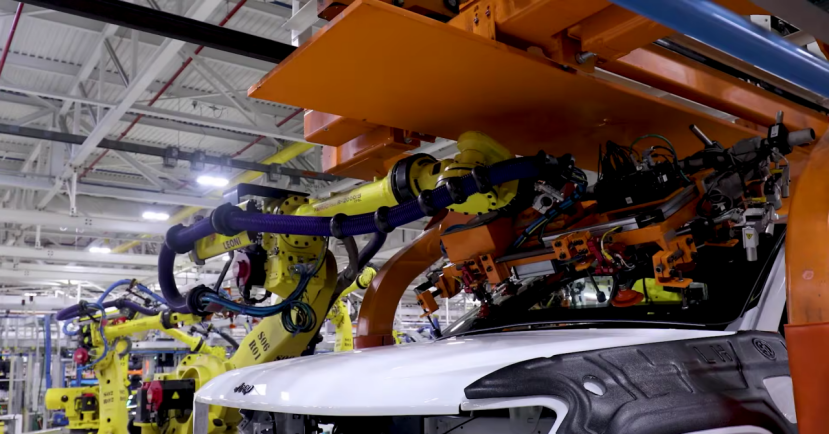
The Brampton plant has been idle since late 2023. When it was in production, it employed about 3,000 union workers. It had been planned to retool the line to produce the Jeep Compass SUV, but that production plan was canceled after U.S. President Donald Trump announced plans to impose tariffs on imported vehicles. The Canadian government had previously provided Stellantis with hundreds of millions of Canadian dollars in support, and the cancellation of the production plan sparked strong dissatisfaction in Canada.
Stellantis is currently in labor negotiations with Unifor, the Canadian autoworkers' union representing the plant's workers. The union previously said it had received notice from Stellantis that the company was considering closing and selling the plant.

Roshel's Plan: Backed by Military Orders
Roshel is headquartered in Brampton, Ontario, not far from the plant. The company is bidding for a Canadian military light utility vehicle order worth up to C$4.9 billion (about US$3.5 billion), and has told the Canadian government that it could quickly restart production at the plant if it wins the contract.
Roshel CEO Roman Shimonov said the company is the only potential buyer with substantive interest in the plant, and stressed that the memorandum is only the first step in an “extremely complex” transaction. According to his account, the plan is not to replace vehicle assembly with defense production, but to retain vehicle manufacturing capability while adding a defense equipment business on top. If it wins the military order, the plant could quickly recall about 1,000 workers to their jobs.
A study Roshel submitted to the office of Canadian Industry Minister Melanie Joly estimates that over a three-year vehicle production cycle, the project could support an average of 4,530 direct and indirect jobs per year; during the subsequent 15-year support services phase, it could add another 574 jobs annually. On the supply chain side, Roshel has announced cooperation plans with several Canadian companies, including Algoma Steel in Sault Ste. Marie, Ontario, supplying steel for armored vehicle production at the plant; the company previously partnered with Swedish steelmaker Swebor Stal Svenska AB to build Canada's first plant dedicated to producing bulletproof steel.
The Union and the Government Form Two Hurdles
Stellantis spokesperson LouAnn Gosselin confirmed that the two sides had signed the document. In a statement, she said that after evaluating multiple potential options, Stellantis believes Roshel is a reliable choice to help restore sustainable operations at the Brampton assembly plant, and that this move can preserve the site's strategic position in Canada's advanced manufacturing sector and avoid prolonged idling of the plant. She added that because the company is in labor negotiations with Unifor, it would not comment further for now.
The negotiations are not going smoothly. On the afternoon of September 11, Unifor said talks with Stellantis had reached an impasse, with the plan for disposing of the Brampton plant and the automaker's negotiations with Roshel being the core reasons for the breakdown. In an emailed statement, the union said Stellantis's continued insistence on closing and selling the plant has obstructed the negotiation process; the proposed closure and sale would threaten union members' compensation rights. The union also stressed that the plant is irreplaceable in Canada's vehicle assembly industry, underpinning a vast supply chain, regional economic vitality and a large number of high-quality union jobs.
The Canadian government's stance is also a variable. A spokesperson for the department of Industry Minister Melanie Joly said in an emailed statement on the evening of September 11 that the Canadian government has continued direct communication with Stellantis, Unifor and the Ontario provincial government to jointly explore the plant's future; any proposed transaction must satisfy all obligations and commitments Stellantis has already made to workers and Canadians.
Dispute over Production Scale
Within the industry, views differ on a “defense-sector takeover.” Flavio Volpe, president of the Automotive Parts Manufacturers' Association of Canada, said he wishes Roshel well but does not support selling the plant to the company. He noted that the production scale of Stellantis's vehicle assembly line is far beyond what Roshel can absorb—the plant embodies about 60 years of core large-scale vehicle manufacturing capability, corresponding to daily output of 500 to 1,000 vehicles, 3,000 workers on site, and 9,000 to 12,000 jobs in the external supply chain and support services. In his view, Stellantis's future new-vehicle plans still reserve unallocated capacity, and the plant may still have an opportunity to restart vehicle production in the future.
The field of possible buyers has not narrowed completely. Brampton Mayor Patrick Brown recently told Bloomberg that the city government had received inquiries about the plant from several companies, including China's BYD.
Several Takeaways for Companies Going Global
Several points from this case are worth noting for Chinese automakers as they plan overseas production capacity.
First, government funding support usually comes with employment and production capacity commitments. The hundreds of millions of Canadian dollars in support the Canadian government provided to Stellantis constitute existing obligations that this transaction must take on, and Canada has explicitly required that the proposed transaction satisfy the automaker's commitments “to workers and Canadians.”
Second, unions are a stakeholder that cannot be bypassed in localized operations. The plan for disposing of the Brampton plant directly triggered the labor negotiation impasse, showing that the timetable for capacity exit or transfer, as well as compensation arrangements, are often just as critical as the commercial transaction itself.
Third, idle capacity caused by tariff policy may give rise to a combined utilization path of “vehicle manufacturing + defense business,” but whether the business characteristics and production scale match remains controversial. Roshel advocates retaining vehicle assembly capability while layering on defense orders, whereas the industry association questions whether defense orders can absorb the production volume of an assembly plant.
Fourth, binding local supply chains can help improve the feasibility of a plan. Roshel simultaneously announced local steel supply and bulletproof steel production line arrangements, providing supporting backing for its narrative of restarting the plant.
As of now, this memorandum is still only the first step in the transaction. The final ownership of the Brampton plant depends on whether Roshel can win the military order, the direction of negotiations between Unifor and Stellantis, and the Canadian government's determination regarding existing funding obligations. As one facet of the spillover effects of U.S. tariff policy, the fate of this plant will also provide an ongoing case study for observing the reallocation of North American vehicle production capacity.