Hyundai Motor Group has delayed the launch of models equipped with its self-developed driving assistance software to the end of 2029, two years later than originally planned. During the transition period, Hyundai will partner with Nvidia to launch Level 2+ and Level 2++ advanced driver assistance systems in 2028, and use the data they generate to train its self-developed platform Atria. Hyundai and Kia have annual sales of more than 7 million vehicles and plan to surpass competitors in total driving data by 2033. The partnership also extends to AI data centers and Boston Dynamics' humanoid robot business.
In-house Timeline Pushed Back Two Years
Hyundai Motor Group will launch vehicles equipped with its self-developed driver assistance software by the end of 2029, two years later than originally planned. Reuters reported on September 13 that the project had originally been scheduled to go live in late 2027. The adjustment was explained publicly by Hyundai Motor Group President Park Min-woo at a media briefing.
Beyond the delay, Hyundai's response path is to bring in external technology partners. The group will partner with Nvidia to launch 'Level 2+' and 'Level 2++' advanced driver assistance systems (ADAS) in 2028, as a transitional solution before its in-house software goes live.
The report noted that this strategic adjustment highlights the challenges Hyundai has encountered in its self-developed autonomous driving software project, and also raises concerns about its growing dependence on outside parties. In the race to commercialize autonomous driving, there is a market worry that Hyundai may fall further behind Tesla and its local Chinese competitors.
Interim Technical Approach and Sensor Trade-offs
According to Park Min-woo, Hyundai will jointly design the relevant technology with Nvidia and use data generated by this system to train and refine Atria, its self-developed software platform. He said at the briefing: 'Our cooperation with Nvidia is not about putting our fate entirely in their hands.'

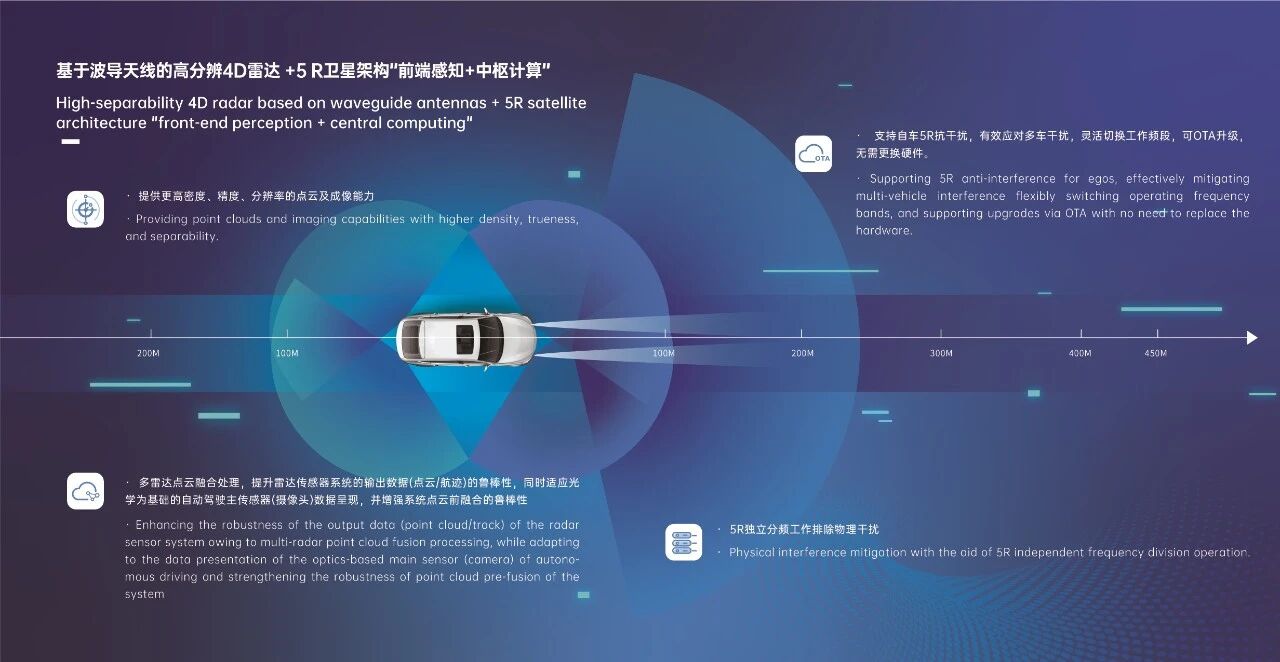
On sensor configuration, Hyundai vehicles equipped with Nvidia's Hyperion 10 platform will initially omit costly lidar, using cameras, ultrasonic sensors and radar as the perception solution; Hyundai is considering equipping its Level 3 autonomous driving system with lidar. A Level 3 system can enable hands-off driving in specific scenarios.
Regarding redundancy, Park Min-woo said: 'To truly ensure safety, sensor redundancy is crucial: if one sensor fails, the remaining sensors must be able to keep the vehicle driving safely.' However, he did not give a commercialization timeline for Level 3 autonomous driving.
Under the definitions in the article, 'Level 2+' generally refers to a more capable driver assistance system suitable for highway scenarios; a 'Level 2++' system can handle more complex urban road conditions, with performance approaching Tesla's Full Self-Driving (FSD) system. Both levels require the driver to monitor the vehicle at all times.
7 Million Annual Sales and a 2033 Data Target
Hyundai and its affiliate Kia together form the world's third-largest automaker, with annual sales of more than 7 million vehicles. The two plan to rely on their vast global fleet to collect data for training autonomous driving technology. Hyundai expects that by 2033, the total driving data it has accumulated will surpass that of its competitors.
Achieving this goal depends on the efficiency of data collection, transmission and training pipelines. Hyundai's extension of cooperation from autonomous driving to AI data centers may be related to this link.
Boundaries of Cooperation: From Autonomous Driving to AI Data Centers and Robotics
Beyond autonomous driving, Hyundai Motor Group is expanding its cooperation with Nvidia to cover AI data centers and the humanoid robot business developed by its Boston Dynamics subsidiary.
On personnel, Park Min-woo previously worked at Nvidia and joined Hyundai in January this year, leading efforts to deepen cooperation between the automaker and the chipmaker. His strategy marks a clear shift from that of his predecessor Song Chang-hyeon, who had strongly pushed in-house software development and suddenly resigned last December.
Reading Automakers' Intelligentization Choices from the Timeline
Placing the key milestones side by side, the timeline Hyundai has given is: interim ADAS functions landing in 2028, models with the self-developed software platform launching at the end of 2029, and the total data target pointing to 2033. This arrangement means that for the next roughly three years, the intelligent experience in Hyundai's mass-produced vehicles will mainly be carried by systems jointly designed with Nvidia, while the in-house platform Atria will continue to iterate on the same batch of data.
From an industry perspective, this case reflects the realistic trade-offs large automakers face between in-house development and external sourcing: fully in-house development has high time costs and iteration risks, while relying on external platforms may leave one constrained in cost structure, technological leadership and product cadence. Whether Hyundai's chosen model of 'joint design + own use of data' can balance both depends on Atria's actual performance around 2029, as well as the final sensor solution and commercialization timing for the Level 3 system.
For observers watching intelligentization going overseas, two indicators are more worth tracking: first, to what extent can Hyundai-Kia's annual sales of more than 7 million vehicles be converted into effective training data; second, after the in-house software goes live, will the gap between Hyundai and Tesla and its local Chinese competitors narrow or persist in terms of product capability. With Park Min-woo not giving a commercialization timeline for Level 3 autonomous driving, the answers to these questions still await further disclosure.