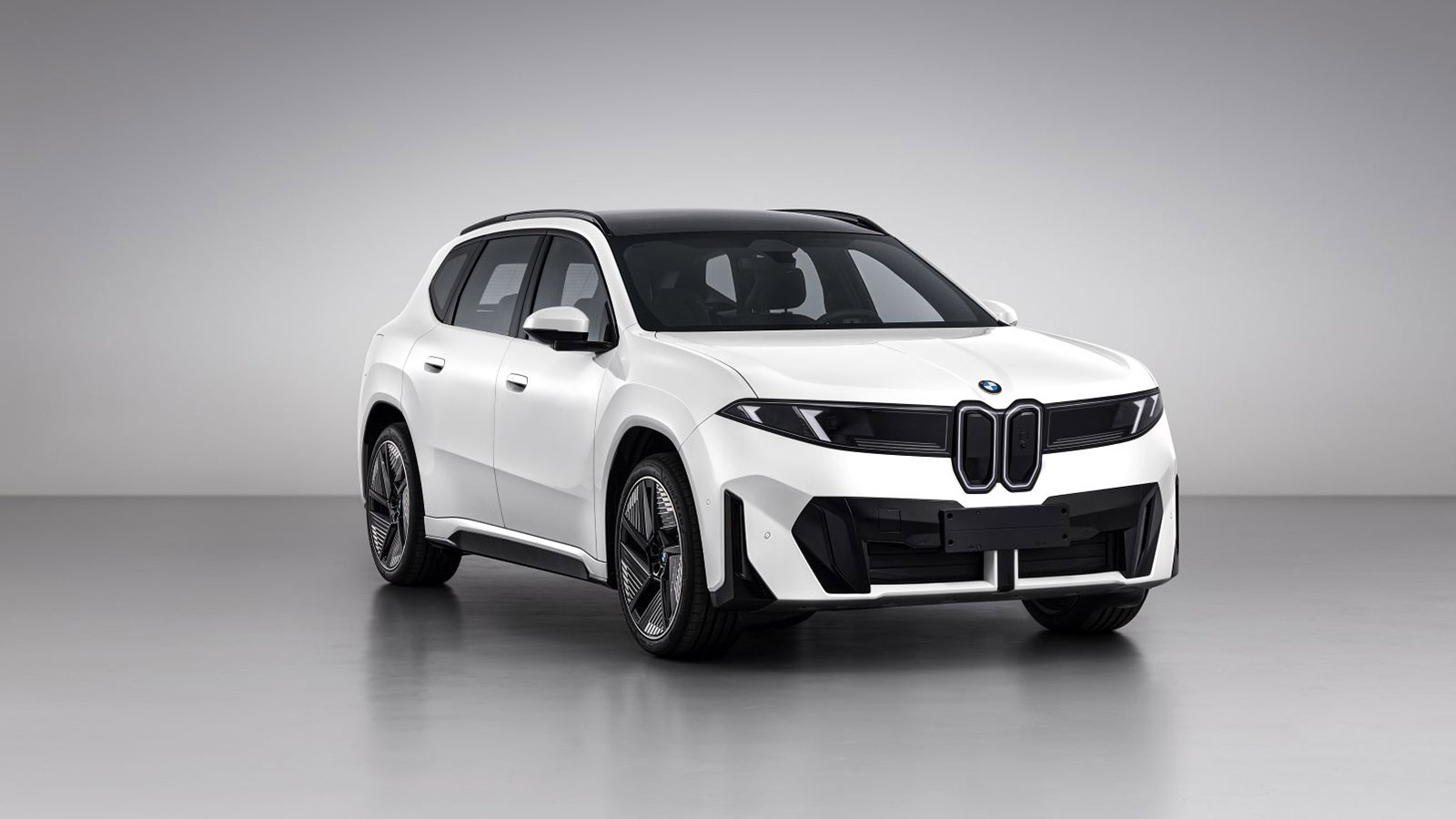
The entry-level model of BMW's Neue Klasse iX3 long-wheelbase version, the iX3 30L, has entered the Ministry of Industry and Information Technology's 411th batch of new product public notice catalog. It is produced at BMW Brilliance's Shenyang plant and has opened pre-sales at the Chengdu Auto Show. The three models are priced from RMB 269,900 to RMB 339,900 and will be delivered in November. Regulatory filing information shows it is equipped with a 235 kW motor and a lithium iron phosphate battery from CATL's Yibin base, has a wheelbase of 3,005 mm, and adopts localized configurations such as Momenta end-to-end intelligent driving, Huawei HiCar, and Alibaba's large model. This case shows that Chinese battery and intelligent driving capabilities are deeply entering the core models of multinational automakers.
On September 8, China's Ministry of Industry and Information Technology (MIIT) released its 411th batch of new vehicle product public notice catalog, and the entry-level variant of BMW's Neue Klasse iX3 long-wheelbase version, the iX3 30L, appeared on the list. The public notice period runs from September 9 to September 15. The vehicle is produced by BMW Brilliance and has already opened pre-sales at the Chengdu Auto Show, which began on August 21, with a starting price of 269,900 yuan and deliveries beginning in November. According to the official line, a unified price is used nationwide, and the final market launch price will be consistent with the pre-sale price.
It should be noted that entering the MIIT public notice catalog is part of the routine regulatory process for a model entering the Chinese market, and the public notice itself does not constitute final approval.
Filing information: 235 kW motor and LFP battery from Yibin
The filing materials show that the iX3 30L is equipped with a drive motor produced by BMW AG, with a peak power of 235 kW (315 hp) and a top speed of 180 km/h. The power battery uses an LFP system, with cells supplied by CATL's subsidiary in Yibin, Sichuan. The filing information does not disclose battery capacity or range, and the key parameters of the entry-level version remain to be announced.

In terms of dimensions, the vehicle is 4,885 mm long, 1,895 mm wide, and 1,634 mm tall, with a wheelbase of 3,005 mm. It has a five-seat layout and a curb weight of 2,237 kg. For reference, the long-wheelbase version's wheelbase is 108 mm longer than that of the standard version, with the added space mainly benefiting second-row passengers.
Three variants and delivery cadence
The pre-sale prices of the iX3 30L, iX3 40L xDrive, and iX3 50L xDrive are 269,900 yuan, 299,900 yuan, and 339,900 yuan, respectively. All three vehicles will be sold in the Chinese market, with deliveries starting in November.
The vehicle is the first long-wheelbase all-electric SAV on BMW's Neue Klasse EV platform, developed specifically for the Chinese market and produced at BMW Brilliance's Shenyang plant. The entire chain from product definition to production rollout is completed in China, an arrangement that has been rare among joint-venture EV models over the past several generations.

Localized configuration for intelligent driving and the cabin
According to previously released information, the Chinese version will be equipped with an end-to-end driver assistance system jointly developed by BMW and Momenta, covering urban roads and highway scenarios. The infotainment system supports Huawei HiCar and Apple CarPlay, and integrates Alibaba's AI large model and DeepSeek capabilities.
This configuration combination points to a clear strategy: in the two key links that determine the electrified experience—battery and intelligent driving—BMW has chosen deep cooperation with Chinese suppliers rather than continuing with solutions from its overseas system. Sources describe this as a move by BMW to strengthen its competitiveness in China through local software partnerships.
A vantage point: from vehicle exports to supply chain output
Viewed within the broader picture of China's new energy vehicle exports, this vehicle offers a sample different from "complete vehicle exports."
In recent years, the main form of Chinese new energy vehicles' participation in the global market has been complete vehicle trade, with discussion focused on overseas sales, tariff policies, logistics capacity, and plant construction in destination markets. BMW's Neue Klasse iX3 long-wheelbase version presents another path: the role of Chinese companies shifts from car sellers to providers of key components and software capabilities—CATL's Yibin base supplies cells, Momenta provides the end-to-end intelligent driving solution, and Alibaba's large model and DeepSeek enter the cabin ecosystem. These links were originally internal to the global systems of multinational automakers, and are now undertaken by Chinese partners.
For multinational automakers, this is a calculation that requires weighing. Localized procurement and local software cooperation help maintain product cadence and cost competitiveness in China, the most fiercely competitive market; at the same time, dependence on suppliers from a single market for key links in their global vehicle platforms rises accordingly. Conversely, for Chinese suppliers, entering the core models of multinational brands means upgrading from "supplying local brands" to "supplying global platform models," and their products and engineering capabilities must meet more stringent validation standards.
Whether this trend will extend beyond power batteries to standards and regulatory levels currently lacks sufficient data to support a judgment. What can be confirmed is that in the specific case of BMW's Neue Klasse iX3 long-wheelbase version, Chinese battery and intelligent driving technologies have already occupied a core position in product competitiveness, while pricing, deliveries, and market feedback for the vehicle will gradually provide answers after November.
For practitioners following the going-global track, the significance of this vehicle may not be limited to sales numbers themselves: it turns the phrase "Chinese technology reverse export," previously more of a discussion-level idea, into a concrete model whose configuration sheet can be checked.