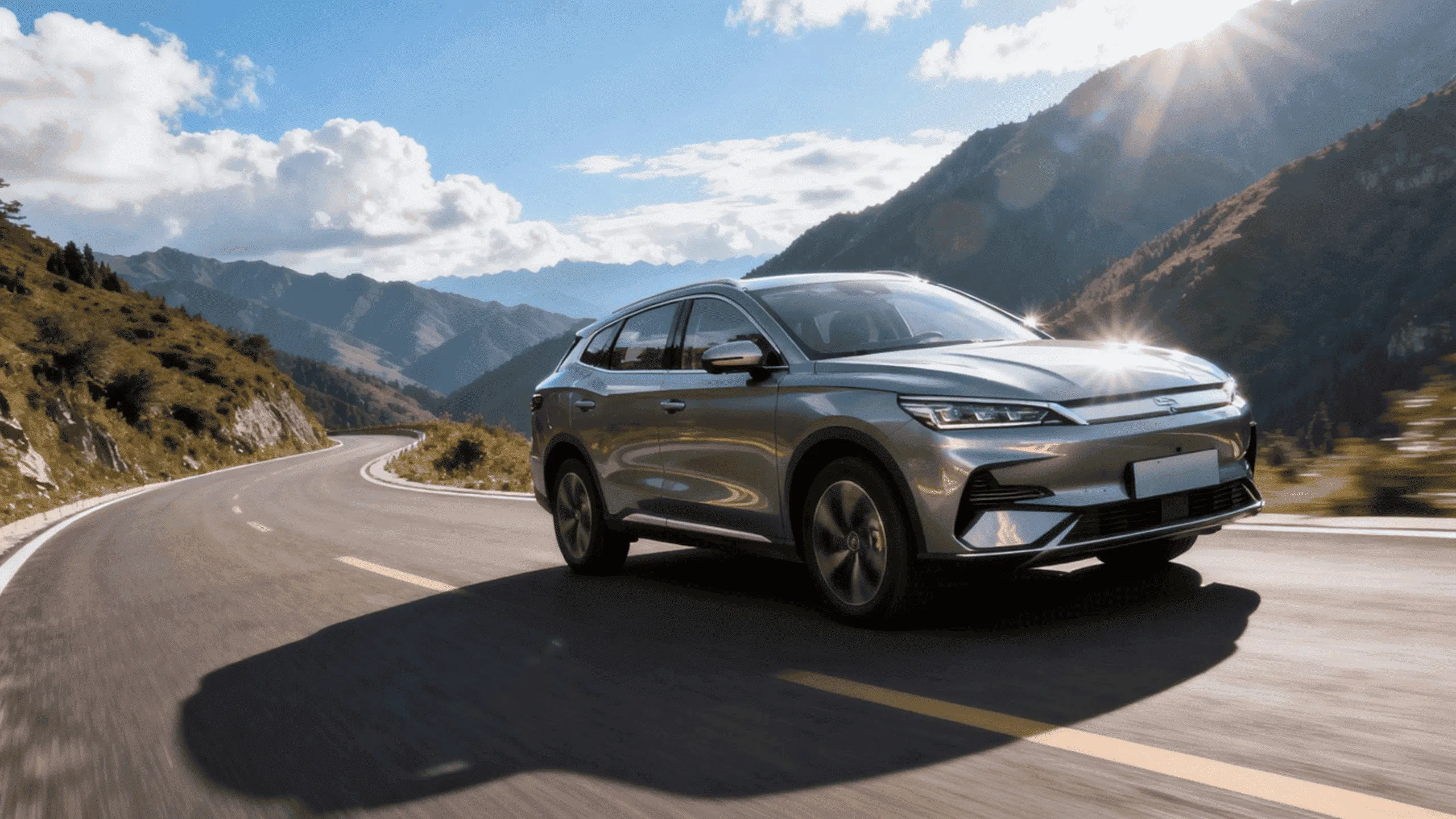
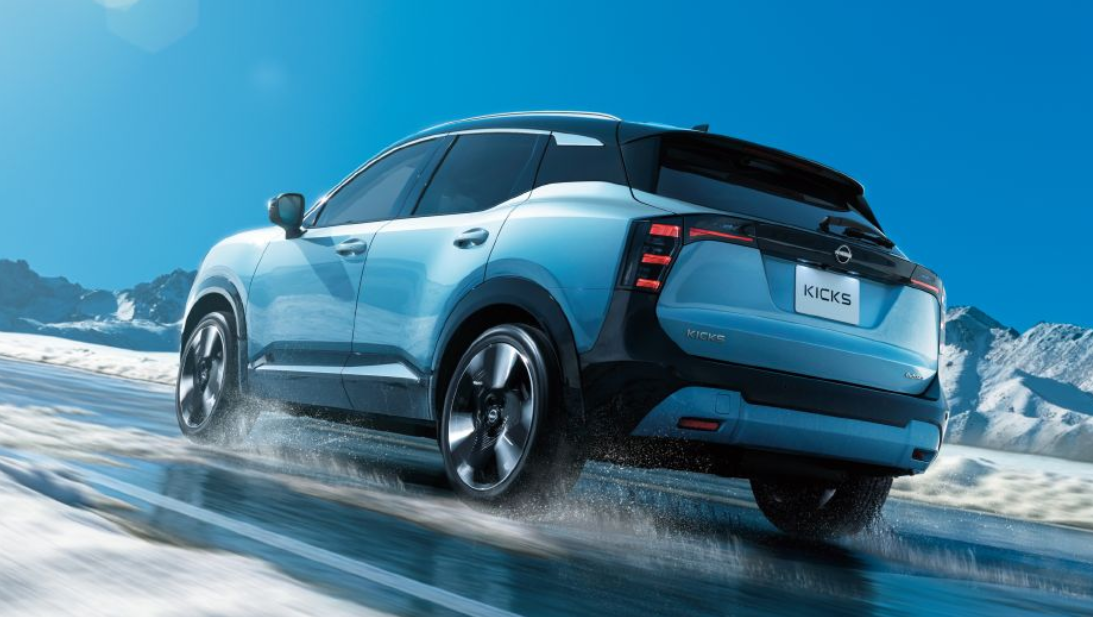
Dongfeng Nissan officially released teaser images for its N-series second SUV model, the NX7, on August 5, 2026. Targeted at younger buyers with a sporty design language, the model is expected to offer both extended-range and pure-electric powertrain variants, serving as a critical product in Dongfeng Nissan's accelerated NEV localization efforts.
Product Positioning: Differentiated Expansion of the N-Series
On August 5, 2026, Dongfeng Nissan officially released teaser images for the NX7, the second model in its N-series SUV lineup. Following the NX8, the NX7 strategically承担着 the important mission of expanding the joint venture's footprint in the electric SUV segment. Unlike the larger, mid-to-large-sized NX8, the NX7 is more compact, focusing on essential daily mobility needs while adopting a distinctly sportier design language aimed squarely at younger consumers.
Visually, the NX7 breaks away from the conservative, steady-going look typical of traditional family SUVs, instead leaning into a youthful, sporty design approach. This design shift reflects Dongfeng Nissan's keen insight into current market consumption trends: in the new energy era, young consumers no longer settle for "moderate" product positioning but expect vehicles with more individual expression.
The core elements of NX7's product strategy include:
Dual powertrain layout: Expected to offer both extended-range and pure-electric variants, balancing range flexibility with charging efficiency
Youth-oriented positioning: Design language breaks from traditional joint venture SUV stability toward sportiness and personalization
Differentiated complementarity: Creates错位 competition with the NX8 in size and positioning rather than simple intra-line cannibalization
NEV acceleration: Reflects the accelerated pace of joint venture automakers' localized new energy transformation
Powertrain System: Dual-Track Strategy of Extended-Range Plus Pure Electric
The NX7 is expected to mirror the NX8's strategy by offering both extended-range (EREV) and pure-electric (BEV) powertrain variants. This dual-track strategy demonstrates strong adaptability in China's current new energy market:
The extended-range version addresses range anxiety concerns, particularly suitable for regions in central and western China and overseas emerging markets where charging infrastructure remains underdeveloped. The pure-electric version meets zero-emission mandates in tier-one cities while offering cost advantages in daily operation.
However, as of now, Dongfeng Nissan has only revealed the NX7's exterior teaser images. Critical details regarding powertrain architecture specifications, battery range, autonomous driving capabilities, interior configurations, and pricing remain undisclosed. The release of this information will directly impact the assessment of NX7's market competitiveness.
Current joint venture new energy SUV dual-powertrain strategy comparison:
Model | Brand | Positioning | Powertrain | Core Selling Point |
|---|---|---|---|---|
NX7 | Dongfeng Nissan | Compact sporty SUV | EREV + BEV | Youthful design, joint venture quality |
NX8 | Dongfeng Nissan | Mid-to-large SUV | EREV + BEV | Spacious, family-oriented |
Mid-size SUV | EREV + BEV | Huawei ADAS, tech configuration | ||
Leapmotor | Mid-size SUV | EREV + BEV | High value, spacious |
Strategic Significance: A New Template for Joint Venture NEV Transformation
The NX7 launch is viewed within the industry as a critical step in Dongfeng Nissan's—and the broader joint venture camp's—accelerated NEV localization. In recent years, joint venture brands have faced sustained pressure on market share from dominant domestic brands in China's new energy market. Against this backdrop, the NX7's introduction represents not just a new model launch but a landmark move for Dongfeng Nissan to reassert its market position.
From the industry competitive landscape perspective, joint ventures face core challenges on the NEV track:
Product iteration speed: Domestic brands have compressed new model launch cycles to 12-18 months; joint ventures need to accelerate their pace
Intelligent configuration: Joint ventures lag behind leading domestic brands in intelligent cockpit and ADAS capabilities
Pricing competitiveness: Domestic brands achieve more competitive pricing through vertical supply chain integration
Brand perception transformation: Shifting from "reliable and durable" to "smart and tech-savvy" requires time and resource investment
The NX7's design language shift and sporty positioning can be seen as Dongfeng Nissan's proactive appeal to younger consumer groups. In the most fiercely competitive electric SUV segment, differentiation will be key to survival. Whether the NX7 can establish unique advantages in the youth and sport细分定位 will directly determine its market performance.
For overseas automotive buyers and dealers, Dongfeng Nissan's N-series dual-powertrain strategy warrants attention. The EREV plus BEV combination provides flexible product choices for different market environments, particularly in markets like Central Asia and Russia where charging infrastructure is still being built out, where the extended-range variant may offer stronger adaptability. More joint venture NEV model updates at EX1000.COM.