In August, BEV registrations in 16 core European markets reached 202,833 units, up 54.2% year on year, with a 30.5% share; cumulative registrations in the first eight months exceeded 1.67 million units, up 33.1% year on year. BYD has made clear that in the long term it needs to build three vehicle plants and one battery plant in Europe, is starting its Hungarian plant and plans to finalize a second site by the end of the year, preferring acquisition and conversion, with Spain and France as priorities. Leapmotor is pre-producing the B10 at Stellantis's Spanish plant and has pushed down to 19,900 euros with the B03X, as Chinese automakers advance localized production while jockeying over tariff rules in parallel.
BEV penetration in Europe rises to 30.5%, localized production becomes a must-answer question for Chinese automakers
Data from the European Electric Mobility Association, New Automotive and Fier Automotive show that in August, BEV registrations in 16 core European markets reached 202,833 units, up 54.2% year-on-year, with market share rising to 30.5%. In the first eight months of this year, cumulative BEV registrations in Europe exceeded 1.67 million units, up 33.1% from the same period in 2025. This performance exceeded previous market expectations and provided demand-side support for Chinese NEV makers' European expansion.
Against this backdrop, BYD's European production capacity plans have become clearer.
BYD: In the long term, three vehicle plants and one battery plant are needed
On September 16, Alfredo Altavilla, special adviser to BYD Europe, said that from a long-term development perspective, to achieve growth targets and meet EU regulatory requirements, BYD needs to build three vehicle assembly plants and one battery plant in Europe.
According to him, BYD is currently starting production at its first European plant in Hungary and plans to finalize the site for its second production base by the end of the year. In terms of construction approach, the company prefers to acquire and retrofit existing plants rather than build from scratch; Spain and France are priority candidate locations.
Alfredo Altavilla's exact words were: “In the long term, we will need three vehicle assembly plants and one battery plant.” This statement extends BYD's European localization from a single vehicle assembly stage to local production of batteries, a core component.
Site selection logic: retrofitting existing capacity, with Spain and France taking priority
Based on public information, BYD's strategy is not simply capacity expansion, but rather compressing production ramp-up time and capital expenditure through acquiring and retrofitting existing plants. This path is not unique in Europe.
Leapmotor is taking another localization path. It has started pre-production of the B10 compact battery-electric SUV at Stellantis's plant in Spain. The model meets sufficient local content standards and can be recognized as made in Europe, thereby avoiding EU tariffs on Leapmotor EVs imported from China. The B10 will be produced at Stellantis's Zaragoza plant, which currently produces three Stellantis small cars: Lancia Ypsilon, Opel/Vauxhall Corsa, and Peugeot 208.
It can thus be seen that European localization, beyond tariff avoidance, also involves a series of operational issues such as capacity sharing, platform collaboration, and local content qualification.
Tariff and rule negotiations advance in parallel
The reason localized production has become a priority option for Chinese automakers is directly related to the EU tariff environment. Leapmotor's case shows that meeting local content standards can change the tariff identity determination of a product.
Pressure at the rules level is also spreading to the UK. A Nissan executive said that if the UK wants equal treatment under the EU's rules of origin framework, it may need to impose trade tariffs on Chinese cars. Massimiliano Messina, a Nissan executive responsible for Europe and other regions, said the EU may pressure the UK to follow the EU in implementing tariffs to prevent large numbers of Chinese cars from entering the EU market via the UK; Chinese-brand cars currently account for one-fifth of total UK market sales.
Meanwhile, Europe's domestic industry is also seeking policy protection. On September 16, labor representatives at auto parts giant Bosch called for EU-level policy action, through regulations supporting local production, to curb job losses in the industry. Frank Sell, chairman of the general works council of Bosch's Mobility business division, speaking on behalf of about 70,000 German employees, said: “Only by keeping value creation and jobs in Europe can our industry's transformation succeed.”
Downward Price Shift: Competition Intensifies in the Small EV Market
Beyond localized production, Chinese automakers are also entering Europe's mainstream segments through product pricing.
Stellantis's Chinese partner Leapmotor is entering Europe's small electric SUV market with the B03X. The model is priced several thousand euros below established competitors such as the Ford Puma, placing it in the same range as European-built minicars such as the Renault Twingo. Leapmotor is offering Italian consumers a €5,000 discount, bringing the B03X price down to €19,900. That is close to the price of Europe's cheapest locally built EV, the Renault Twingo, which starts at €19,500 in Italy.
The move downmarket means direct competition between Chinese automakers and European local brands in the entry-level market will unfold further.
Supporting Signals from the Supply Chain and Capacity
The Europeanization of vehicle production capacity is also driving adjustments in the components supply chain.
Yokohama Rubber is accelerating its expansion, aiming to secure a larger share of Chinese automakers' supply chains. Chairman and CEO Masataka Yamaishi said the company is ready to adapt to the Chinese market with a fast, low-cost production model. On September 14, speaking at the company's new passenger tire plant in Hangzhou, Zhejiang, China, he said: “We will use Chinese-style speed to accelerate returns on investment.” The project has total investment of RMB 1.96 billion (US$292 million). It is a relocation and upgrade of an existing nearby plant; construction began in December 2024, and the first tire rolled off the line in November 2025, taking only 11 months from groundbreaking to production, whereas similar projects previously typically took more than two years. Annual capacity will rise by about 50% to 9 million tires.
Other Variables in the European Market
Chinese automakers' European expansion is taking place against the backdrop of accelerating electrification across Europe and a changing global trade environment.
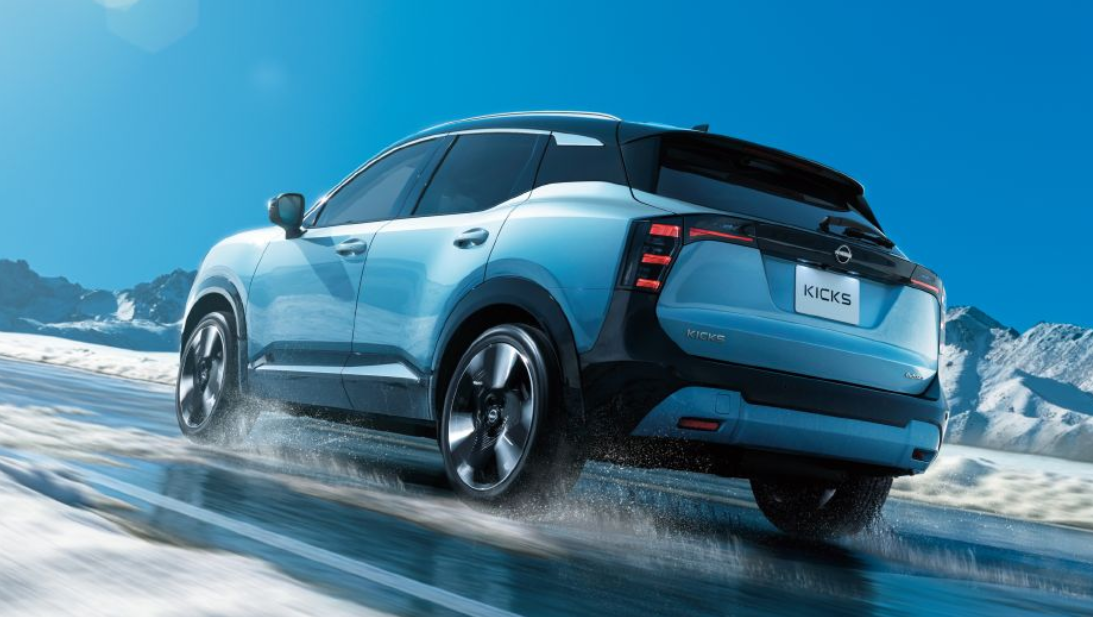
The moves of other multinational automakers are also worth watching. FAW-Volkswagen, a joint venture between Volkswagen Group and China FAW Group, announced on September 11 that it had officially begun selling vehicles in Madagascar, becoming the first multinational automaker to export China-made cars to Africa; General Motors is also exporting vehicles to Africa and other overseas markets through SAIC-GM. Nissan announced an investment of £170 million (US$228 million) to produce the all-new Kicks hybrid SUV at its Sunderland plant in the UK; this is the first time the Kicks has been produced and sold locally in Europe. Supercar maker McLaren plans to build a new plant in the UK as it prepares to launch its first SUV, with plans to add 1,000 jobs by 2032 and invest £500 million (US$674 million) in a new assembly plant, upgrades to its Woking headquarters, and its Sheffield carbon fiber production base.
On the policy front, the Italian government announced on September 16 that starting next year it will exempt 14.5 million cars and motorcycles from road tax, expected to create more than €2 billion (US$2.3 billion) in spending pressure on the already strained national finances.
For Chinese automakers planning to establish operations in Europe, production capacity siting, local content determination, the direction of tariff rules, and local industrial policies will remain key variables requiring continuous monitoring over the coming years.