On September 16, Black Sesame Technologies said at the 6th Intelligent Vehicle Chip Ecosystem Conference 2026 (Shanghai) that for high-volume models, cockpit and intelligent driving chips are paired in a fragmented way, with a single vehicle model corresponding to dozens of configurations and prominent duplicate development issues. The company launched the Wudang series cross-domain fusion chip C1296, converging more than ten combinations into a single platform, and it has already been mass-produced and deployed on Dongfeng Tianyuan's intelligent driving platform. Its dual-track layout of Huashan and Wudang supports inter-chip P2P compatibility and interoperable toolchains. Against the backdrop of automotive going global, platform-based solutions help automakers cope with tariffs and logistics costs and improve hardware and software reuse and cost amortization at scale.
The Realistic Starting Point for Cockpit-Driving Integration: Chip Combinations in Volume Models Are Overly Fragmented
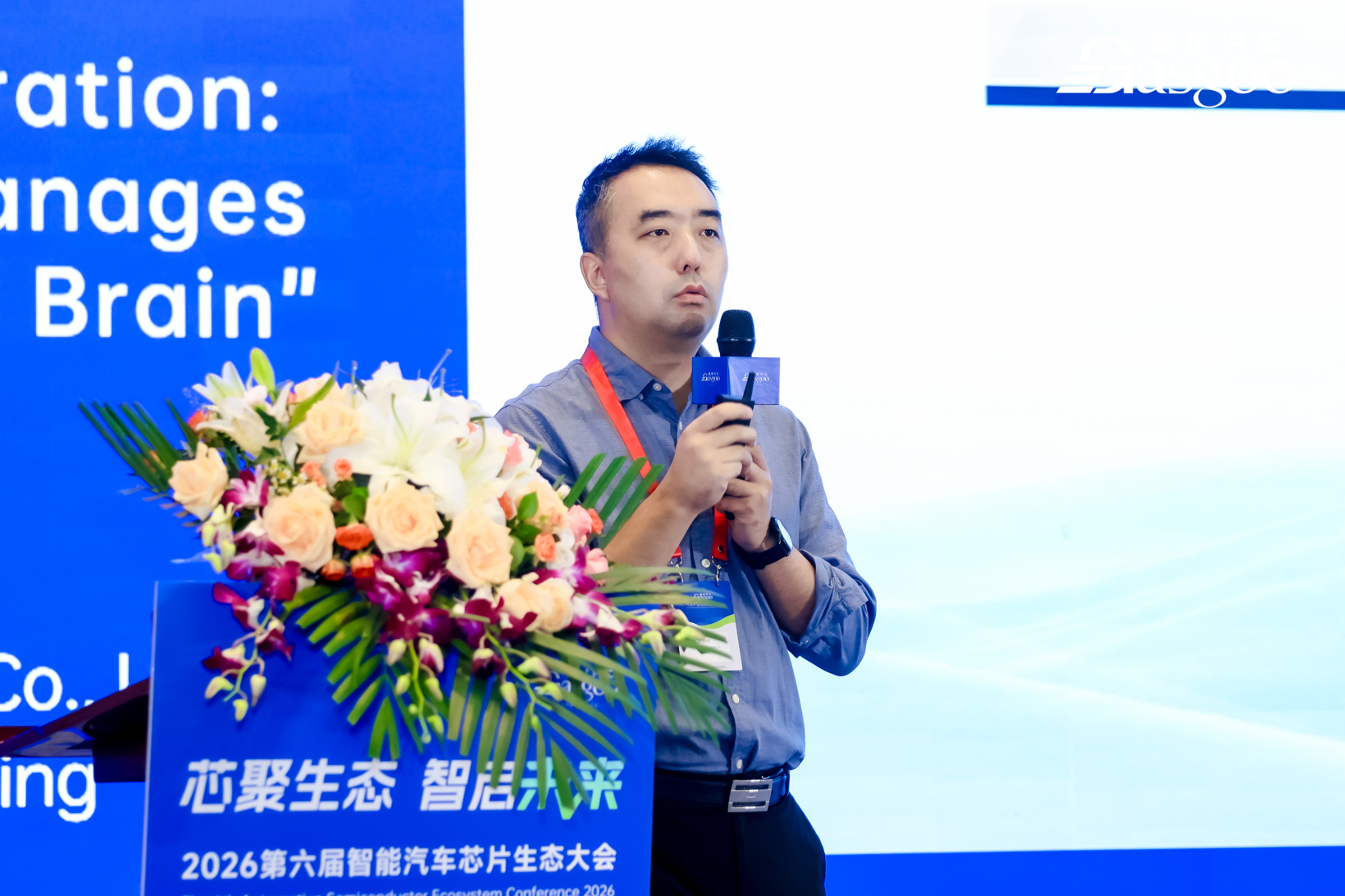
On September 16, the 2026 6th Intelligent Vehicle Chip Ecosystem Conference, hosted by Gasgoo, was held in Shanghai. In his keynote speech, Eriete, a product expert at Black Sesame Technologies, compared today’s automotive industry landscape to the smartphone industry: flagship models at the top attract the vast majority of industry attention, but it is highly homogenized volume models that truly drive sales. The automotive industry is the same—topics such as VLA, AI box, end-to-end, and world models attract 80% to 90% of market attention, but the functions of flagship models are far from converged.
The real pain point lies with volume models. Eriete pointed out that the pairing of cockpit and intelligent driving chips in volume models is extremely fragmented: there are four or five options on the cockpit side and another four or five on the intelligent driving side, which together can mean dozens of chip configurations for a single vehicle. “Every time you change a chip, it means a lot of the work you did before has to be redone. That is what we call reinventing the wheel.”

C1296: Converging Ten to Twenty Combinations with One Chip
In response to the above issues, Black Sesame Technologies launched the Wudang-series cross-domain fusion chip C1296. Eriete said that C1296 aims to use one chip to cover the needs of volume models under different cockpit-to-intelligent-driving ratios, converging ten to twenty chip combinations in the supply chain into a single platform and helping automakers reduce costs at the chip architecture level. According to the introduction, the chip has already achieved mass production deployment on the Dongfeng Tianyuan intelligent driving platform.
From a supply chain perspective, converging chip configurations means greater reuse of hardware materials, software adaptation, and validation resources. Volume models are more sensitive to changes in per-vehicle cost, so the value of a platform-based chip solution is easier to quantify. For automakers that need to quickly roll out across multiple models and configurations, reducing the number of chip combinations directly translates into shorter development cycles and lower engineering investment.
Dual-Track Layout: Huashan and Wudang, P2P Compatibility and Interoperable Toolchains
In its product matrix, Black Sesame Technologies adopts a dual-line layout with the Huashan series and Wudang series: the Huashan series focuses on ADAS functions, while the Wudang series focuses on cross-domain fusion. Eriete emphasized that Black Sesame Technologies is one of the few vendors on the market offering a matrix-style chip portfolio, with P2P compatibility and interoperable toolchains across the series, helping automakers reduce duplicated hardware and software investment across solutions at different levels.
Its latest flagship A2000 chip uses the “Jiushao Architecture” NPU, a rare automotive-grade NPU that adopts an ASIC architecture and supports floating-point operations. It can provide support for L3 and above intelligent driving capabilities and support the needs of large models such as VLA. For the long term, Black Sesame Technologies has planned a complete roadmap from short-term existing applications, mid-term cross-domain fusion and advanced intelligent driving, to long-term central computing platforms.
Cost and Platformization Demands in the Context of Going Global
Turning to overseas markets, volume models also play the role of the main sales driver in most overseas regional markets. The cumulative costs brought by tariffs, logistics, and localized operations make automakers pay more attention to platform reuse capability and cost dilution through scale for core components such as chips. The “one chip covers different ratios” proposition emphasized by C1296 is directionally consistent with this demand.
From the perspective of industry evolution, the key to cockpit-driving integration moving from concept to mass production lies in whether a replicable cost-reduction path can be formed for high-volume models. The mass-production rollout of the Dongfeng Tianyuan intelligent driving platform provides an observable sample for this path.