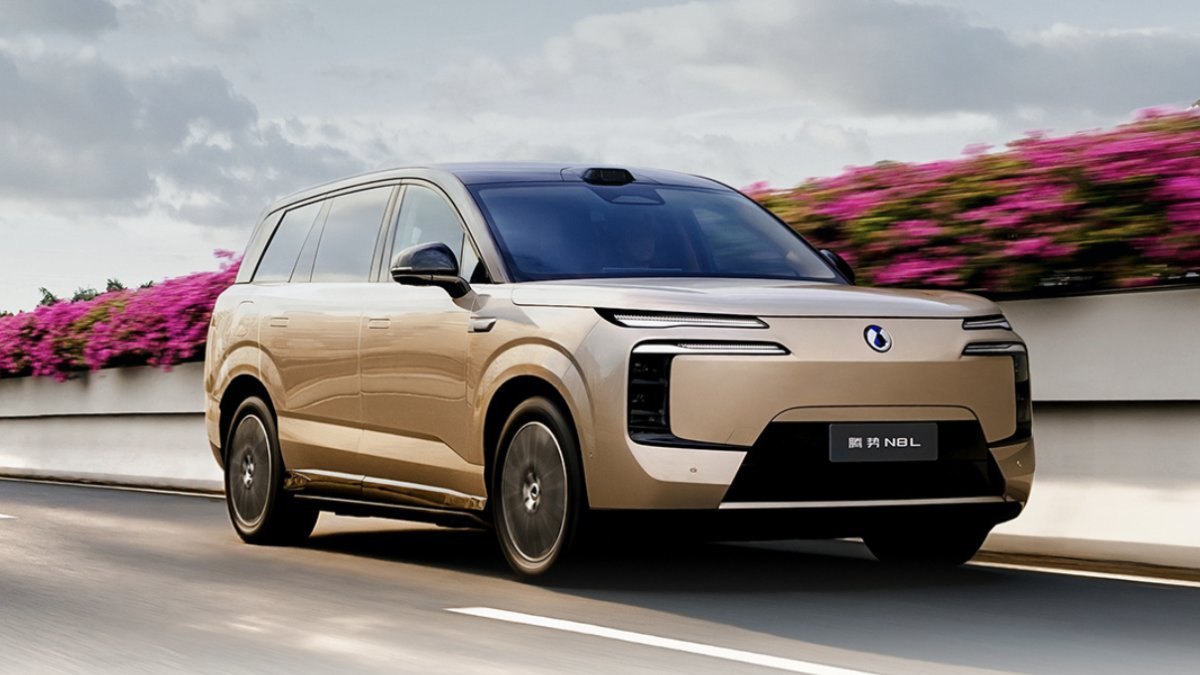
On September 16, 2026, HIMA adjusted the AITO cooperation model: Seres took over product definition, design, production, marketing, channels, and after-sales, while Huawei returned to being a technology supplier. The adjustment is limited to AITO; Luxeed and other brands remain led by Huawei. The context is that Seres expects its profit in the first half of 2026 to drop by about 60%, and a third party said Huawei's old agreement took a commission of about 50,000 yuan per vehicle. The new arrangement may ease profit pressure and create two collaboration paths within HIMA, providing a reference for cooperation in the auto industry and the division of responsibilities for going overseas.
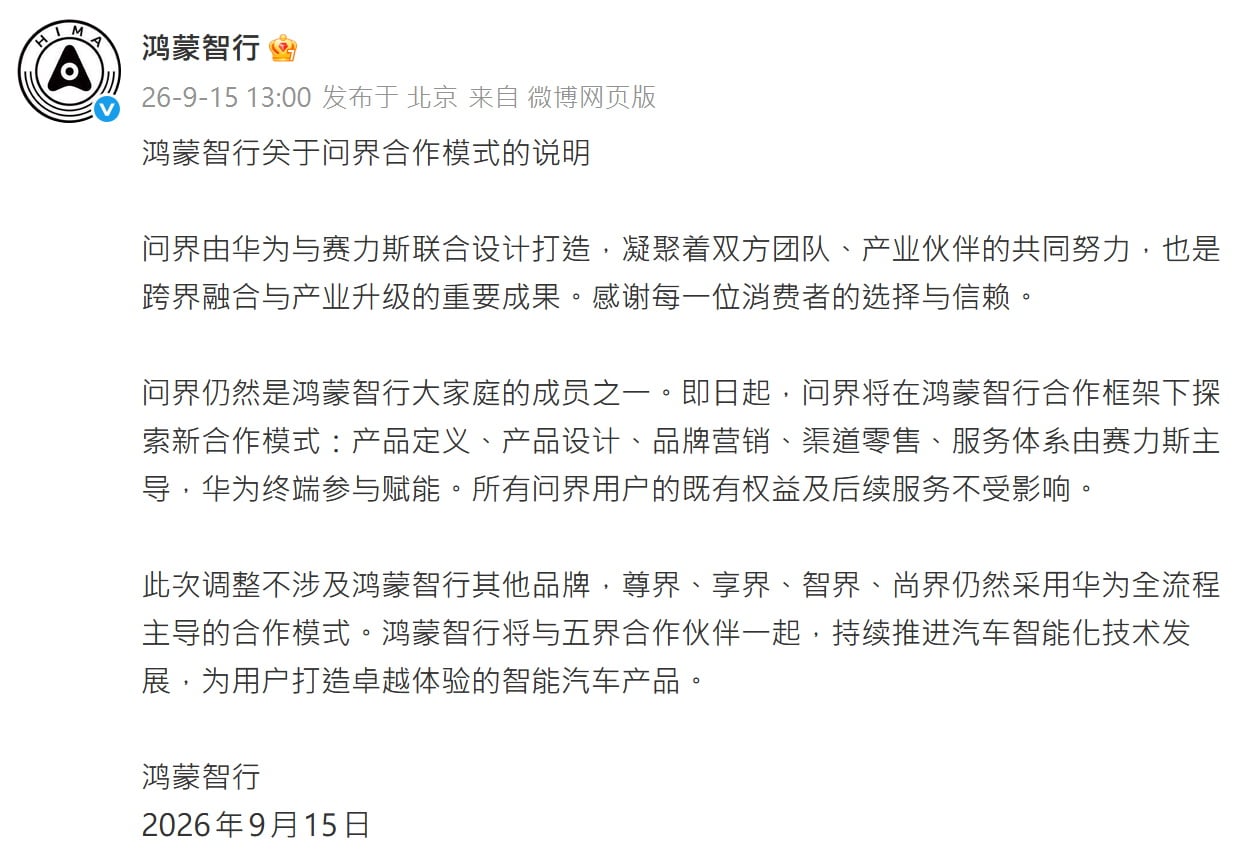
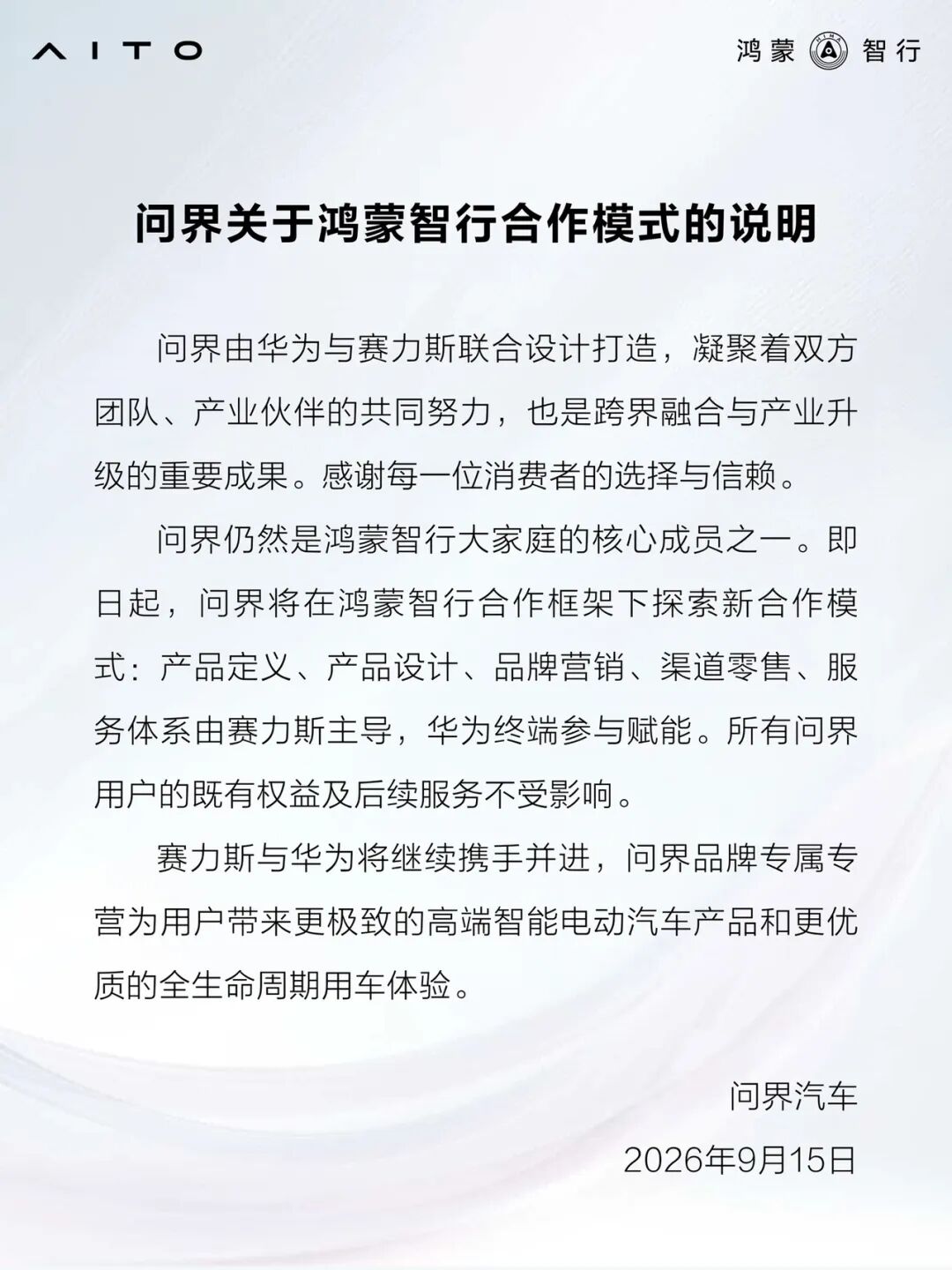
On September 16, 2026, HIMA adjusted its partnership regarding the AITO brand. Under the new terms, Seres will be responsible for AITO’s product definition, design, production, marketing, sales channels, and after-sales service, while Huawei returns to the position of technology supplier. This change applies only to AITO; other brands under HIMA, including Luxeed, Stelato, Maextro, and Shangjie, remain led by Huawei.
Control Returns to Seres
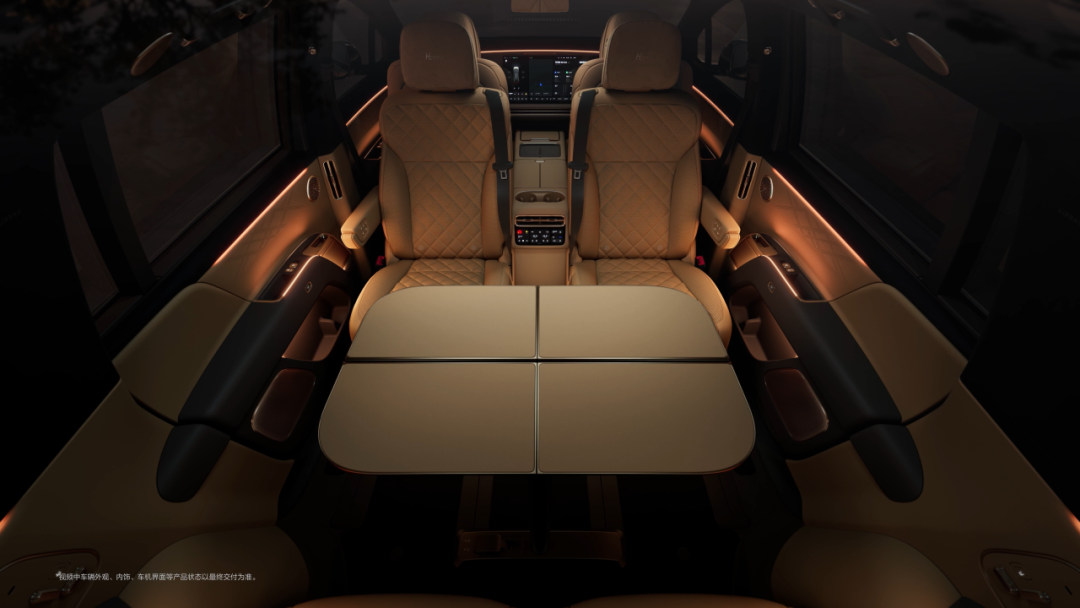
From the division of responsibilities, the new arrangement makes AITO more like a Seres sub-brand in form. Seres has taken over the complete chain from product definition to after-sales, while Huawei supports AITO brand building with its consumer service capabilities. HIMA stressed that AITO remains a “member of the HIMA family,” that existing after-sales service and owner rights are unaffected, and said AITO’s previous market performance reflects “multidisciplinary cross-sector cooperation” and “automotive industry upgrading.”
After the adjustment, AITO will also set up brand-exclusive retail stores. By contrast, other HIMA models are currently still sold through combined dealer and Huawei store channels. For new and existing AITO owners, exclusive channels may bring more brand-specific services and support.

Per-Vehicle Commission Controversy and Profit Pressure
The background to this adjustment is pressure on Seres’s performance. The company’s business forecast for the first half of 2026 shows profit expected to fall by about 60%, ultimately landing in the range of RMB 740 million to RMB 970 million (about USD 110 million to USD 140 million).
There has already been considerable discussion in the market about profit distribution. The independent automotive market commentary Che Shi Du Ping said that under the old agreement, more than 30% of Seres’s auto parts were procured from Huawei; it also said Huawei takes about RMB 50,000 (USD 7,500) from each AITO vehicle sold. Using AITO’s current product price range as a reference—the entry-level M6 at RMB 229,800 (USD 34,300) and the top-trim M9 at RMB 659,800 (USD 98,400)—a RMB 50,000 commission equals up to about 22% of a vehicle’s transaction price. It should be noted that the above commission and procurement ratios are third-party media claims, not figures disclosed by the two parties.
The new agreement may improve Seres’s profit performance in the short term. The company has launched its own brand Aiva to reduce dependence on Huawei, while denying rumors of cooperating with ByteDance to develop a “TikTok car”; it had previously attracted attention over a patent related to an in-car toilet.

Two Collaboration Paths Emerge Within HIMA
After the adjustment, two cooperation paradigms now effectively coexist within the HIMA system.
One is the AITO model: the automaker controls product definition, manufacturing, channels, and after-sales, while Huawei leads technology supply. The other is the model of other brands: Huawei takes the leading role in development and marketing, while partner automakers Chery, BAIC, JAC, and SAIC mainly handle manufacturing.
This divergence raises a direct question: whether Seres can continue to deliver an undiminished HIMA experience under the new structure of rights and responsibilities, and to what extent AITO models will retain their “Huawei characteristics.” Based on public information, the two sides have not yet provided more detailed explanations on this.

Reference Significance for Industry Collaboration and Overseas Expansion Paradigms
For the collaboration models of China's auto industry, the AITO case offers a vantage point: in a "tech company + automaker" alliance, how the boundary between the technology supplier and the brand-and-channel party is drawn directly determines how profits are distributed between the two. When the technology provider's revenue share is calculated on the basis of per-vehicle transaction price, an automaker's scale expansion does not necessarily translate into improved profits in tandem — this is the structural issue reflected in Seres' first-half performance.
For overseas expansion, this shift likewise has reference value. In overseas markets, the compliance entity, sales channels, and after-sales network are usually built by the party that bears brand responsibility; therefore, whoever controls the brand and channels often determines where the primary responsibility and returns of overseas operations lie. The AITO model concentrates more of these responsibilities on the automaker's side, whereas other HIMA brands still maintain a path led by Huawei. As for the adaptability of the two paths in overseas markets, there is currently insufficient data to support a judgment, and their progress on the ground will need to be observed going forward.