On September 13, nine Lynk & Co 03+ TCR cars took to the same track at the TCR China Shanghai round, four of which were driven by owners including Pan Dejun, Li Guanghua, Fu Guxiang, and Wang Tao. The car has an official price of 1.4 million yuan, and the first batch of 10 was delivered in April this year. The article notes that customer racing buyers are expanding from professional teams to individual drivers. Beyond the 1.4 million yuan, long-term support is also needed for race entry, transportation, engineering setup, spare parts, and accident repairs. Whether the manufacturer can maintain stable service across multiple seasons is more critical than single-round lap times.
9 Cars on the Same Grid, 4 Owners: The Buyer of Customer Racing Cars Has Changed
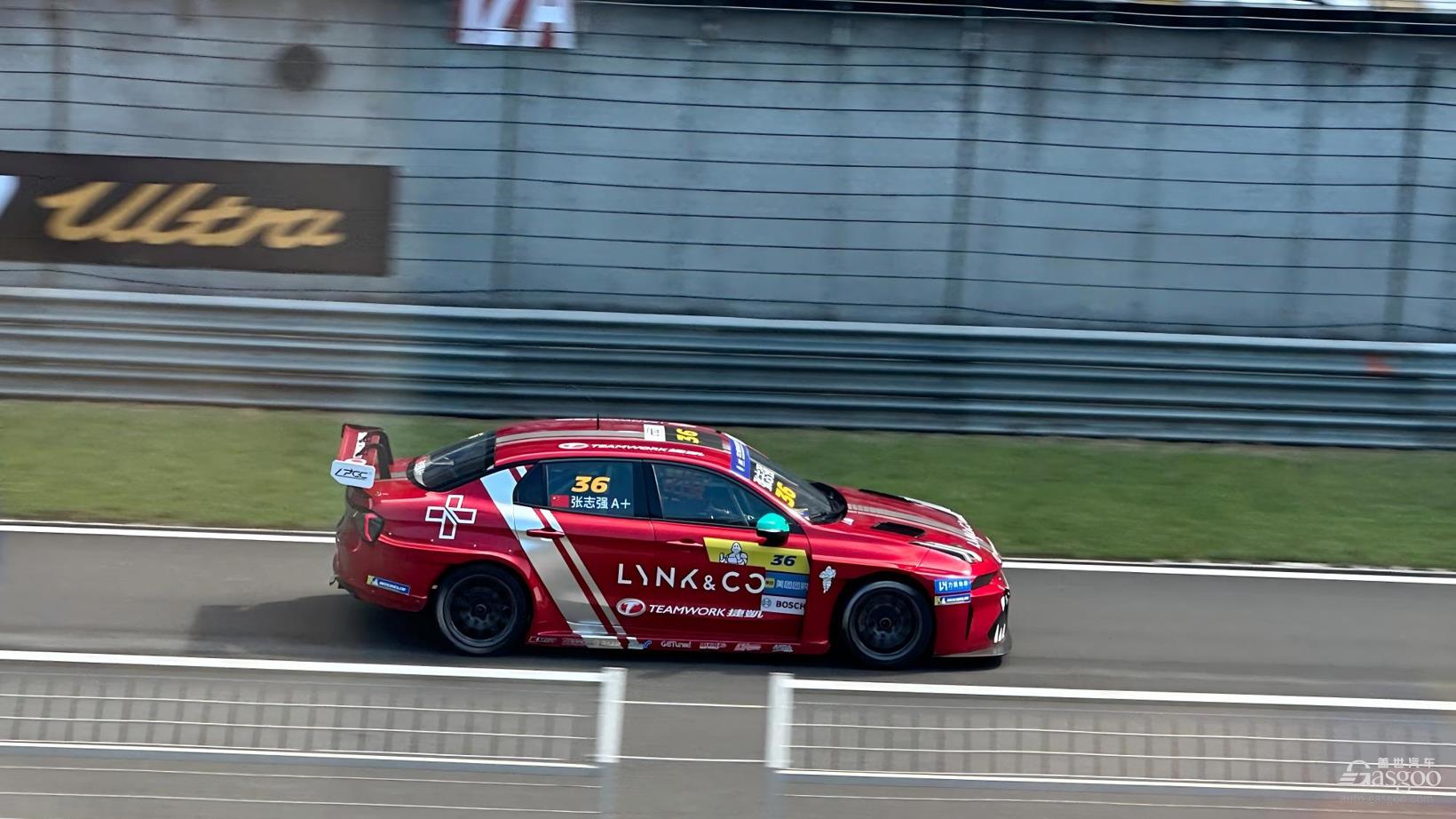
September 13, Shanghai International Circuit. On the entry list for the TCR China Shanghai round, there were nine Lynk & Co 03+ TCR cars. Five came from Lynk & Co Cyan Racing, while the other four were driven by Pan Dejun, Li Guanghua, Fu Guxiang, and Wang Tao. These four share one identity: owners of the 03+ TCR. The car's official price is RMB 1.4 million.
Lynk & Co did not start selling racing cars only this year. When the first-generation 03 TCR was launched in 2018, Geely Group Motorsport had already made clear that the car would be sold to customer teams worldwide. By the time the new-generation model was launched in 2023, Lynk & Co's TCR customer racing program had already been running for years. The change is who it is sold to: the 03+ TCR has a clear tax-inclusive price of RMB 1.4 million, a public deposit plan, and incorporates racing training, engineering guidance, and mechanic support into the sales system. In April this year, the first batch of 10 cars was delivered at Shanghai International Circuit and then went straight into the TCR China season opener. At the time, Lynk & Co made clear that factory teams and customer teams use cars of the same specification.
With nine cars in the same race in Shanghai and four drivers explicitly listed as owners, the racing car is no longer merely handed to professional teams, which then decide who drives it; the actual users are beginning to become buyers directly.
However, these buyers are far from ordinary consumers. Pan Dejun has competed for years in touring car racing at home and abroad, Li Guanghua previously won the TCR China Challenge annual title, Fu Guxiang has long been active in national-level events, and Wang Tao has competed in CRC, China GT, TCR China, and CEC. They are racing participants first, and racing consumers second. In an interview in the pit, driver Zhang Zhiqiang mentioned that the car used by the factory team in races is not fundamentally different from the version customers buy; the main differences are minor adjustments based on a driver's individual driving habits.

After RMB 1.4 Million, There Is Still a Long List of Costs
RMB 1.4 million solves only the most visible part of customer racing.
A car can be bought, but a race does not begin just because the purchase is complete. Racing licenses, event entries, transportation, teams, engineers, and mechanics all need to be arranged afterward. How should the car be set up at different tracks? Where did it lose time on the previous lap? Who repairs it after a crash? Can it be sent out again before the next session? For an ordinary car, these are after-sales issues; for a racing car, they directly determine whether the car can continue to compete.
From Shanghai to Ningbo and then to Zhuzhou, track characteristics differ, and vehicle settings must change accordingly. Tire pressure, ride height, suspension, brake balance, and tire condition all affect lap time. TCR also has performance-balancing rules such as BoP and CW. At the Shanghai round, for example, the car driven by Zhang Zhiqiang needed 20 kg of additional compensation weight for that event. Zhang Zhiqiang said that 03+ TCR owners can receive video, vehicle data, and setup support from the team, without first having to turn themselves into half a race engineer. On the maintenance side, Lynk & Co Cyan Racing can currently complete an engine change in about two hours; in the case of vehicle damage from a serious collision, the team is also capable of getting the car back to a race-ready state in about 24 hours.
But it should be pointed out that these figures first demonstrate what maintenance and engineering capabilities Cyan Racing already has; they cannot be directly equated with every 03+ TCR owner receiving the same guarantee. If a customer is not directly operated by Cyan Racing, or if the car is taken to compete in other regions in the future, whether engine changes, accident repairs, and spare-parts allocation can maintain the same efficiency, and how services are charged, is not fully public information at present.
This is precisely where customer racing is truly difficult. It is not hard for a factory team to repair cars; what is hard is turning capabilities accumulated by the factory team over many years into a set of services that customers can call upon relatively reliably no matter where they race: spare parts must be in stock, engineers must understand the car, mechanics must be familiar with repair procedures, and parts must be delivered according to the race schedule.

A Business Without Economies of Scale
As long as a racing car keeps running, costs keep occurring. Tires, brakes, wear parts, transportation, engineering services, and accident repairs run through the entire season. The same is true for manufacturers: after cars are sold, spare-parts inventory cannot be withdrawn, and technical personnel cannot be disbanded.
This differs greatly from the business logic of mass-production cars. Mass-production cars dilute costs through scale, and the business model is relatively clear; racing has no scale. If a customer racing model sells a few dozen units a year, that is already not a small number, but as long as those cars continue to race, the manufacturer must maintain an engineering and spare-parts system for dozens or even hundreds of cars over the long term. The fewer the customers, the harder it is to spread costs; the heavier the service, the greater the manufacturer's investment; but once engineering, repair, and spare-parts prices are pushed up, it directly raises the threshold for customers to go racing.
How engineering services outside the complete 03+ TCR car are charged, how many rounds customers on average run per year, how much revenue accident repairs, wear parts, and spare parts can contribute, and how large a team and inventory the manufacturer needs to maintain—these data are not currently public. But for judging whether Customer Racing can stand on its own, they may be more important than the RMB 1.4 million complete-car price.
Racing can also bring brand exposure, user operations, a performance image, and technology accumulation, so even without pursuing the same profit scale as ordinary production cars, there may be reasons to continue investing. But when Customer Racing begins to be viewed as an independent business, sooner or later it must answer: after leaving the brand marketing budget, can it survive on its own?
What Latecomers Must Chase Is Not Lap Time, but Time
In the global TCR market, customer racing has long been no rarity. Brands such as Honda, Hyundai, CUPRA, Volkswagen, and Audi have all built relatively mature products and customer networks, forming spare-parts systems, engineering teams, and customer groups around racing cars.
When customers extend from professional teams to individual car owners, the test actually becomes greater. Professional teams come with their own engineers and mechanics, while individual customers rely more heavily on the manufacturer's service system. At that point, customers choosing a racing car look at more than lap time. TCR has BoP restrictions, so absolute performance gaps between different cars are already constrained. Whether a car is worth buying sometimes lies in more mundane details: How long does it take for a suspension arm to arrive after it breaks? How much does one crash repair cost? Can an engineer follow you when you race in another country? Will spare parts still be easy to buy three years from now? Is there a second-hand market for the old car when you want to switch to a new one? All of these require time to accumulate. A car can prove it is fast in one race, but a customer racing system takes many seasons before customers believe, 'you won't regret buying it.'
Changes in an automaker's own direction are also a variable. The Volkswagen Golf GTI TCR delivered more than 100 cars cumulatively to customer teams and was a quite successful product in the TCR customer racing market, but it was eventually discontinued as the group's racing strategy changed. Audi Sport Customer Racing entered the GT3 market with the R8 LMS in 2009 and later expanded customer racing to GT4 and TCR; after the 2023 season, Audi stopped strategic investment in its Customer Racing program and no longer advanced new customer racing products. But the cars already sold are still running. By 2026, customer teams around the world will still be using Audi GT and TCR cars to compete, and Audi and its regional partners will still need to provide parts and related services.
A manufacturer can decide not to build the next generation of racing cars, but customers of the previous generation cannot be left by the side of the track the next day. Once a racing car is sold, the relationship between manufacturer and customer often lives longer than a generation of the model itself.
How many cars are sold this year is not the hardest question. The hard part is whether, three years or five years from now, these cars can still reliably obtain parts and support; when the next-generation racing car appears, whether old customers continue to be looked after; when customers take their cars overseas, whether the service system can go with them. Over the past few years, Lynk & Co has proven that it can build racing cars and win races. Now another, slower race has just begun: it is not about how much faster one lap is, but about how long a manufacturer can keep running with customers after a racing car is sold.