ZF's Commercial Vehicle Solutions division disclosed at the 2026 IAA Transportation in Hannover that it has secured more than EUR 5 billion in new business orders in 2026, with a win rate of nearly 90%. The division is advancing multi-path decarbonization in parallel through hybrid, central electric drive, and eAxle solutions. The AxTrax 2 eAxle has entered mass production in China, cumulative production of the TraXon automatic transmission has exceeded 1.5 million units, global cumulative deliveries of braking systems have reached 20 million sets, and the first ADAS product developed specifically for China has been localized for mass production.
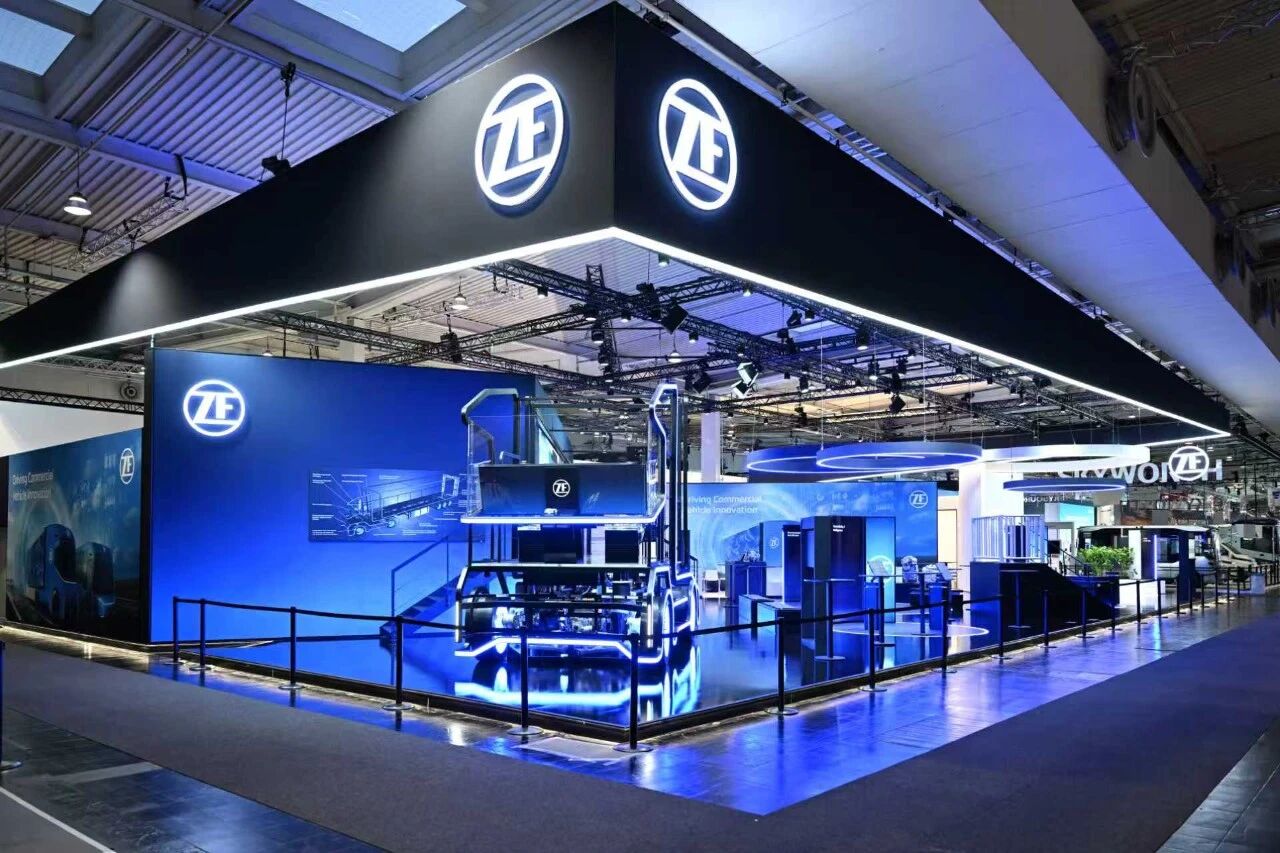
ZF Commercial Vehicle Solutions disclosed during IAA 2026 in Hannover, Germany, that in 2026 it has secured more than €5 billion in new business orders, with a customer win rate of nearly 90%. IAA 2026 runs from September 15 to 20, 2026, and the ZF Commercial Vehicle Solutions booth is located in Hall 21, B42.
Fabian Schlegel, Global Head of Sales for the division, said that a win rate of nearly 90% and more than €5 billion in new orders reflect customers' confidence in its technology portfolio and long-term strategy.
The multi-path decarbonization logic behind the orders
Andreas Moser, Member of the ZF Board of Management and Head of the Commercial Vehicle Solutions Division, said when discussing business growth that the pace of transformation differs by region, application scenario, and customer need, and that the division's task is to match customers with the appropriate technology solutions.
This statement echoes its exhibited product matrix: in terms of powertrain types, ZF has not converged on a single route, but instead advances hybrids, central electric drives, and electric axles in parallel to cover multiple decarbonization paths.
Drivetrain: one unified platform, decentralized rollout milestones
In the drivetrain segment, ZF exhibited the TraXon Hybrid transmission developed on a mature platform, the CeTrax 2 central electric drive system with increased power and an optional power take-off function, and the AxTrax 2 electric axle system with higher output torque.
Beyond the products, what is more noteworthy is the regional mass production and project rollout pace of each technology route: the AxTrax 2 electric axle is already in mass production in China; the AxTrax 2 LF low-floor electric axle has won a major order for city buses in India; the CeTrax 2 dual dual-motor central electric drive system is in mass production in Europe; and the second-generation TraXon transmission with integrated hydraulic retarder achieved a breakthrough in a Hino touring coach project in Japan. Since production began in 2014, cumulative production of the TraXon automatic transmission has exceeded 1.5 million units.

From this set of milestones, the same-generation technology platform is split across different regional markets: China, Europe, India, and Japan each take on different product forms and mass-production stages, with the rollout order directly related to local market maturity and application scenarios.
Air management and braking: a million-unit milestone and Euro 7 compliance
In air management and braking, ZF disclosed that in 2026 it will reach the milestone of cumulative production and delivery of 1 million two-stage compression air compressors. First introduced in 2006, the technology has now been around for 20 years.
The globally premiered MAXX Uniper new-generation single-piston disc brake is positioned to improve braking performance and reduce particulate emissions to meet Euro 7 emission standards. In addition, ZF renewed an electronic air processing unit supply agreement with a leading global truck and bus manufacturer, and reached a new long-term cooperation with Cummins in North America.
Safety and software: braking platform scale and localized ADAS
In the direction of safety and software-defined commercial vehicles, ZF launched a new electronic control unit supporting centralized and zonal electrical/electronic architectures. Its mBSP XBS modular braking system platform has accumulated more than 250,000 installations worldwide, and based on this platform it has developed AL4-level braking technology.
For the Chinese market, OnGuardMAX SE, the first ADAS product developed specifically for the Chinese market, has achieved localized mass production and been delivered to customers. ZF braking systems such as ABS, EBS and mBSP XBS have cumulatively delivered 20 million units worldwide.
On the software side, its SUMS software update management system service suite has been adopted by more than 150 trailer manufacturers, and the ZF [pro]Diagnostics diagnostic platform and ZF Health Check vehicle condition monitoring service have also been put into application.
Three Reference Points for Supply Chains Going Global
Based on the above information, ZF's organizational approach in the commercial vehicle transformation can be summarized as follows: relatively unified technology platforms, regionally distributed implementation nodes, and product forms adjusted according to scenarios. For Chinese supply chain companies, there are several points for reference.
First, production locations and application scenarios need to be viewed separately. The AxTrax 2 electric drive axle is mass-produced in China, and OnGuardMAX SE, as the first ADAS product developed specifically for the Chinese market, has achieved localized mass production and delivery, indicating that the Chinese market's role in this division covers both a manufacturing base and a delivery market.
Second, regulatory milestones are driving the update cadence of traditional components. MAXX Uniper is designed with Euro 7 emission standards as its target, and the two-stage compression air compressor reached the million-unit delivery mark 20 years after launch, both showing that in relatively mature component areas such as air management and braking, there is still regulation-driven replacement and upgrade demand.
Third, economies of scale for software and safety products are accumulating. mBSP XBS has been installed in more than 250,000 units, braking systems have cumulatively delivered 20 million units, and SUMS has been adopted by over 150 trailer manufacturers. This installed base provides a foundation for subsequent software feature iterations and also constitutes a supplier's bargaining chip on the issue of software-defined commercial vehicles.
It should be noted that ZF takes a cautious view of regional differences in the pace of transformation; its order structure, mass-production cadence and product portfolio ultimately still depend on the regulatory progress in each market and customers' specific choices.