In September 2026, Chinese brands concentrated their launches on high-end large six-seat SUVs. The Li i9 was launched on September 16, with a length of 5,225 mm and a wheelbase of 3,168 mm; its dual-motor four-wheel-drive system has a combined output of 400 kW. It initially uses CATL's 5C ternary lithium battery and later switches to a self-developed battery. The Avatr 9 series, jointly designed with Huawei Qiankun, is scheduled to go on sale before the end of the year and will compete in the same segment as the AITO M9, Li L9, and others. Li Auto delivered 37,679 vehicles in August, up 32.07% year on year; Avatr sold 35,250 vehicles in the first seven months. Chinese brands are forming scaled supply in the high-end large SUV market.
In September 2026, Chinese brands are once again making a concentrated push into the premium large six-seat SUV market. Li Auto will unveil its flagship all-electric SUV, the i9, on September 16, while Avatr will reveal the exterior of its 9-series flagship SUV, co-designed with Huawei Qiankun, on September 8, with launch planned before the end of the year. Both models target the large six-seat segment, with product positioning moving toward the higher price range occupied by overseas luxury brands.
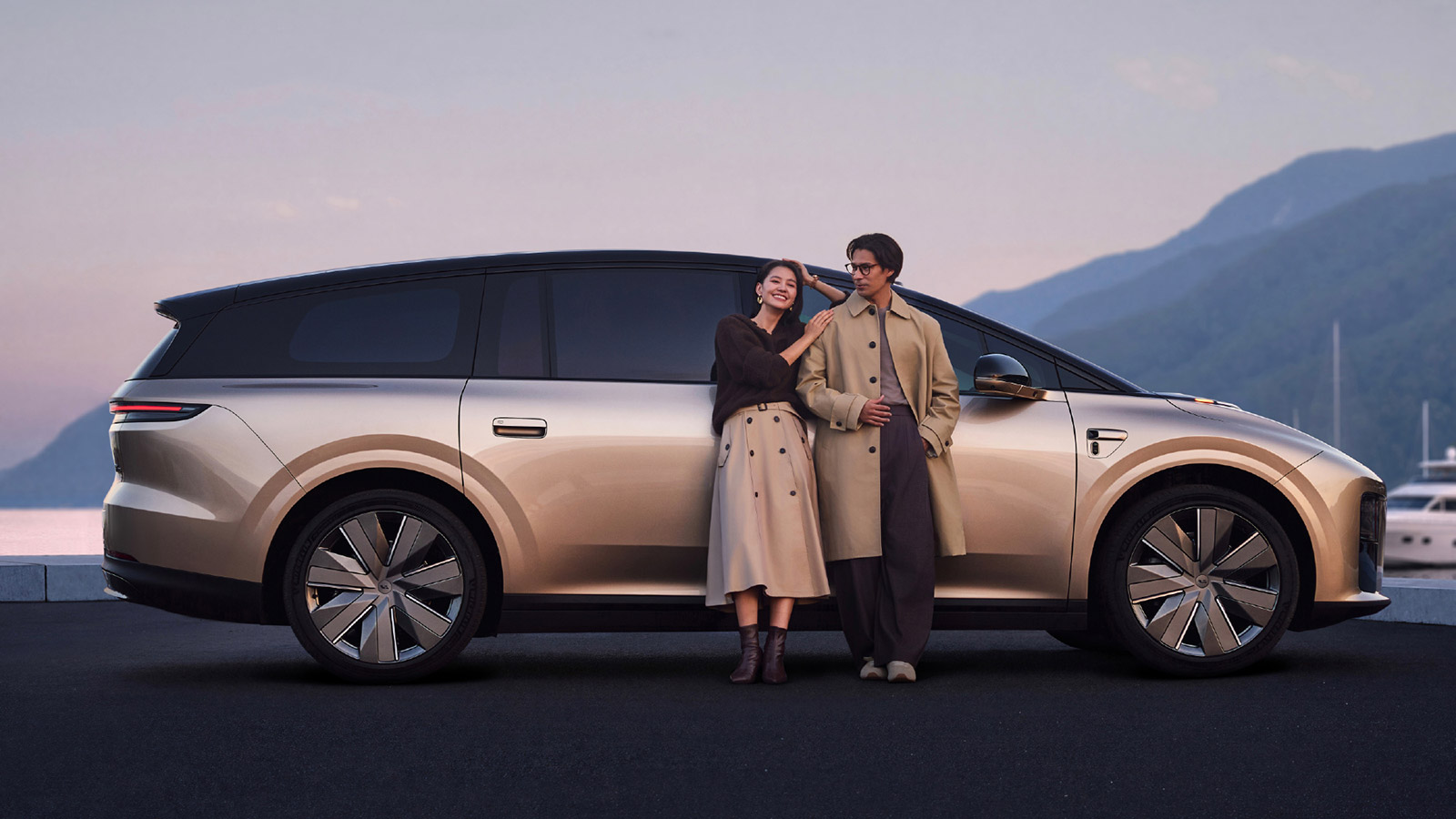
Li Auto i9: Launching September 16, Focused on Family Space
Li Auto announced on September 9 that the i9 launch event will begin at 19:30 Beijing time on September 16, with display cars arriving in stores from September 11. According to regulatory filing information released in July, the i9 is a six-seat SUV with a length of 5,225 mm and a wheelbase of 3,168 mm, making it Li Auto's largest SUV to date. For reference, the Li Auto i8 measures 5,085 mm long with a wheelbase of 3,050 mm.
In terms of power, the filing information shows that the i9 uses a dual-motor all-wheel-drive setup, with a front motor producing a maximum of 150 kW and a rear motor 250 kW, for a combined output of 400 kW. The i9 will become Li Auto's second model after the Mega to offer a Home version. Li Xiang, founder, chairman, and CEO of Li Auto, showcased its interior, which features rotatable zero-gravity seats that allow occupants to sit face-to-face. Li Xiang compared the Mega Home to a suburban house suited to large families and the i9 Home to a luxury city apartment, emphasizing space efficiency, visibility, and comfort.

Battery Supply to Switch in Stages, Financial Performance Yet to Improve
The battery strategy is another point of focus for the i9. Li Auto said on September 7 that initial deliveries of the i9 will use CATL's 5C ternary lithium batteries; as production capacity for its in-house-developed batteries ramps up, the i9 will switch entirely to in-house batteries, and the company plans to gradually extend its in-house batteries to all models. On September 8, the company further explained that it independently develops and manufactures battery packs, while its in-house-developed cells are produced by partners. The company leads in battery product definition, performance specifications, quality standards, and system integration, while partners handle manufacturing and other processes.
The new-generation Li Mega is offered only in a Home version, priced at RMB 509,800, which is RMB 50,000 lower than the previous-generation Home version. New products and technology investments also bear the task of improving financial performance: Li Auto's vehicle gross margin in the second quarter was 9.4%, down from 19.4% a year earlier. Management said on the August earnings call that with the arrival of new models such as the i9, battery-electric vehicles are expected to account for a larger share of sales in the second half of the year.
In terms of delivery data, Li Auto delivered 37,679 vehicles in August, up 32.07% year-on-year, ending three consecutive months of year-on-year decline; cumulative deliveries in the first eight months of this year were 261,619 vehicles, still down slightly by 0.60% year-on-year.

Avatr 9 Series: Scope of Cooperation with Huawei Expands
Avatr Technology released exterior images of its 9-series flagship SUV on September 8. The vehicle was co-designed by Avatr and Huawei Qiankun and is planned for launch before the end of 2026. Official images show that the new car adopts a closed front face with a dot-matrix pattern, split headlights, and a lidar unit mounted at the front of the roof, expected to be Huawei Qiankun's 896-line dual-light-path image-grade lidar, which was previously used on the Avatr 07L launched last month. The body has a boxy silhouette, equipped with semi-hidden door handles, densely packed radial spokes, and a panoramic glass roof, featuring two-tone paint with a silver body and white lower section. The company has not announced the model's official name. Avatr's president said more information will be released in stages; its first teaser video, released on September 2, showed only the front face with distinctive brand features.
Avatr's vice president previously said the company would launch a large six-seat SUV by the end of this year, describing it as Avatr's "first model truly developed in full cooperation with Huawei," integrating Huawei technologies in vehicle control, lighting, voice, and intelligent driving. Previously, Avatr mainly adopted Huawei's intelligent driving and cockpit systems, so the 9 series is seen as a key test of the depth of cooperation between the two sides.

Competitive Landscape and Sales Pressure
The Avatr 9 series will enter China's fiercely competitive large six-seat flagship SUV market, competing alongside models such as the AITO M9, Li Auto L9, Denza N9, and IM LS9. For Avatr, the significance of this model goes beyond brand image: the company's sales still lag behind leading new-energy vehicle startups. In the first seven months of this year, Avatr sold 35,250 vehicles, averaging about 5,040 per month.
On August 8, Avatr launched the five-seat SUV Avatr 07L, with a limited-time starting price of RMB 219,900 after benefits, with its main competitor being the Xiaomi YU7. The 9-series flagship is expected to be in a higher price range, which is expected to improve Avatr's product mix and per-vehicle profitability.
On the capital front, Avatr is advancing a Hong Kong stock listing and resubmitted its application at the end of June after its previous prospectus lapsed. The prospectus shows that its 2025 revenue was RMB 25.63 billion, its net loss narrowed to RMB 3.49 billion, and its gross margin rose to 9.4%.
In terms of product cadence, Li Auto and Avatr will successively bring flagship large SUVs to market in the second half of 2026. The former leverages family space and in-house battery development, while the latter uses deep cooperation with Huawei as its differentiation label. In the premium large SUV segment, where overseas luxury brands previously occupied consumers' minds, the concentrated launches by Chinese brands are forming product supply at scale, and their accumulation in product definition, technology configuration, and cost structure is also seen as a precondition for subsequently competing in overseas high-end markets.