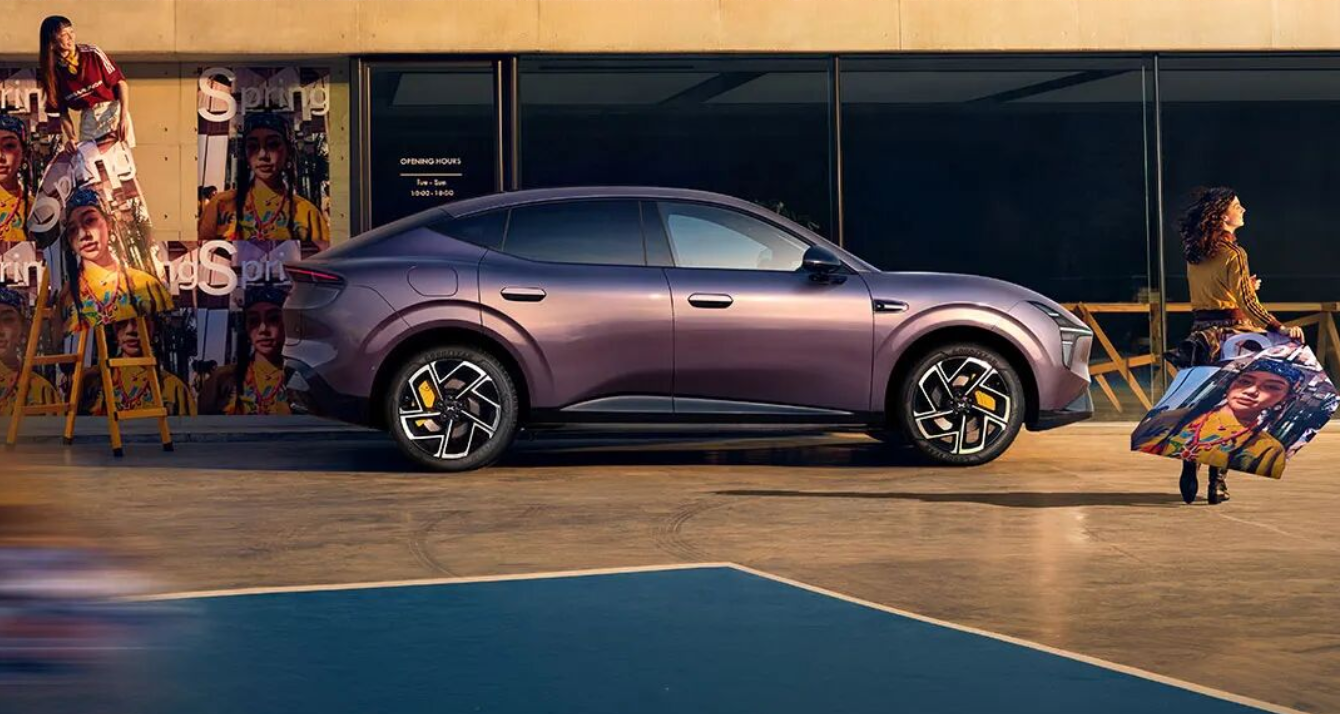
Dongfeng Motor and Huawei Qiankun jointly created the Yijing brand; its first model, the Yijing X9, will go on sale in September 2026 with a presale price range of 299,800 to 379,800 yuan, and received 21,235 orders within 24 hours of presale. The two parties began cooperation in 2023 and upgraded to phase 2.0 in 2025, with over 10 billion yuan in cumulative planned R&D funding and a joint team of thousands. The new car is positioned as a flagship SUV, equipped with six major intelligent solutions including Huawei Qiankun ADS 5 and HarmonyOS cockpit, adopts a range-extended powertrain, and has a CLTC comprehensive range of 1,570 km.
According to an Autohome report on September 18, 2026, the first model under the Yijing brand, jointly created by Dongfeng Motor and Huawei Qiankun, the Yijing X9, will officially go on sale within September. Its previously announced pre-sale price is RMB 299,800–379,800. Official information shows that the new vehicle secured 21,235 orders within 24 hours of opening pre-sales. At a time when "9-series flagship" SUVs are being launched intensively and competition in the RMB 300,000–350,000 segment is fiercest, the product definition approach and cooperation mechanism of this model are more worthy of industry attention than the price itself.
From 2023 to 2026: A "Deep Co-creation" Case Study
Yijing is jointly created by Dongfeng Motor and Huawei Qiankun. The two parties officially launched a strategic cooperation project in 2023, upgraded their cooperation to the 2.0 era in 2025, and established a deep co-creation model centered on "joint definition, joint development, and joint office work." They have planned cumulative R&D funding of more than RMB 10 billion and formed a joint R&D team of several thousand people.
On the timeline, the Yijing brand was officially launched on November 20, 2025, the actual Yijing X9 made its world premiere at Auto China 2026, and it will go on sale within September 2026. The pace from brand launch to first model delivery is about 10 months. Behind this pace is a binding at the organizational level rather than merely the supply level: product definition, development processes, and office collaboration are advanced within the same system, rather than the traditional client-vendor relationship in which an OEM raises requirements and a tech company delivers solutions.
Product Breakdown: Six Major Intelligent Solutions Packed Into the Vehicle
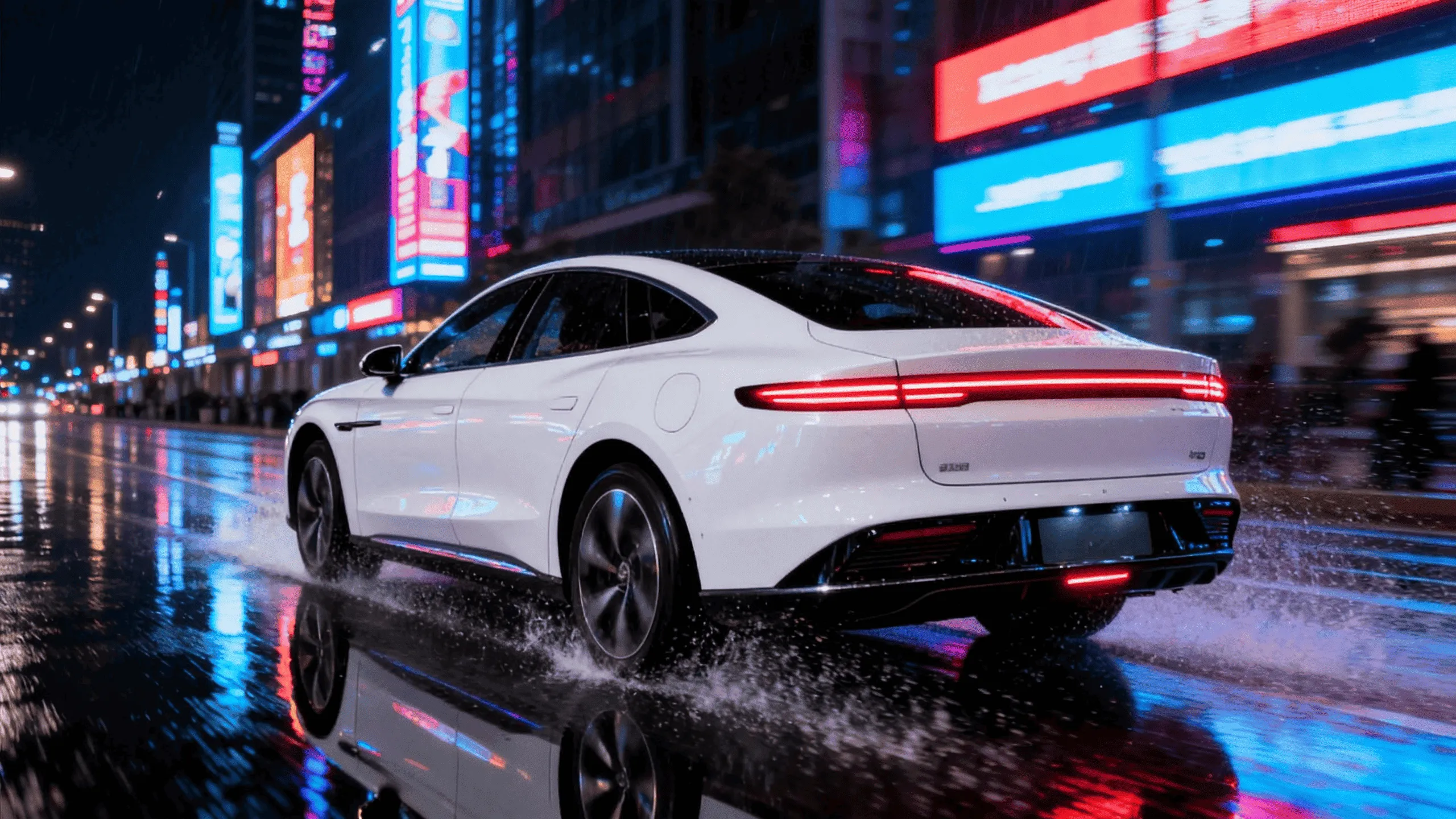
The Yijing X9 is positioned as a flagship SUV, with body dimensions of 5,301/2,015/1,820 mm and a wheelbase of 3,120 mm, adopting a 2+2+2 six-seat layout. Intelligent features are its main selling point, including Huawei Qiankun ADS 5, the HarmonySpace 6 cockpit, the AMS three-in-one in-cabin AI multimodal perception system, HUAWEI XPIXEL megapixel color intelligent headlights, and other among Huawei Qiankun's six major intelligent solutions.
For driving assistance, the new vehicle comes standard with an 896-line dual-optical-path image-grade LiDAR, and is equipped with the four-LiDAR Qiankun ADS 5 Max full-stack solution, supporting full-scenario navigation assist and roaming modes. The cockpit is equipped with HarmonySpace 6, featuring the all-new Xiaoyi AI agent built on the MoLA 2.0 architecture, positioned as a full-scenario conversational AI assistant. It also offers the AI companion robot "HAMOMO Hamengmeng," which can display wake, listening, and command execution states through facial expressions.
Cockpit hardware includes dual 17.2-inch 3.4K Dieyu twin screens, a 75-inch HUAWEI XHUD augmented reality head-up display, a 21-inch rear ceiling-mounted soft-light screen, and a 32-inch projection screen HUAWEI XSCENE LCoS in-car laser projection system. In terms of comfort features, it provides a 9L dual-opening hot/cold refrigerator (-6°C to 50°C), 21-speaker HUAWEI SOUND audio, starlight ambient lighting, and a negative oxygen ion fresh air system. There are 43 storage spaces throughout the vehicle; with six occupants, trunk capacity is 484L, and with four occupants it can expand to 1,368L.
Chassis and Powertrain
Power comes from an extended-range setup, with a 1.5T range extender producing a maximum output of 95kW. The two-wheel-drive version's motor produces a maximum of 300kW, paired with a 74.29kWh battery and 465km of CLTC pure-electric range; the four-wheel-drive version has a combined output of 450kW, accelerates from 0-100km/h in 5.1 seconds, and delivers 432km of CLTC pure-electric range. Both versions offer 1570km of CLTC combined range.
The chassis is built on Huawei Qiankun's Chitu platform, with a front double-wishbone and rear five-link suspension, dual-chamber air suspension and EDC continuously variable damping shock absorbers. It supports road preview, stable driving after a tire blowout at 120km/h and motion-sickness relief, and offers bidirectional 14° rear-wheel steering with a minimum turning radius of 5.3 meters. In terms of body structure, it adopts a 6-longitudinal, 11-transverse body structure, with high-strength steel and aluminum alloy accounting for 92.4%, including a 2300MPa hot-gas-formed A-pillar tube beam, side-door anti-collision beams and hot-formed dual door rings, as well as 2400MPa ultra-high-strength steel layered into the B-pillar.
Competitive Landscape: Differentiation Amid Converging Specifications
Looking at the pre-sale price range, models overlapping with the Yijing X9's price include the ID.ERA 9X, Lynk & Co 900 and XPeng GX, while the Xiaomi Pengcheng N90 serves as a price reference point with a starting price of 269,900 yuan.
Among products in the same class, features such as refrigerators, TVs and plush seats, along with air suspension, can no longer create a clear gap. The Yijing X9's relative advantages are concentrated in the intelligent experience delivered by Qiankun ADS 5 and HarmonyOS Cockpit 6; the XPeng GX offers steer-by-wire technology; the Xiaomi Pengcheng N90 is more specifically targeted at outdoor-scenario flexibility in its spatial layout, but its refrigerator, TV and plush seats are optional equipment, provided free of charge during the initial sales period, and the strategy after that period remains to be seen. Whether the Yijing X9's official price will be further adjusted from the pre-sale price likewise awaits launch information.
Industry Implications of This Collaboration Paradigm
The deep co-creation model between Dongfeng and Huawei Qiankun offers a sample for observing the evolution of "OEM + tech company" collaboration: a tens-of-billions-of-yuan-scale R&D funding plan and a joint team of thousands of people mean that intelligent capabilities are not only reflected in a single model, but also involve the accumulation of R&D processes, organizational collaboration and standard definition.
For the spillover of Chinese brands' intelligent capabilities, the value of such a model lies in its replicability. If the mechanism of joint definition and joint development can be reused across more models and brands, its engineering experience in smart cockpits, driver assistance and electrical/electronic architectures will become the technical foundation for subsequent competition in overseas markets. At the same time, tariff policies, regulatory certification, charging standards, data compliance and localized service networks in overseas markets remain real variables; currently available public information contains no specific overseas rollout arrangements for the Yijing brand or related technology solutions, so it is better viewed as being at the capability-validation stage.
From the brand's launch in November 2025 to the first vehicle's market debut in September 2026, the Yijing X9 entered the market during a window crowded with "9-series flagship" launches, and pre-sale order data indicates that its pricing and configuration combination has won a degree of initial recognition. Subsequent official pricing, delivery pace and the actual performance of intelligent functions will determine whether this collaboration paradigm can move from the success of a single product to reusable system-level capability.