Tesla has teased an event on October 1 to unveil the next-generation Roadster. Deliveries for the model have been repeatedly delayed since its November 2017 reveal, and the latest earnings report still lists it as being in the design and development stage. The event slogan "ready to launch" is interpreted as a tribute to SpaceX and has sparked speculation about a merger between the two companies. Tesla currently mass-produces the Model 3, Model Y, Cybertruck and Semi, while the Roadster is positioned more as a brand and technology symbol. The market is watching whether it will announce a specific timeline for the first time.
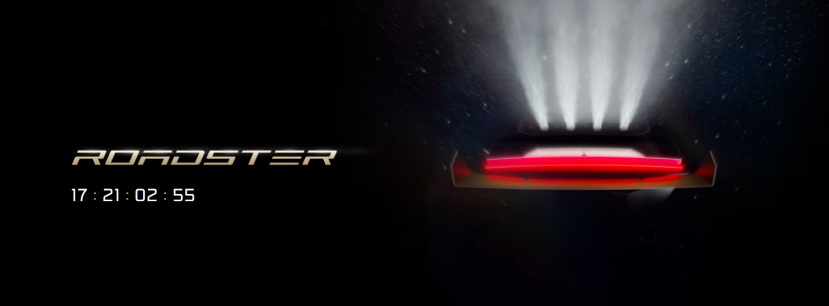
Tesla has teased an event on October 1 to unveil the next-generation Roadster sports car. This niche model, first announced by CEO Elon Musk in November 2017, has had its delivery timeline delayed multiple times; in its latest earnings presentation, Tesla still labels its status as “design development phase.” The event’s slogan “Go for launch” has been interpreted by outside observers as a tribute to SpaceX rocket launch missions, and will likely further fuel market speculation about a merger between Tesla and SpaceX.
A Belated Launch Event
From its first unveiling in November 2017 to this teased event, nearly nine years have passed. The delivery milestone for the second-generation Roadster has been delayed multiple times during that period, and as of now, Tesla has not given a clear production or delivery timetable in public materials.
During Tesla’s Q1 2026 earnings call in April 2026, Musk said of the model: “I think this may be one of the most stunning product demos of all time.” His remarks focused on the impact of the demonstration itself, not engineering milestones or capacity arrangements.
This context determines the basic character of the October 1 event: it is first and foremost a product- and brand-level showcase, not a delivery milestone confirmation. For investors watching Tesla’s product cadence, the “design development phase” designation in its financial filings remains the most direct public basis for judging the model’s progress.
“Go for Launch”: Marketing Rhetoric and Capital Narrative
The phrase “Go for launch” is strongly pointed in its messaging. Bloomberg reported that the slogan pays tribute to SpaceX’s rocket launch missions, while Tesla has consistently used live events to energize consumers and investors.
Musk has long promoted Tesla and SpaceX together, and this kind of symbolic borrowing between the two is not new. In February 2018, Musk’s own cherry-red first-generation Tesla Roadster flew into space as the payload aboard SpaceX’s first test flight of the Falcon Heavy rocket. That webcast lasted 43 minutes, drew millions of viewers, and ended with David Bowie’s “Life on Mars?”

That same year, Musk also posted a description of the first-generation Roadster’s “SpaceX option package”: about 10 small rocket thrusters, cleverly arranged around the vehicle body, which he said could improve acceleration, top speed, braking, and cornering, and might even enable the car to fly. At the time, this statement was already seen as a concept with a clear publicity flavor rather than an engineering commitment.
From a communications standpoint, placing a new car launch in the same context as spaceflight narratives can quickly activate both automotive users and spaceflight followers, and it easily creates associations in the capital markets about where the relationship between the two companies is headed. Whether such associations will materialize into actual company-level actions currently has no public information to support it.
A Niche Player in the Product Lineup
Tesla is currently the world’s most valuable automaker, but its model lineup is not particularly broad. The Austin-based company currently produces the Model 3, Model Y, Cybertruck, and Semi semi-truck.
Unlike the products above aimed at scaled sales, the Roadster is positioned closer to a brand image and technology symbol. Tesla is also advancing production of the two-seat autonomous vehicle Cybercab, which Musk sees as a core product in pushing Tesla to become a leader in autonomous driving.
This creates a fairly clear priority sequence: mass-market passenger and commercial vehicles form the cash-flow foundation, Cybercab carries autonomous-driving commercialization expectations, and the Roadster’s significance lies more in buzz and brand prestige. Given the limited number of models, a sports car still in the design development phase being given a dedicated event reflects a marketing attribute stronger than a sales attribute.
Observations
For industry observers, the information worth watching from the October 1 event centers on three aspects: first, whether Tesla gives a specific timetable for the Roadster for the first time; second, whether there is any company-level response to merger speculation triggered by “Go for launch”; and third, how communication resources are allocated between this event and the pace of advancing autonomous-driving products such as Cybercab.
In Tesla’s current product lineup, the Roadster is not a model tasked with sales volume, and there is an obvious gap between its launch cadence and delivery reality. This gap itself offers an entry point for observing Tesla’s brand marketing tactics and capital market narrative strategy. As of now, Tesla has not provided further explanation regarding the event content, vehicle specifications, or related rumors with SpaceX.