In July 2026, China's passenger NEV retail penetration exceeded 65% for the first time, while gasoline vehicle sales plummeted 47.2% YoY. NEVs claimed 9 of the top 10 sales spots, leaving only one ICE model. Despite 31 ICE models cutting prices by an average of 14.1% in H1, the decline proved unstoppable.
Historic Inflection Point: NEVs Officially Dominate
July 2026 marked a watershed moment for China's auto market. CAAM data showed NEVs accounted for 60.4% of new vehicle sales for the first time, with cumulative share for the first seven months exceeding 50% at 51.2%. CPCA data showed NEV retail penetration reaching a record 65.1%, up 11.6 percentage points from a year earlier.
Together, these figures paint a clear picture of the "gasoline retreat, electric advance" transformation. On the sales charts, gasoline vehicles that once dominated have been comprehensively overtaken by NEVs.
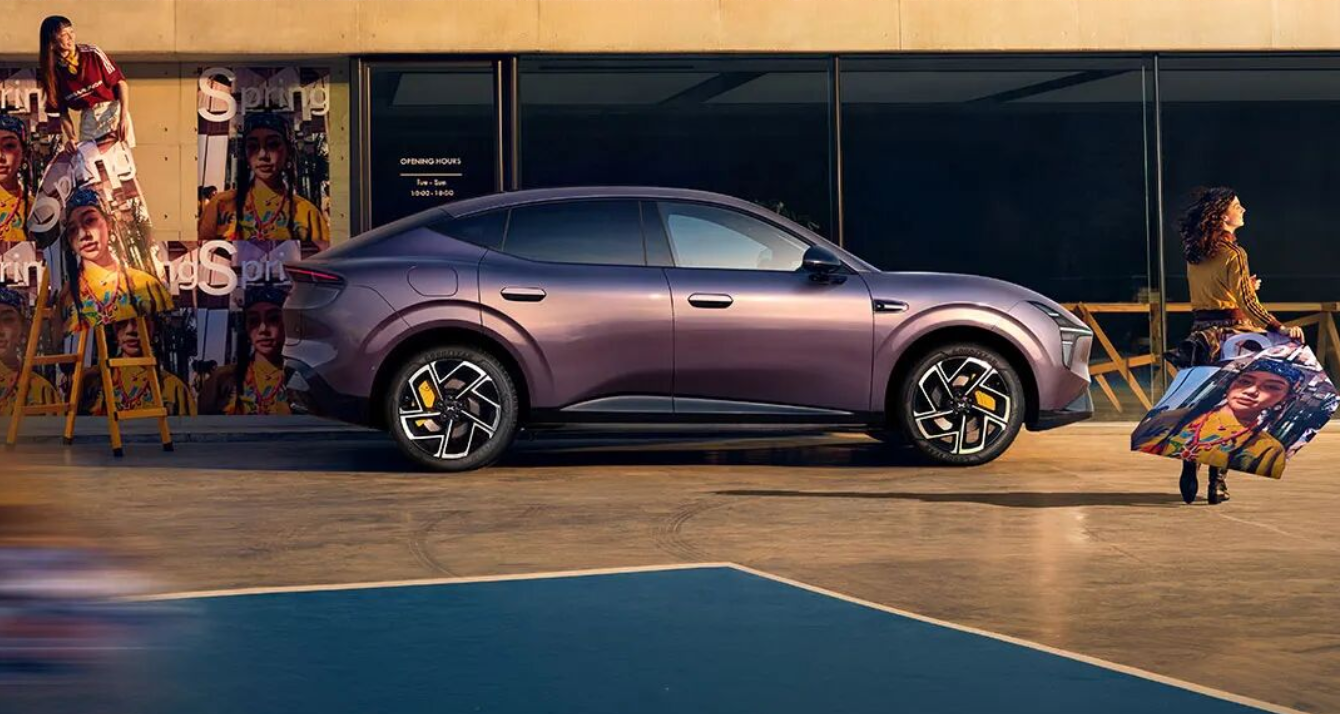
According to Dongchedi rankings, NEV models claimed 9 of the top 10 passenger vehicle retail sales positions in July. The Geely Xingyuan led with 32,306 units, followed by the Leapmotor A10 at 26,424 units, and the [Tesla Model Y](https://www.ex1000.com/en/compare/5769) at 25,158. The sole ICE entry, the [Toyota Corolla Cross](https://www.ex1000.com/en/compare/6428), ranked eighth with just 14,510 units—one step from falling out of the top ten entirely.
From just 4.7% NEV share in 2019 to breaking 60% in 2026, new energy vehicles have shed their "niche" label and become the market's dominant force.
ICE Sales Collapse: The Brutal Data
Per CAAM data, July 2026 passenger vehicle sales totaled 1.345 million units, down 24.7% YoY. Gasoline passenger vehicle sales were 429,000 units, down a staggering 47.2% YoY. For the first seven months, gasoline passenger vehicle sales were 4.123 million units, down 33.9% YoY.
The sharp contraction in gasoline vehicle sales is the primary drag on the overall market. CPCA Secretary-General Cui Dongshu attributed the collapse to a confluence of factors: rising oil prices, macroeconomic headwinds, summer heat suppressing showroom traffic, and June's sales push pulling demand forward. He emphasized that oil price volatility is driving the substitution rhythm—geopolitical conflict disrupting Strait of Hormuz shipping has pushed international oil prices upward, significantly raising operating costs.
Joint venture brands are in deep trouble:
- SAIC Volkswagen July sales: down 42.20% YoY
- GAC Honda July sales: just 11,686 units, down 27.11% YoY
- GAC Toyota Levin July sales: just 101 units, versus monthly averages exceeding 10,000 in 2023—a cliff-like collapse
A GAC Toyota salesperson in Jinan revealed that the Levin and other gasoline models have switched to order-based production, with showrooms no longer displaying inventory. A FAW Toyota salesperson admitted, "This year gasoline vehicles are in terrible shape. The Corolla Cross only moves through deep discounting. Dealers barely make money selling cars anymore—the market has fundamentally changed."
All-Out Price War: 14% Cuts Still Can't Stop the Decline
As NEV penetration broke 60%, gasoline vehicle market share accelerated its contraction, triggering an unprecedented price collapse.
The discount wave began with luxury brands:
- BMW announced official price cuts across 31 models on New Year's Day 2026
- Mercedes GLB and BMW X1 transaction prices fell below 200,000 yuan
- Some older inventory models saw total discounts approaching 50%
- [Audi A4L](https://www.ex1000.com/en/compare/692) entry-level versions dropped to below 180,000 yuan with incentives
Joint ventures fared even worse:
- [Buick Verano](https://www.ex1000.com/en/compare/3751): below 70,000 yuan after discounts
- Volkswagen T-Cross, [Nissan Sylphy](https://www.ex1000.com/en/compare/448), VW Sagitar—all saw major price loosening
- Toyota Camry, VW Passat: typically 30,000–50,000 yuan off
Cui Dongshu's data showed 31 gasoline models announced price cuts in H1 2026, up 7 from the prior year. The average participating model was priced at 225,000 yuan, with average per-vehicle cuts of 32,000 yuan and an average discount of 14.1%.
Yet discounts failed to halt the decline. July gasoline passenger vehicle retail sales were 510,000 units, down 41% YoY. Pure gasoline models plunged 44% YoY, while conventional hybrids fell just 4%—the only resilient segment.
| Segment | July YoY Change | Performance |
|---|---|---|
| Domestic Brand ICE | -46% | Sharpest decline |
| Mainstream JV ICE | -40% | Severely pressured |
| Luxury Brand ICE | -28% | Relative resilience |
| Conventional Hybrid | -4% | Only resilient segment |
Deep Logic: The Rules of Competition Are Being Rewritten
Beneath the surface-level contrast between NEV and ICE fortunes lies a deep restructuring of China's auto industry.
Gasoline vehicles that once dominated through mature manufacturing expertise and brand equity have lost their mainstream halo. NEVs, having developed over years, now command the market through comprehensive advantages in battery/motor/electronics technology, intelligent features, charging infrastructure, and operating costs.
The ICE-era competitive framework—built on brand premium, dealership models, and "big three" mechanical barriers—is being replaced by a new paradigm centered on intelligent experience, supply chain integration efficiency, and rapid local iteration capability.
That said, gasoline vehicles won't disappear entirely. For long-distance travel, extreme off-roading, cold remote regions without charging infrastructure, and commercial heavy-duty transport, ICE advantages remain irreplaceable. Cui Dongshu predicts gasoline vehicles will evolve toward premium specialization and tool-specific applications, with significantly contracted volume but stable demand.
NEV share crossing the 60% threshold signals the end of China's auto industry era of following and imitating, and the beginning of a new era where Chinese players define the rules. For more in-depth analysis, visit EX1000.COM.