2026 is widely recognized as a pivotal year for solid-state battery industrialization. CATL's semi-solid-state batteries have achieved energy density exceeding 500Wh/kg, Sunwoda has announced its first-generation all-solid-state battery for 2026, and BYD's sulfide all-solid-state battery has passed vehicle-grade certification. With advantages of smaller volume, lighter weight, and higher safety, solid-state batteries are moving from laboratories to production lines, poised to fundamentally rewrite the competitive rules of electric vehicles.
In 2026, the global power battery industry reached a milestone moment—solid-state batteries formally transitioned from laboratory concepts to the eve of industrialization. This year is widely recognized across the industry as the inaugural year of solid-state battery mass production, with Chinese companies leading the global race.
The core technical principle of solid-state batteries lies in replacing the liquid electrolyte in traditional lithium-ion batteries with solid electrolyte. This seemingly simple substitution brings revolutionary performance improvements. Based on liquid content in the electrolyte, solid-state batteries can be classified into three levels: semi-solid (5-10% liquid content), quasi-solid (1-5% liquid content), and all-solid (0-1% liquid content). The current industrialization process shows a clear pattern of "semi-solid first, all-solid steadily following."
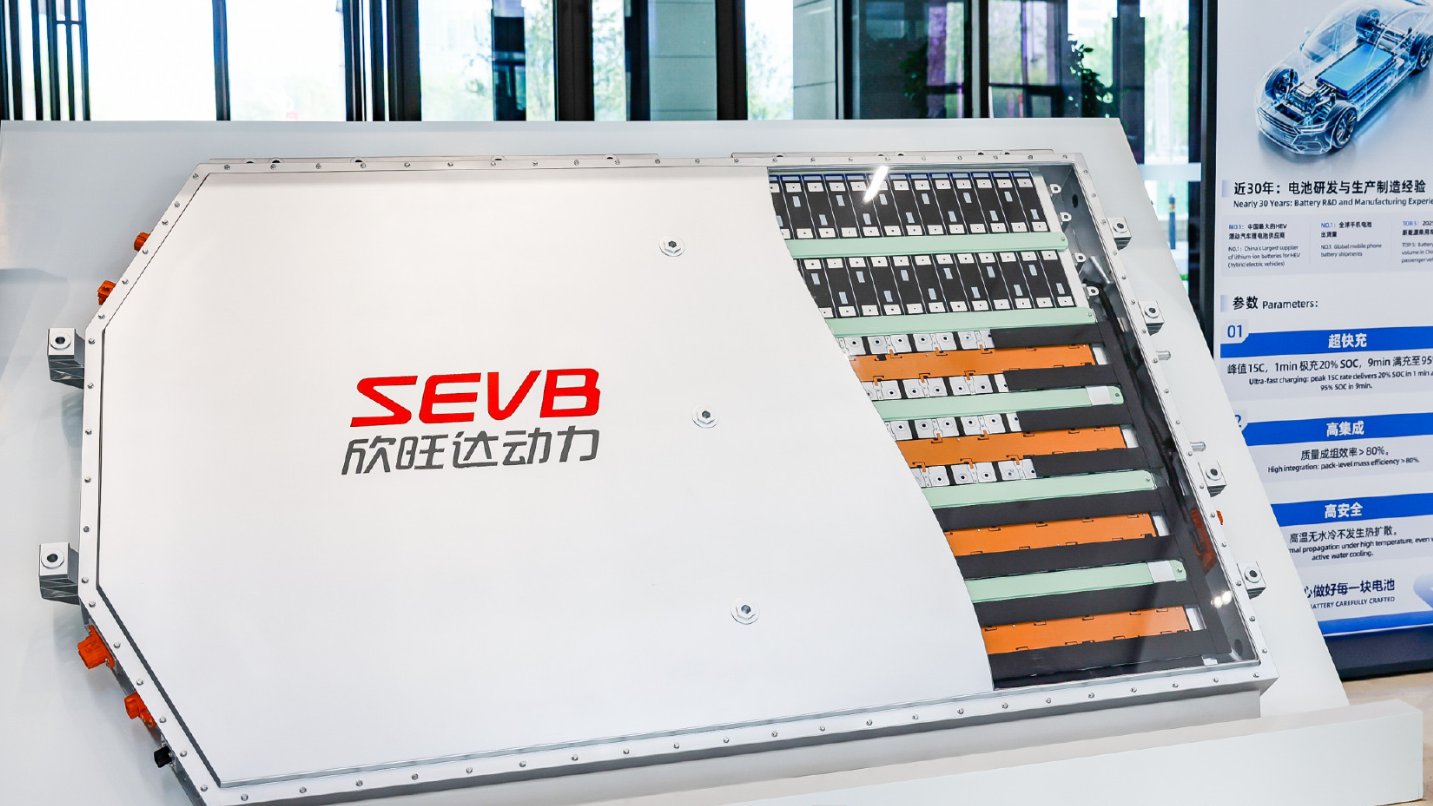
In terms of volume and weight, all-solid-state battery packs demonstrate significant advantages. By removing liquid electrolyte and corresponding separators and packaging materials, solid-state batteries achieve substantially higher energy density. CATL's announced condensed semi-solid-state battery has surpassed 500Wh/kg energy density, far exceeding the 250-300Wh/kg level of current mainstream liquid ternary lithium batteries. This means that under the same range requirements, all-solid-state battery packs can reduce volume by approximately 40% and weight by about 35%. For electric vehicles, this not only means larger interior space but also lower vehicle energy consumption and more flexible chassis layouts.
Safety is the most prominent advantage of all-solid-state batteries. Traditional liquid lithium batteries carry thermal runaway risks under extreme conditions such as high temperatures, overcharging, and penetration—this is the core pain point of EV safety. Solid electrolytes are non-flammable and non-leaking, fundamentally eliminating the risk of thermal runaway. Test data shows that Sunwoda's solid-state battery samples experienced only a 1.8°C temperature rise after steel nail penetration, while traditional ternary batteries would ignite under the same conditions. BYD's sulfide all-solid-state battery passed the full vehicle-grade reliability certification from CATARC in February 2026, demonstrating excellent performance in 200°C heat chamber tests and nail penetration experiments.
Regarding industrialization progress, 2026 represents a critical turning point. CATL's Ningde solid-state battery pilot line has commenced production with stable yields exceeding 95%. Initial battery cells have been sent to NIO, Zeekr, and other automakers for matching tests, with mass production installation planned by the end of 2026. Sunwoda plans to launch its first-generation all-solid-state battery product in 2026 and build a 1GWh production line, with cell capacity increasing to 60Ah and costs controlled below 2 yuan/Wh. SAIC Motor announced that its all-solid-state battery will achieve mass production in 2026. Changan Automobile expects to complete solid-state battery vehicle verification in 2026 and promote gradual mass production of all-solid-state batteries in 2027.
From a technology route perspective, global solid-state battery R&D mainly advances along three paths. The sulfide route has become the mainstream choice due to its high ionic conductivity, adopted by CATL, BYD, Toyota, and Samsung SDI. The oxide route is represented by QuantumScape, using ceramic separators plus anode-free lithium metal solutions. The polymer route is led by LG Energy Solution, planning to achieve semi-solid mass production first in 2026. Chinese companies currently lead globally in the sulfide route, with effective patents accounting for over 60% and production capacity exceeding 70%.
However, the comprehensive commercialization of all-solid-state batteries still faces challenges. First is cost. Current all-solid-state battery mass production line investment reaches 1.5-1.8 billion yuan per GWh, 8-10 times that of liquid batteries, and existing production line compatibility is low and difficult to repurpose. Second is manufacturing complexity. The interface contact problem between solid electrolyte and electrodes is a core technical difficulty, requiring precision hot-pressing equipment and strict environmental control. Third is immature supply chain support. Large-scale supply capabilities for key materials and equipment such as sulfide electrolytes and dry electrodes are still under construction.
Despite these challenges, the industry is generally optimistic about solid-state batteries' prospects. GGII predicts that global solid-state battery installation will exceed 20GWh in 2026 and reach 100GWh in 2027. Jianghai Securities research reports indicate that the global solid-state battery market will exceed 200 billion yuan by 2030, with China entering a rapid growth phase around 2027. More importantly, solid-state battery breakthroughs will bring qualitative changes to the EV experience—range exceeding 1,200 km, 15-minute charging to 80%, full temperature domain adaptability, and lifetime maintenance-free characteristics will fundamentally eliminate consumers' range and charging anxiety.
From a competitive landscape perspective, solid-state batteries are expected to reshape the global power battery market. In the current liquid lithium battery field, Chinese companies already hold over 60% of global market share. In solid-state batteries as the next-generation technology, Chinese companies continue to lead, with CATL, BYD, Sunwoda, WeLion New Energy, and others forming a complete R&D and industrialization lineup. Although Japanese and Korean companies have deep accumulation in sulfide technology, they face challenges in industrialization speed and cost control. European and American companies rely more on startups like QuantumScape, with relatively lagging commercialization timelines.
In 2026, all-solid-state batteries are transforming from "future technology" to "impending reality." Smaller, lighter, safer—these three keywords represent not just technical parameter improvements but signify that the EV industry is moving toward its next era. When solid-state batteries truly achieve large-scale vehicle installation, today's range competition and charging anxiety will become history, and the story of the automotive industry will turn to a completely new chapter.