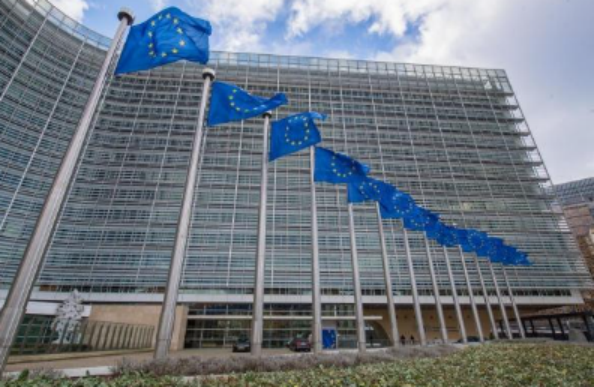
The second regular meeting of the China-EU Trade and Investment Consultation Mechanism was held in Beijing from October 8 to 9. The two sides reached an understanding on hybrid vehicle trade and agreed to advance price undertakings and review procedures in the electric vehicle anti-subsidy case. On October 14, Changan, Leapmotor, Dongfeng and GAC successively expressed support, but their European focuses vary: Changan stressed localization "in Europe, for Europe"; Leapmotor said it has established more than 1,000 outlets in 36 countries and entered local manufacturing; Dongfeng focuses on compliance and taking hybrid technology overseas; and GAC is deepening local cooperation. Industry insiders believe trade costs remain a key variable in automakers' European investment decisions.
China-EU Consultations Signal Easing as Four Automakers Chart Different Paths
From October 8 to 9, the second regular meeting of the China-EU trade and investment consultation mechanism was held in Beijing. The two sides reached an understanding on hybrid vehicle trade and agreed to continue advancing the price undertaking and related review procedures in the electric vehicle anti-subsidy case. On October 14, Changan Automobile, Leapmotor, Dongfeng Motor and GAC Group issued statements in succession, expressing support for the outcomes of this round of consultations. Previously, the China Association of Automobile Manufacturers, BYD, Chery and others had already made statements.
Judging from the statements of the four automakers, support for the consultation outcomes is the common tone, but their footholds in the European market differ: Changan emphasizes the localization philosophy of “In Europe, for Europe”; Leapmotor relies on its channel network and local manufacturing as two pillars; Dongfeng places its compliance system and overseas expansion of hybrid technology side by side; and GAC highlights deeper collaboration with local partners.
Consultation Outcomes: Hybrid Understanding and Price Undertaking in Parallel
Two developments from this round of regular meetings deserve to be viewed separately. The first is the understanding reached on hybrid vehicle trade; the second is the agreement to continue advancing the price undertaking and related review procedures in the electric vehicle anti-subsidy case. The former points to trade arrangements for the hybrid category, while the latter is a procedural continuation of the existing dispute in the battery electric vehicle segment.
It is worth noting that both outcomes are progress at the consultation level rather than a final settlement of the dispute. The source material also explicitly points out that consensus in consultations does not mean the relevant disputes have been fully resolved; subsequent policy implementation and changes in trade costs will still affect Chinese automakers’ investment and operating decisions in Europe.
Changan: Anchoring Localization with “Three Principles”
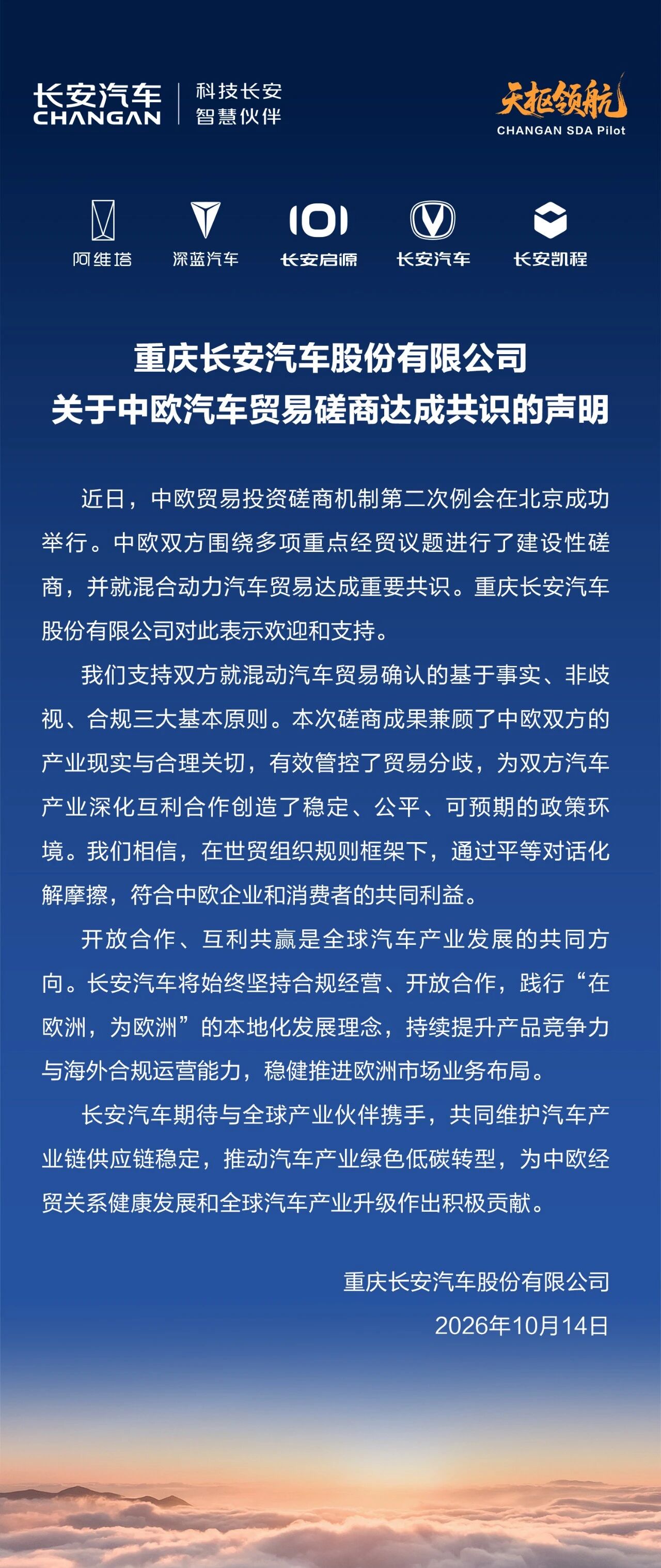
Changan Automobile’s statement focuses on principles and philosophy. The company said it supports the three principles confirmed by both sides—fact-based, non-discriminatory and compliant—and stated that it will continue to practice the localization development philosophy of “In Europe, for Europe,” enhancing product competitiveness and overseas compliance operations capabilities.
This statement links improvements in the trade environment with its own localization investment in Europe: building R&D, production and operations capabilities locally is seen as a long-term solution for responding to fluctuations in trade policy.

Leapmotor: Over 1,000 Outlets in Parallel with Local Manufacturing
Among the four, Leapmotor provided the most specific European operating data. The company said it has established more than 1,000 sales and service outlets in 36 European countries and has entered the stage of local manufacturing; it will continue to strengthen industrial collaboration with global partners.
Channel scale and manufacturing implementation form the two pillars of its European layout. For brands entering the European market through trade, the progress of local manufacturing is directly related to exposure to tariffs and trade costs, which also makes Leapmotor relatively more sensitive to the progress of consultations.

Dongfeng and GAC: Compliance as the Bottom Line, with Different Paths
Dongfeng Motor’s statement focuses on risk and system building. The company emphasized that it will continue to improve its overseas business compliance system, advance the overseas expansion of new energy and hybrid technologies and localized industrial collaboration, and at the same time strengthen overseas operational risk management. Listing the overseas expansion of hybrid technology separately echoes the direction of this round of consultations in reaching an understanding on hybrid vehicle trade.
GAC Group stated that it will take the consensus reached in these consultations as an opportunity to continue deepening its presence in the European market, deepen cooperation with local partners, and adhere to lawful and compliant operations. Its statement focused on the continuation and expansion of cooperative relationships rather than the advancement of any single business metric.
What the two companies have in common is that they place "compliance" in a prominent position. Against the backdrop of trade remedy proceedings still being underway, compliant operations are both a prerequisite for market entry and foundational work for responding to policy uncertainty.

After the Consensus: Trade Costs Remain a Variable in Investment Decisions
From an industry perspective, the concentrated statements by multiple automakers within a single week reflect the Chinese auto industry's widespread demand for a stable China-EU trade relationship. For companies expanding overseas, the predictability of trade policy directly affects the pace and scale of localized investment—plant construction, channel development, and supply chain support are all long-cycle investments that require a relatively stable policy environment as a prerequisite.
It should be clarified, however, that these results remain at the level of understandings and procedural progress. The price undertaking negotiations and related reviews in the electric vehicle countervailing duty case are still ongoing, and the final arrangements will determine the trade costs for specific models. For companies that have already established a presence in Europe, this means investment decisions need to retain flexibility; for companies still watching from the sidelines, the implementation of trade arrangements for hybrid vehicle categories may serve as a reference for their next approach to market entry.
Signals of easing in China-EU auto trade have already appeared, but translating them into a long-term operating environment that companies can rely on still depends on the details and pace of subsequent policy implementation. The differences in the approaches taken by the four automakers' statements also reflect, to some extent, the different stages they each occupy in Europe: from philosophical declarations and the implementation of channels and manufacturing to the building of compliance systems, the European narrative of Chinese automakers is shifting from "selling cars" to "operating."