Geely Holding announced sales of 3,002,640 vehicles in the first three quarters of 2026, a record high; NEV sales reached 1,792,617, up 12.6% year on year, with a penetration rate of 59.7%. Among them, Geely Auto recorded cumulative sales of 2,235,481 vehicles, including 1,326,364 NEVs, up 14% year on year. NEVs accounted for 71.5% of Lynk & Co's sales, while Zeekr delivered 288,404 vehicles, up 101% year on year. Overseas exports totaled 797,670 vehicles, up 169% year on year, of which NEV exports reached 484,086, accounting for 61% of total exports, indicating that its growth momentum is shifting from scale expansion to structural upgrading.
On October 15, Geely Holding Group announced that in the first three quarters of 2026, cumulative sales reached 3,002,640 units, a record high; NEV sales were 1,792,617 units, up 12.6% year on year, with NEV penetration reaching 59.7%. Against the backdrop of price wars and fluctuations in the global trade environment, the highlight of this scorecard is no longer just scale, but the shift in the internal sales structure—the proportions of NEVs, high-end brands, and overseas exports all rising simultaneously.
Despite modest total growth, NEVs become the main growth engine
As the core operating entity, Geely Automobile Holdings Limited recorded cumulative sales of 2,235,481 units in the first three quarters, up 3% year on year; cumulative NEV sales were 1,326,364 units, up 14% year on year, with a penetration rate of 59.3%. Steady modest growth in overall scale and double-digit NEV growth mean the switch from an ICE base to a NEV mainstay was completed while maintaining scale stability, with incremental growth mainly contributed by NEV products.
By brand, Geely China Star recorded cumulative sales of 873,776 units in the first three quarters, while Geely Galaxy recorded 877,184 units, almost on par. The former provides scale and cash flow support for the transformation, while the latter undertakes NEV incremental growth and brand upscaling, forming a dual pillar of "ICE + NEV." This parallel structure allows the Geely brand to defend its base in the mainstream market while opening up NEV space.

High-end matrix: Lynk & Co structure reshaped, Zeekr doubles year on year
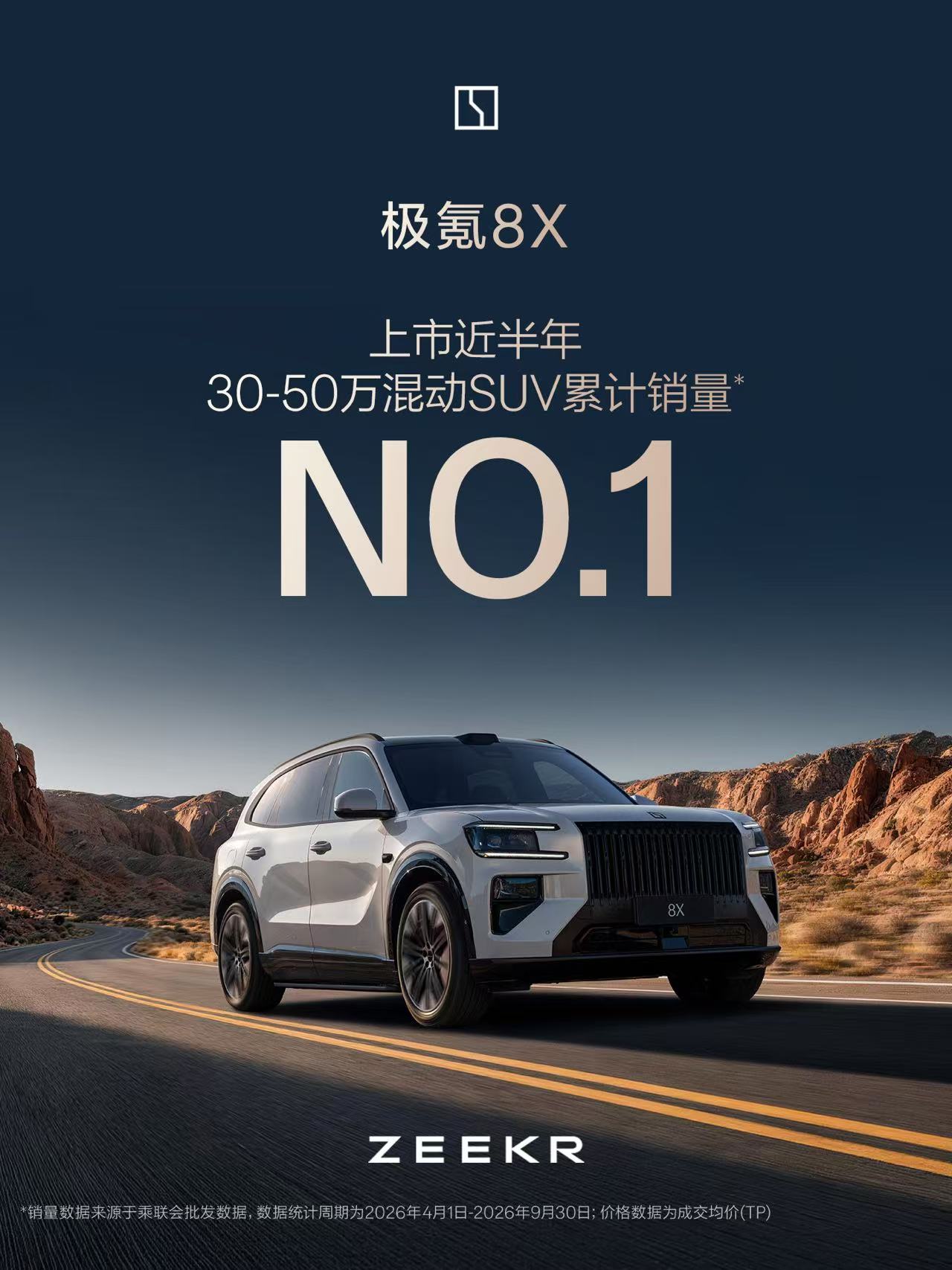
Structural changes in the high-end segment are more evident. Lynk & Co recorded cumulative sales of 196,117 units in the first three quarters, with NEVs accounting for 71.5% of sales. This ratio not only reflects changes in product structure but also corresponds to a reconstruction of user perception, channel capabilities, and brand positioning. Zeekr delivered 288,404 units cumulatively in the first three quarters, up 101% year on year, achieving doubled growth in the high-end NEV market above RMB 300,000, which to some extent shows that its system capabilities in pure electric platforms, smart cockpits, intelligent driving, and three-electric technologies are being converted into market recognition.
From Galaxy and China Star to Lynk & Co and Zeekr, Geely Holding Group has formed a brand echelon from mainstream to high-end. The brands are differentiated by price band while also creating synergies in technology, supply chains, channels, and user operations. This matrix structure has stronger cyclical resilience than single-brand operations and also shifts growth momentum from "scale-driven" to "structure-driven."
Export structure shifts: NEV share rises to 61%
Globalization is another main thread in this period's data. In the first three quarters, Geely Automobile's overseas export sales were 797,670 units, surging 169% year on year; in September alone, exports were 106,685 units, with overseas exports exceeding 100,000 units for four consecutive months, and the scale effect is beginning to emerge.
More noteworthy is the export structure: NEV exports were 484,086 units, accounting for 61% of total exports, a significant increase from the same period last year. This means the main body of overseas sales has shifted from ICE vehicles to NEV products, with the share of high-value models rising in tandem; overseas growth does not rely on volume from low-priced ICE vehicles. Despite EU tariff barriers and a complex and volatile global trade environment, exports have maintained rapid growth, reflecting continuous optimization of its product structure, operational capabilities, and localized layout. From product going global to brand going global, and further to technology, supply chain, and ecosystem going global, its globalization is entering a stage of "system output."

Multi-brand global synergy; commercial vehicles emerge as a new growth driver
Overseas system capabilities also stem from multi-brand global synergy. Volvo Cars' global cumulative sales in the first three quarters reached 466,000 units, including 237,000 new energy vehicles, a penetration rate of 50.7%; Polestar's cumulative sales were about 45,000 units, with third-quarter sales exceeding 14,000 units, its best third-quarter performance in brand history; Proton's cumulative sales were about 161,000 units, surpassing its full-year sales in 2025 and setting a new high for the same period since partnering with Geely in 2017.
The commercial vehicle segment has become a new growth point. Geely Farizon New Energy Commercial Vehicles' cumulative sales in the first three quarters were about 149,000 units, up 38.8% year on year; in September, the brand made its debut at the 2026 Hannover Motor Show, entering the European market with a "product + ecosystem" model. Its light commercial vehicle products made it the industry's first new energy commercial vehicle brand to achieve monthly sales of more than 20,000 units in the light commercial vehicle segment. With passenger vehicles and commercial vehicles advancing in parallel and domestic and overseas operations working in synergy, its diversified layout has stronger resilience against cycles.
Structural indicators are more indicative than sales figures
Under the strategic guidance of the Taizhou Declaration and the 2030 strategic goal of "One Geely, Comprehensive Leadership," Geely Holding's assessment focus has shifted from purely sales scale to structural indicators such as new energy penetration, overseas export share, premium brand share, and commercial vehicle incremental growth. In the first three quarters, a 59.7% new energy penetration rate, 61% new energy export share, 71.5% new energy share for Lynk & Co, and Zeekr's 101% year-on-year growth together provide quantitative evidence of this shift.
Three million units is a milestone and also a starting point for observation. As the new energy transition deepens and global system capabilities are further unleashed, whether it can maintain the pace of export structure upgrading amid uncertainties in tariffs and the trade environment will be a variable more worth tracking in the next stage.