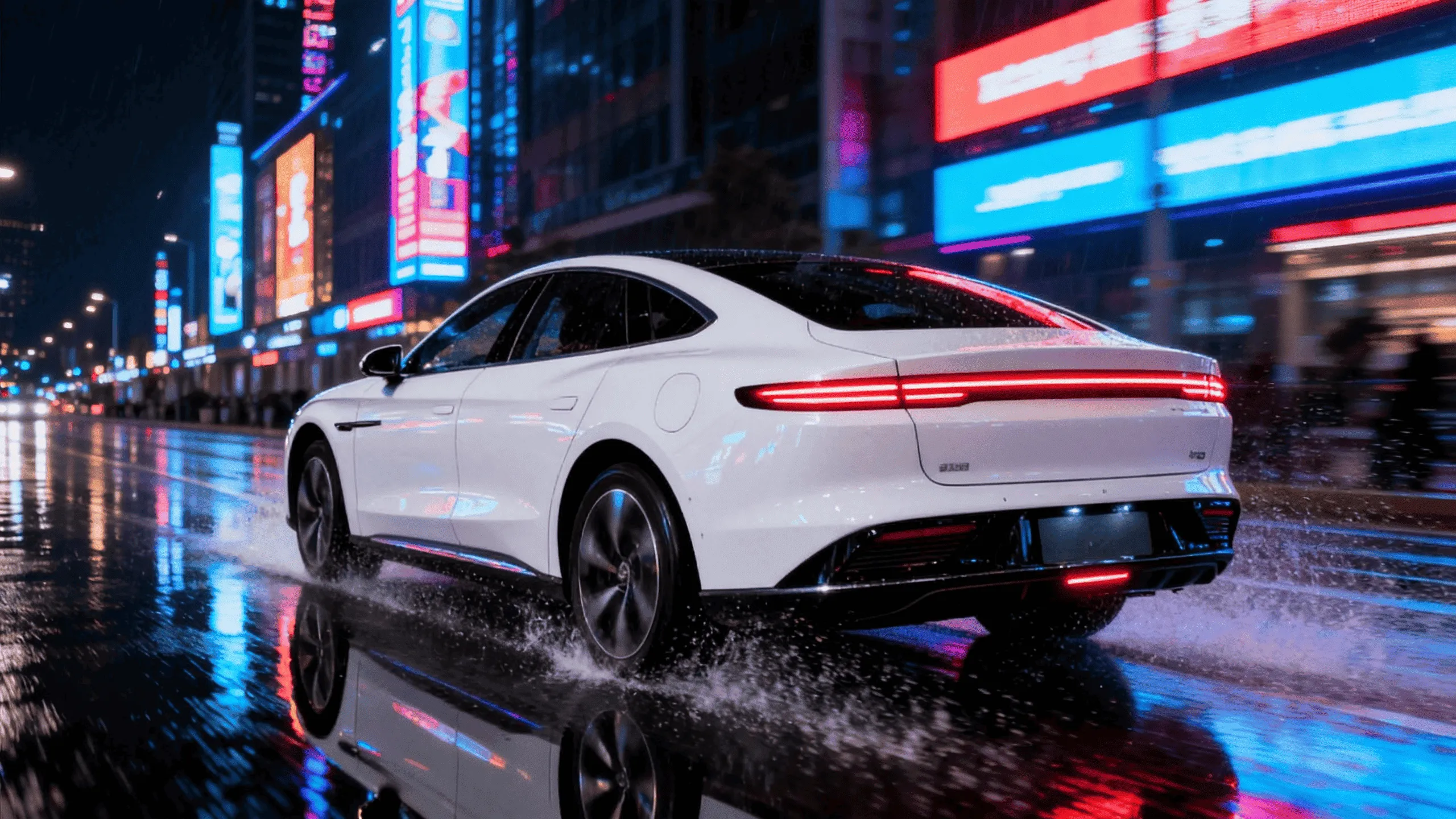
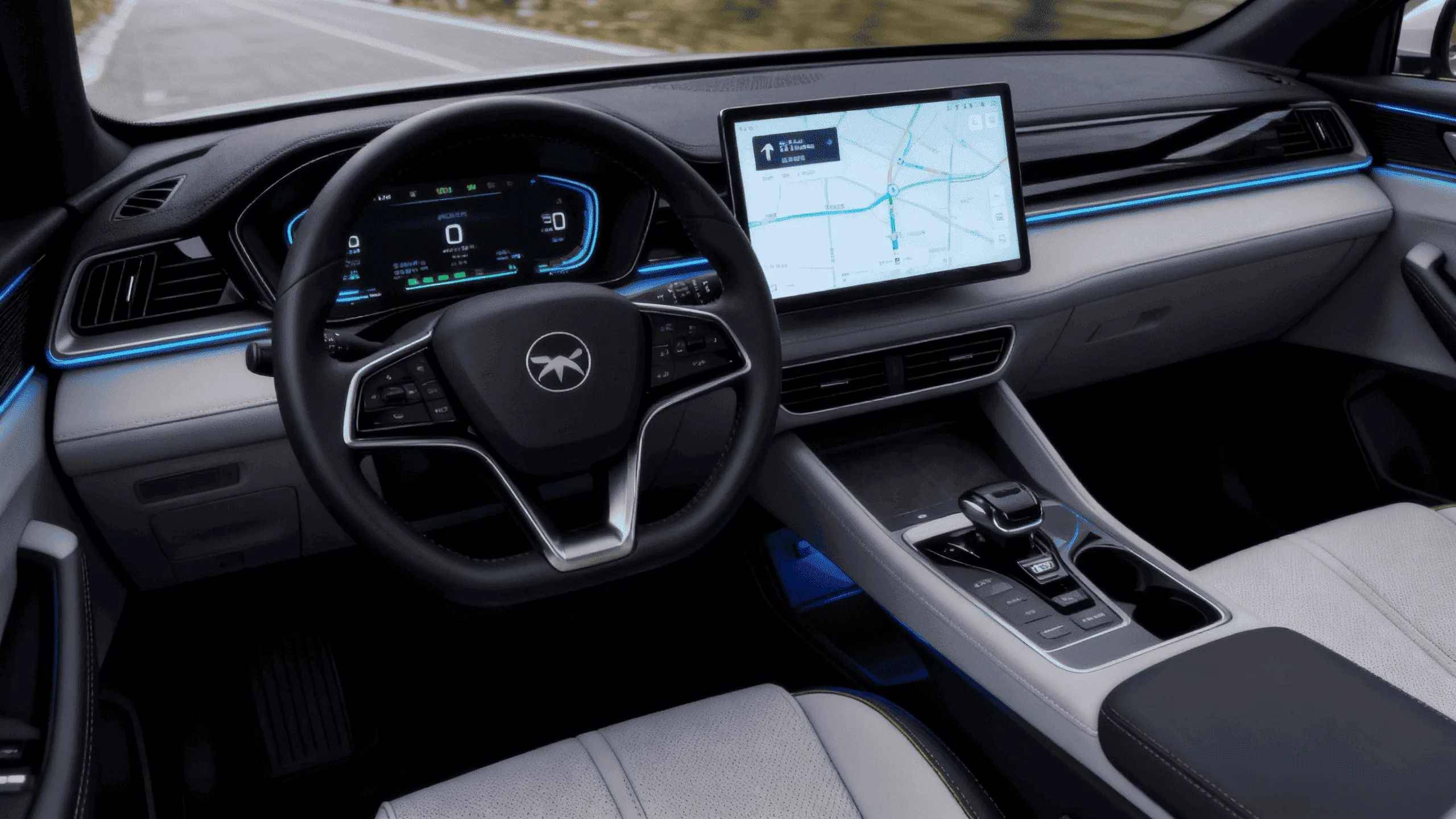
Li Auto CEO Li Xiang announced that the Li i9 will be launched on September 16, becoming the flagship debut model of Li Auto's second-generation pure electric platform and positioned as a new-form family flagship SUV. Official figures disclosed in the same period show 37,679 vehicles delivered in August; the Li i6 ranked among the top three in sales for models priced above 200,000 yuan for seven consecutive months; and four core technologies were ready simultaneously for the first time. The new car measures 5225×1970×1752 mm, with a wheelbase of 3168 mm, a drag coefficient of 0.215, dual-motor all-wheel drive and a 101 kWh battery, and a CLTC range of 680 km or 705 km. Market performance still awaits delivery validation.
On September 10, Li Xiang, CEO of Li Auto, announced via his personal Weibo that the Li Auto i9 will officially launch on September 16. Li Xiang described the arrival of the vehicle as Li Auto overcoming three major challenges, and said it “embodies 11 years of Li Auto's self-developed technology and product thinking.” Also disclosed at the same time were product specifications and August delivery data, providing new coordinates for observing the pace of Li Auto's pure electric strategy.
Launch Timing: Debut Flagship of the Second-Generation Pure Electric Platform
From the product lineup perspective, the Li Auto i9 will appear as the debut flagship of Li Auto's second-generation pure electric platform, positioned as a “new-form family flagship SUV.” This means the i9 is not merely an additional model, but also a vehicle through which Li Auto centrally showcases its self-developed achievements on a pure electric platform. Li Xiang called it “a submitted 100-point answer sheet,” a statement with clear internal positioning overtones; for industry observers, what is more worth unpacking are the three sets of data supporting this positioning: sales, technology, and infrastructure.

The “Three Major Challenges” and the Sales Foundation
Li Xiang summarized the three major challenges as: walking on “two legs” with extended-range and pure electric; insisting on self-development of core technologies and successfully putting them into vehicles; and insisting on being itself. The three correspond respectively to product route, technology path, and brand positioning. Among them, “walking on two legs” already has phased data for reference.
According to Li Xiang, the Li Auto i6 has ranked among the top three in sales for all models above 200,000 yuan for seven consecutive months, and the Li Auto i8 and the new-generation MEGA have exceeded sales expectations. According to official Li Auto data, August deliveries reached 37,679 units; in the first half of the year, it ranked first in sales among Chinese brands in the new energy vehicle market at 200,000 yuan and above. This set of data forms Li Auto's base for advancing pure electric products: on one hand, extended-range products still carry the main delivery scale; on the other hand, pure electric models are beginning to establish a presence in the high-end market.
In terms of the charging network, Li Auto disclosed that on the 18 busiest national highways across the country, there is on average one Li Auto 5C supercharging station every 122 kilometers. For long-distance pure electric travel scenarios, the density of supercharging along highways is one of the important variables in users' decisions. Li Auto's choice to emphasize this data before the launch is intended to provide an infrastructure-side explanation for the experience of using its pure electric products.
Four Core Technologies Ready Simultaneously for the First Time
At the technical level, Li Xiang revealed that Li Auto's R&D investment in the past three years has been more than 10 billion yuan annually, and four core technologies—self-developed contract-manufactured batteries, self-developed and self-manufactured motors, the Mach M100 chip, and intelligent driving models—are ready simultaneously for the first time.
From the technical composition, the four items cover the three-electric systems, self-developed chips, and intelligent driving software, pointing to three dimensions: cost control, performance output, and intelligent experience. Among them, the phrase “ready simultaneously for the first time” indicates that these technologies had not previously been implemented together on one product. It should be pointed out that there is still a distance between technology being “ready” and its stability and cost performance after scaled delivery, and ultimately it still must be verified by delivery data and user feedback.

Product Specifications: Dimensions, Drag Coefficient, and Range
According to information released by Li Xiang, the main specifications of the Li Auto i9 are as follows:
| Item | Specification |
|---|---|
| Model positioning | New-form family flagship SUV |
| Body dimensions | 5225×1970×1752mm |
| Wheelbase | 3168mm |
| Drag coefficient | 0.215 |
| Powertrain | Dual-motor all-wheel drive |
| Battery capacity | 101kWh |
| CLTC pure electric range | 680km / 705km |
For a large family SUV with a length exceeding 5.2 meters and a wheelbase exceeding 3.1 meters, the simultaneous presence of a 0.215 drag coefficient and a spacious body means that a balance must be struck among styling, space, and energy consumption. Dual-motor all-wheel drive combined with a 101kWh battery pack provides two CLTC pure electric range figures, 680km and 705km, usually related to differences in tires, wheels, or trim versions; the official side has not yet explained the reasons for the difference.
Observation: True Quality Awaits Delivery Test
From the timeline, the Li Auto i9 is scheduled to launch on September 16, at a stage when Li Auto's pure electric product matrix is gradually taking shape. Its strategic significance lies in that Li Auto needs to prove that pure electric models can independently support sales beyond the extended-range base, rather than merely serving as a supplement to the product line.
What can currently be confirmed is: August deliveries of 37,679 units provide a scale foundation; the market performance of the i6, i8, and the new-generation MEGA provides preliminary validation for “extended-range and pure electric in parallel”; and the four core technologies being ready simultaneously for the first time offers technological imagination. As for whether the i9 can truly help Li Auto overcome the “three major challenges,” launch is only the starting point. Subsequent order performance, production ramp-up, and actual delivery pace will be the next set of key data for testing the true quality of its pure electric strategy.