In 2026, Geely Galaxy TT, together with CATL and CATARC Automotive Test Center, completed a real-person in-vehicle, single-cell thermal runaway test under conditions of 40°C high temperature, 96% SOC, and internal heating trigger, with the result being no fire, no explosion, and no smoke. After GB 38031-2025, the new national standard, set "no fire, no explosion" as a mandatory baseline, tests beyond the national standard such as gunshots, fire, and high-altitude drops have increased. Drawing on Ouyang Minggao's judgment of "whole-process safety," this article discusses the boundary between extreme testing and validation under real-world conditions.
1. Real Person In-Vehicle, Single-Cell Thermal Runaway: A "Person" Is Added to the Test Variables
In 2026, Geely Galaxy TT, together with CATL and CATARC Automotive Test Center, completed a real-person in-vehicle, real-vehicle single-cell thermal runaway test. The test conditions were a 40°C high-temperature environment, 96% SOC fully charged state, and thermal runaway triggered by direct internal heating of the cell. The final result was no fire, no explosion, and no smoke, with vehicle occupants feeling nothing. The test was executed by CATARC Automotive Test Center and passed the "China Electric Vehicle Fire Safety Index Thermal Propagation Protection Performance Test and Evaluation Regulations 2026 Edition," earning a five-star rating.
What is noteworthy is not the "real person in-vehicle" format itself, but the combination of three conditions: high temperature, full charge, and internal heating. Compared with conventional validation at room temperature and low SOC, this set of parameters is closer to the extreme operating conditions of a user driving for a long time after summer exposure and then recharging. Another easily overlooked detail is "no smoke." The national standard sets no quantitative threshold for smoke after thermal runaway, yet high-temperature smoke containing hydrogen fluoride and carbon monoxide is often the direct cause of casualties in real fires. Writing "no smoke" into the test objectives is equivalent to raising the safety threshold from "not burning" to "not harming."

2. The New National Standard Sets the Baseline, and "Beyond the National Standard" Becomes Differentiated Competition
The industry background of this test is GB 38031-2025 "Safety Requirements for Power Batteries for Electric Vehicles," implemented on July 1, 2026. Compared with the old standard, which only required an alarm signal within 5 minutes after thermal runaway, the new standard requires no fire and no explosion after thermal runaway, and that smoke not cause harm to occupants; the trigger methods add internal heating in addition to external heating and nail penetration, and the nail penetration speed is narrowed from 0.1–10 mm/s to 0.1–1 mm/s; for the first time, a bottom impact test is included, in which a 30 mm steel ball impacts the bottom of the battery pack with 150 J of energy, and there must be no leakage, no fire, and no explosion; for fast-charging batteries, an external short circuit test must also be completed after 300 fast-charging cycles.
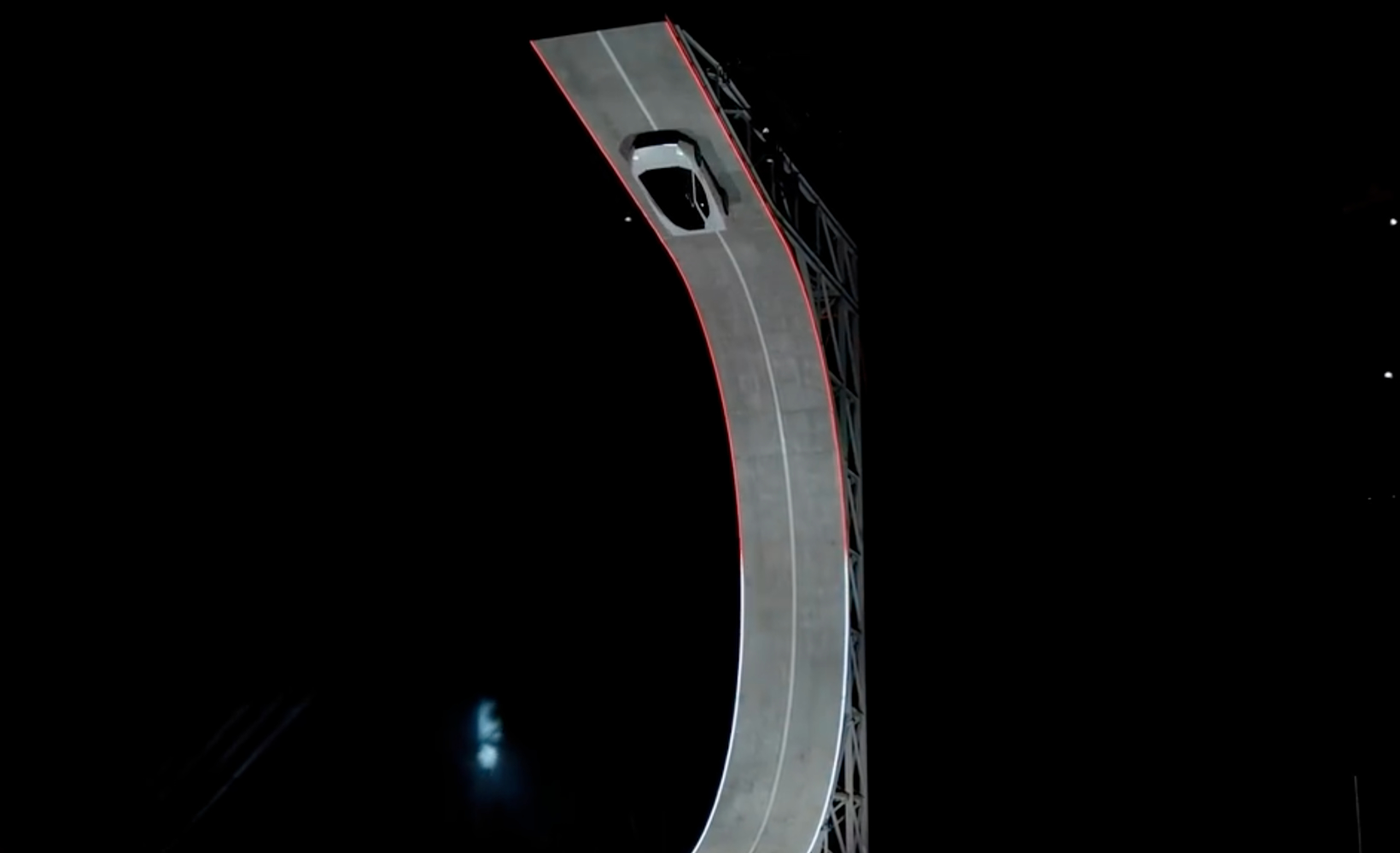
When "no fire, no explosion" changes from corporate promotional language into a mandatory baseline, companies pursuing differentiation naturally turn to more extreme demonstrations: gunshots, fire, whole-vehicle immersion, high-altitude drops, and bottom nail penetration after the battery pack is "covered in bruises." Geely Galaxy TT is not the first case of "involution" in testing. Testing methods are becoming increasingly extreme, which in essence is a safety selling-point competition above the new national standard and a direct projection of consumers' anxiety about spontaneous combustion.
3. Harsher Testing Does Not Equal Greater Safety
It is necessary to distinguish two types of "beyond national standard": one is visual-impact violent testing, and the other is engineering validation close to real failure paths. The former has greater communication value than engineering value—a battery being hit by a bullet, surrounded by fire, or dropped from a height has an extremely low probability of occurring in real road environments. The latter corresponds to clear failure causes: bottom impact corresponds to road collisions, short circuits after fast-charging cycles correspond to aging risks brought by long-term fast charging, and thermal propagation under high-temperature full charge corresponds to extreme summer conditions.
Transparency is another hurdle. For the same nail penetration test, whether the nail diameter is 3 mm or 6 mm, how deep it penetrates, and at what temperature and SOC it is conducted can lead to significantly different results. Some companies disclose complete temperature, SOC, trigger method, and observation duration, while others provide only edited videos. For consumers, understanding the test conditions is more informative than seeing the words "challenge successful."

4. From Single-Point Passing to Whole-Process Safety
At the 2026 World Power Battery Conference, Ouyang Minggao, an academician of the Chinese Academy of Sciences, listed "whole-process battery safety" as the foremost trend in the power battery industry. Its connotations include three dimensions: full-chain prevention and control from thermal runaway causes to occurrence and propagation; full-level protection from materials, cells, and systems to the whole vehicle; and full-lifecycle management from design and manufacturing to use.
Systematic approaches already have corresponding practices. CATL's NP3.0 thermal runaway protection technology adopts multiple layers: at the cell level, optimizing materials and electrolyte formulas; at the module level, using thermal insulation materials to block propagation; at the system level, designing pressure relief channels to discharge high-temperature gases; and at the vehicle level, having the BMS monitor cell voltage and temperature in real time and provide early warnings. Although BYD's Blade Battery, GAC Aion's Magazine Battery, and Great Wall's Dayu Battery have different technical routes, their approaches are similar; AI analysis of operating data is used to provide early warnings before thermal runaway occurs, shifting protection from passive to predictive.
But systematic approaches still have unresolved issues: passing a single test does not equal safety across the full lifecycle. The new national standard requires a short circuit test after 300 fast-charging cycles, but what about after 500 or 1,000 cycles? The current national standard mainly covers the manufacturing and testing sides, while validation and regulation in the use phase still need to be supplemented. For the industry, the next stage of competition may no longer be "whose test is harsher," but who can disclose test conditions, data, and full-cycle performance more fully.