From January to July 2026, China's NEV penetration rate reached 51.2%, with July alone breaching 60%. Yet a significant number of consumers remain hesitant at the door of electrification. This article breaks down the real decision-making ledger of EV holdouts across five dimensions: operating costs, insurance, residual value, charging conditions, and safety perception.
Milestone and Divide: More Than Half of New Cars Are Now Green-Plated
According to CAAM data, from January to July 2026, new energy vehicles accounted for 51.2% of new car sales in China, officially crossing the "half the market" watershed. In July alone, the share exceeded 60% for the first time.
While industry narratives grow more certain about "internal combustion vehicles exiting," hesitation and wait-and-see attitudes remain common in real purchasing decisions. As one owner who bought a Volvo XC60 gasoline car in 2019 put it: "It's a good thing my car still has a few years left. I'm not at the point where I have to replace it yet, otherwise I'd be really torn about what to get."
Layer One: The Mileage Threshold for Savings
When discussing EV benefits, "low operating costs" is usually the first selling point. With home charging, energy cost is less than 0.1 yuan per km, compared to roughly 0.5-0.7 yuan per km for gasoline cars. On the surface, EVs seem like the better deal no matter how you calculate.
But few actively mention the prerequisite: you have to drive enough.
The economic efficiency of EVs is not universal; there is a clear break-even line. The more you drive, the more worthwhile it becomes; the less you drive, the more likely you are to lose money. Rolling together the net purchase price difference, extra insurance over five years, saved maintenance fees, and potential extra residual value loss, most models need to recover 20,000-30,000 yuan through fuel savings. At 0.4 yuan saved per km, that requires driving 50,000-70,000 km — averaging 10,000-15,000 km per year over five years to break even.
| Factor | EV | Gasoline Car | Note |
|---|---|---|---|
| Energy cost (home charging) | <0.1 yuan/km | >0.5 yuan/km | EV advantage significant |
| Energy cost (public fast charging) | 0.2-0.3 yuan/km | >0.5 yuan/km | Gap narrows substantially |
| Annual insurance | +15-20% | Baseline | High-end models up to +20-30% |
| Annual maintenance | Save hundreds to 1,000+ yuan | Baseline | No engine oil, filters, etc. |
| 3-year residual value | 44.8% | 46.07% | Gap narrowed to ~1.3 pp |
Without home charging and relying solely on public fast charging, cost per km rises to 0.2-0.3 yuan, significantly shrinking the gap with gasoline cars and pushing the break-even mileage even higher. This means for users with very low annual mileage (e.g., a few thousand km), the "money-saving advantage" of EVs is hard to realize.
Such users are not rare: urban office workers with 3-5 km one-way commutes, second cars used only for grocery runs and school pickups, families racking up less than 8,000 km a year. For them, EV fuel savings may not offset the extra purchase cost, higher annual premiums, and lower resale value.
Layer Two: Insurance, Repairs, and Residual Value
If the mileage calculation is the "visible ledger," it's the factors beneath the surface that truly cause hesitation.
Insurance is the first major hurdle. Industry data shows that average premiums for NEVs of the same price point are generally 15-20% higher than gasoline cars. The more expensive the model, the more intelligent features it has, and the higher the parts-to-vehicle price ratio, the more pronounced the difference. Some high-performance models see premium increases of 20-30%.
The reason is straightforward: the "three-electric" system (battery, motor, controller) is costly, with the battery pack alone accounting for 30-50% of vehicle cost. High integration means collisions often require whole-unit replacement rather than partial repair, resulting in massive single claims. Combined with inherently higher claim rates and some commercial vehicles insured as private cars, insurers have no choice but to raise premiums.
A 200,000 yuan car with a 2,000 yuan annual premium difference adds up to over 10,000 yuan across five or six years — enough to offset a large portion of fuel savings.
Maintenance and residual value follow closely. Gasoline cars have a century of development behind them with highly mature parts systems and transparent pricing. EVs' three-electric systems have high technical barriers, with most servicing limited to 4S dealerships.
An easily overlooked detail is tires. Pure EVs are typically 200-400 kg heavier than same-class gasoline cars, with high instantaneous torque placing greater load on tires and causing faster wear. EV-specific tires with low rolling resistance compounds and built-in noise-canceling features also cost more. Industry data shows EV tires need replacement after about 30,000-50,000 km in city conditions, versus 60,000-80,000 km for gasoline cars.
On residual value, changes have been rapid. Data from the China Automobile Dealers Association and Jingzhengu for H1 2026 shows gasoline cars' three-year average retention rate at 46.07%, versus 44.8% for NEVs — a gap narrowed to approximately 1.3 percentage points.
However, this narrowing is partly due to gasoline car residual values themselves declining significantly (having reached 67.6% in 2022). At five years, battery degradation and technological iteration may widen the EV gap again. Brand and model divergence is significant: some cars retain value well after three years, while others depreciate heavily.
Layer Three: Charging Constraints and Safety Anxiety
If insurance, maintenance, and residual value are still "money issues," some concerns cannot be solved by spending alone.
Safety anxiety is an inescapable hurdle. While gasoline cars also catch fire, public concern about NEV fires is significantly higher. Battery thermal runaway differs from traditional fuel fires: rapid spread, extreme temperatures, high re-ignition risk. The amplification effect of social media turns every accident into a potential factor for decision rejection.
Industry progress on thermal management, insulation, flame retardancy, and structural protection is real, with most mainstream brands matching or exceeding gasoline car crash test performance. But the gap between technological progress and public perception updates is significant — consumers may remember old-model fire videos from years ago. This cognitive lag is itself a tangible decision cost.
Charging is another hard threshold. The "ultimate savings" premise of EVs is owning a private charging pile. But many owners live in older complexes without fixed parking or rent their homes. Difficult property management approvals and insufficient grid capacity mean smooth installation is far from guaranteed.
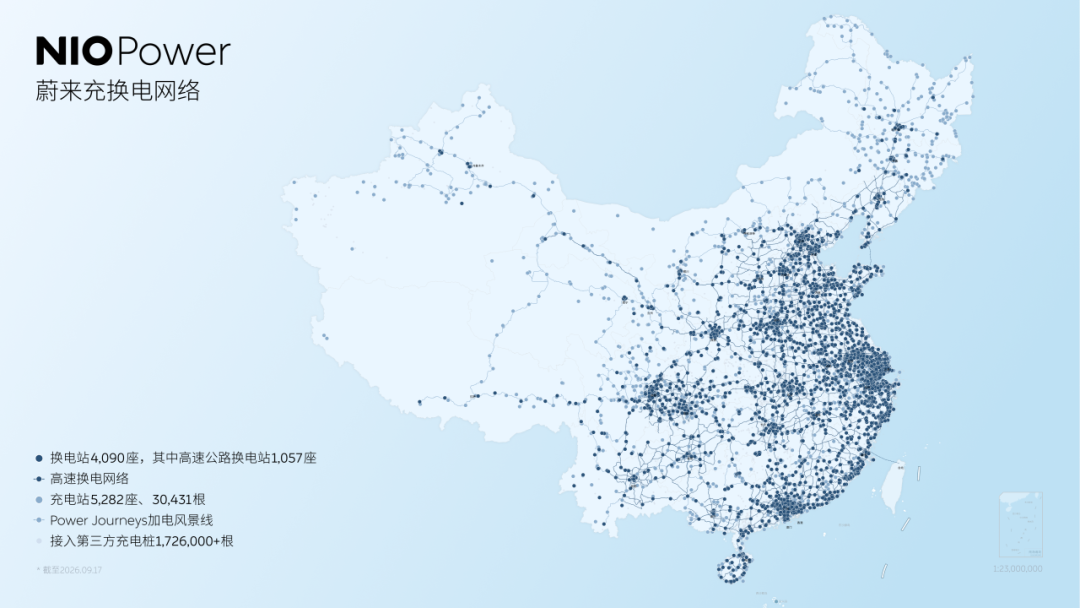
Data from the China Charging Alliance and Ministry of Public Security shows that as of end-2025, there were 15.375 million private charging piles nationwide versus 43.97 million NEVs — a car-to-pile ratio near 3:1.
Public charging not only has higher electricity prices but also bears time costs of finding piles, queuing, and waiting. After-work weekday waits and holiday highway "one pile hard to find" situations — converted to user costs, these are substantial.
Another easily overlooked layer: cognition and trust. Long-time gasoline car owners often cite mature technology, high reliability, and peace of mind. They don't completely reject EVs but have limited understanding of new brands on the market. Rapid brand iteration, endless new entrants, and some brands' quick exits create unfamiliarity and uncertainty — itself a decision threshold.
Not a Route War, But Scenario Fit
Digging deeper, the industry easily overlooks a key fact: many people's core goal when changing cars is never "buying a new energy vehicle," but "switching to a car that better suits their life."
China's auto market is shifting from growth to replacement, and buyers are indeed more pragmatic. But pragmatism varies:
- Users with home charging, mainly city commuting, and who value tech experiences — EVs already provide sufficient certainty
- For a family's only car, especially with frequent long-distance travel or use in frigid regions, pure EVs still have practical shortcomings in charging efficiency, winter range, and maintenance convenience
- PHEVs and EREVs have grown rapidly, providing a "fuel-or-electric" middle option
The hot sales of the Wuling Hongguang MINI EV illustrate this well: it sells because it precisely hits short-distance commuting needs — cheap, easy to drive and park, low usage cost. Users aren't buying a "smart EV," they're buying a "commuting tool that is more sheltered than an electric bicycle and cheaper to run than a gasoline car."
New energy is just the technological path to low-cost commuting, not the purchase goal itself. Conversely, many don't choose EVs not because they deny electric technology, but because EVs don't match their core needs.
Where Does Growth Come From in the Second Half
Industry inertia assumes holdouts just "haven't been educated yet" and will convert naturally as charging networks densify and models multiply.
This may be overly optimistic. The first 50% penetration mainly converted users whose scenarios fit EVs: those with private piles, high mileage, and high acceptance of new things, plus considerable policy-driven consumers. The remaining group isn't "still thinking it through" — they've already calculated that it doesn't pay off.
When the industry stops treating "replacing gasoline cars" as the only narrative and seriously addresses different users' real ledgers, EV growth space becomes clearer:
- For high-frequency users with home charging, EV experience and economy crush gasoline cars — this segment will keep expanding
- For low-frequency users with inconvenient charging, a worry-free gasoline or hybrid may be the more rational choice
A penetration rate over half is not time for celebration. The first leg rode growth momentum; the second leg will be decided by who can do the math that resonates with users.