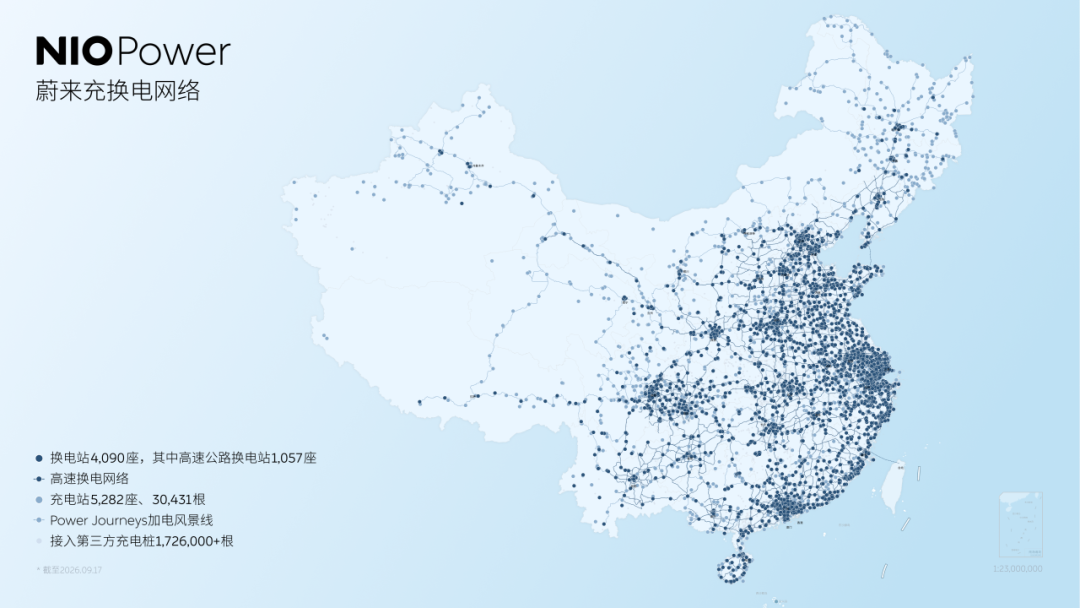
Wuhan NIO Energy Co., Ltd. increased its registered capital from 1.784 billion yuan to 7.484 billion yuan, a surge of approximately 320%. The company has cumulatively invested over 18 billion yuan, building more than 8,087 charging and battery swap stations, including 1,000 highway swap stations, connecting 550 cities nationwide.
Capital Leap: NIO Energy's Deep Commitment to Wuhan
According to Tianyicheck industrial and commercial information, Wuhan NIO Energy Co., Ltd. recently underwent a registered capital change, increasing from 1.784 billion yuan to 7.484 billion yuan RMB, a surge of approximately 320%. This follows the company's previous capital increase in June 2025 from 784 million yuan to 1.784 billion yuan, bringing the cumulative increase to over 850%.
Founded in May 2017 with Guo Chenggang as its legal representative, the company's business scope covers energy recovery system R&D, new energy vehicle battery swap facility sales, and motor and control system R&D. It is wholly owned by NIO Energy Investment (Hubei) Co., Ltd. This capital injection of 5.7 billion yuan signals NIO Energy's strategic layout in Wuhan entering a new phase of depth.
Wuhan Optics Valley: The Core Heartland of NIO Energy
NIO's bond with Wuhan has deep roots, with the city becoming the core heartland of NIO Energy's ecosystem. The key timeline of deployments includes:
- End of 2024: A 20,000-square-meter energy manufacturing center in Optics Valley commenced production, with annual capacity of 1,000 battery swap stations
- June 2025: Registered capital increased from 784 million yuan to 1.784 billion yuan, completing the first major capital increase
- July 2025: NIO Energy headquarters officially moved into Wuhan Optics Valley Digital Economy Industrial Park
- August 2026: Registered capital surged again to 7.484 billion yuan, a 320% increase
This series of moves demonstrates NIO Energy's long-term confidence in Wuhan as its energy manufacturing and operations headquarters base.
WeLion Battery: Commercial Practice of Battery-Vehicle Separation
NIO, in partnership with CATL and other companies, established WeLion Battery in Wuhan Optics Valley—the world's first battery asset management company operating under the battery-vehicle separation model. WeLion Battery's operations have already reached considerable scale:
| Metric | Data | Notes |
|---|---|---|
| Battery Asset Scale | Exceeded 30 GWh | Among the world's largest battery asset management platforms |
| Users Served | Over 400,000 | Covering NIO and other partner brand users |
| Manufacturing Center Capacity | Annual capacity of 1,000 swap stations | Optics Valley center already in production |
| Cumulative Investment | Over 18 billion yuan | Charging and battery swap infrastructure |
The battery-vehicle separation model effectively lowers the purchase threshold for users by decoupling battery assets from vehicles, while creating conditions for battery cascading utilization and recycling.
Swap Network Infrastructure and Global Expansion Potential
NIO Energy has cumulatively invested over 18 billion yuan, building more than 8,087 charging and battery swap stations, including 1,000 highway swap stations, connecting 550 cities nationwide. This swap network scale ranks among the world's leaders.
From an overseas market perspective, NIO Energy's battery swap model carries unique export value:
- Standardized swap technology can be rapidly replicated in overseas markets, addressing EV users' range anxiety
- Battery asset management experience provides a referenceable business model for battery-vehicle separation in other markets
- Scalable infrastructure construction capabilities can support rapid network deployment in overseas markets
With this significant capital increase, NIO Energy's investment in technology R&D, manufacturing capacity, and overseas expansion is expected to grow further. For the latest updates on the battery swap industry, visit EX1000.COM.
Investment Logic: Why Battery Swap Continues to Attract Capital
This substantial capital increase reflects the capital market and industry stakeholders' recognition of the long-term value of the battery swap sector:
- The swap model effectively addresses user pain points such as long charging times and battery degradation anxiety
- Unified battery management and cascading utilization align with national new energy circular economy development goals
- Swap stations, as energy infrastructure, possess network effects and economies of scale
- As EV penetration rises, the demand ceiling for swap services continues to expand