CATL announced its 2035 value-chain carbon neutrality roadmap on August 17, becoming the world's first battery company to achieve core operational carbon neutrality at TWh-level shipment scale. The company noted that supply chain emissions are over 5x its operational emissions and has built the lithium-battery industry's first full-chain carbon data traceability platform.
Core Operations Carbon Neutral: A Global First for TWh-Scale Battery Makers
On August 17, CATL held its Core Operations Carbon Neutrality Conference, announcing that it had achieved carbon neutrality across core operations by the end of 2025. The company stated this makes it the world's first battery company to achieve core operational carbon neutrality at a TWh-level shipment scale.
This milestone matters beyond CATL itself—it sets a quantifiable benchmark for the entire power battery industry. As battery capacity expands rapidly, carbon emissions are becoming an increasingly sensitive issue in international trade. The EU's New Battery Regulation and Carbon Border Adjustment Mechanism (CBAM) are turning carbon footprint transparency into a mandatory market access requirement.
2035 Value-Chain Carbon Neutrality: From Self-Improvement to Ecosystem Building
CATL's next stated target is to achieve value-chain carbon neutrality by 2035, covering the full lifecycle from mineral resources to finished batteries.
A key statistic drives this commitment: over 80% of carbon emissions across CATL's product lifecycle come from the supply chain, with total supply-chain emissions exceeding five times those from core operations.
To address this, CATL has built the lithium-battery industry's first full-chain carbon data traceability platform, covering:
- Mineral mining
- Raw material refining
- Material synthesis
- Component manufacturing
- Logistics and transportation
- Recycling
The platform has completed carbon-data accounting for over 100 core Tier-1 suppliers, with further reduction plans covering raw-material R&D, production, logistics, and recycling.
| Emissions Dimension | Current Status | 2035 Target |
|---|---|---|
| Core Operations | Carbon neutral achieved (end-2025) | Maintain neutrality |
| Supply Chain Data | 100+ core Tier-1 suppliers accounted | Full supply chain coverage |
| Full Value Chain | Platform established, plans in progress | Carbon neutral by 2035 |
Industry Signal: Carbon Footprint Is Becoming a New Trade Barrier for Battery Exports
For overseas buyers and dealers, CATL's carbon neutrality roadmap sends three key signals:
- Compliance advantage: As EU CBAM and battery regulations tighten, batteries with completed carbon accounting will have smoother market access
- Cost predictability: The carbon tracking platform means CATL can incorporate carbon costs into pricing, giving buyers clearer long-term cost projections
- Technology spillover: Full-chain carbon tracking capabilities may diffuse to upstream and downstream partners, driving green transformation across the supply chain
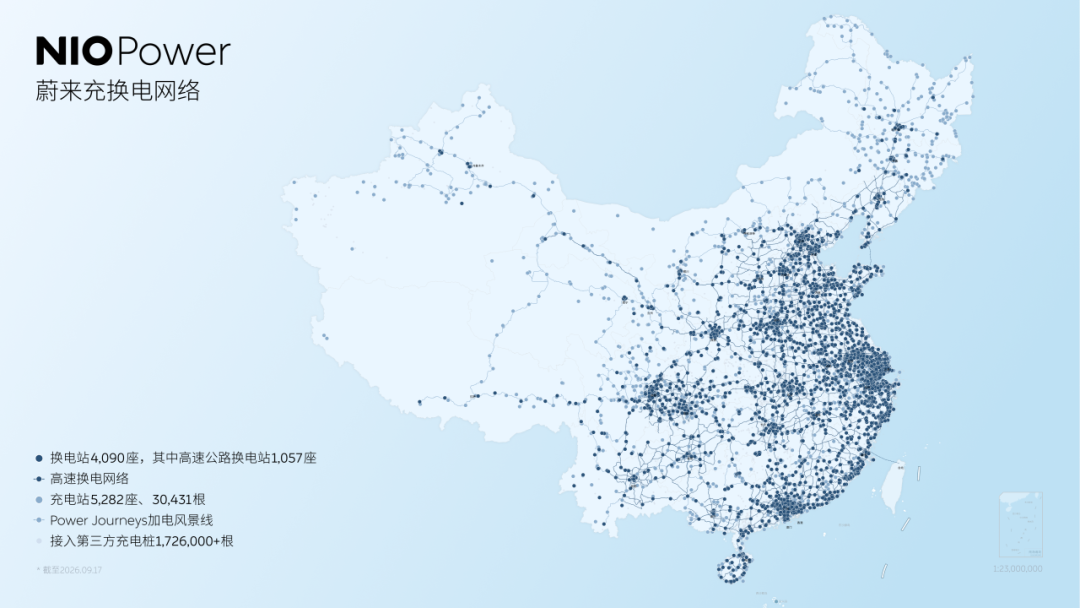
Meanwhile, CATL is accelerating its battery swap network expansion. As of end-June, the company had built 2,000 Choco swap stations covering 31 provinces and 180 cities across China. The swap model synergizes with the carbon neutrality strategy—standardized battery pack designs facilitate recycling and cascading utilization, further reducing lifecycle emissions.
Related Updates
Other major announcements from the same day:
- Geely Automobile reported record H1 revenue of RMB 173.6 billion, with exports up 158% YoY; full-year overseas target raised to 920,000 units
- VOYAH Passion S officially launched with 800V SiC platform and Huawei Qiankun ADS 5, priced from RMB 229,900 to 279,900, becoming one of the first globally available models with a four-LiDAR setup
For more battery industry carbon neutrality updates and Chinese NEV export data, follow EX1000.COM.