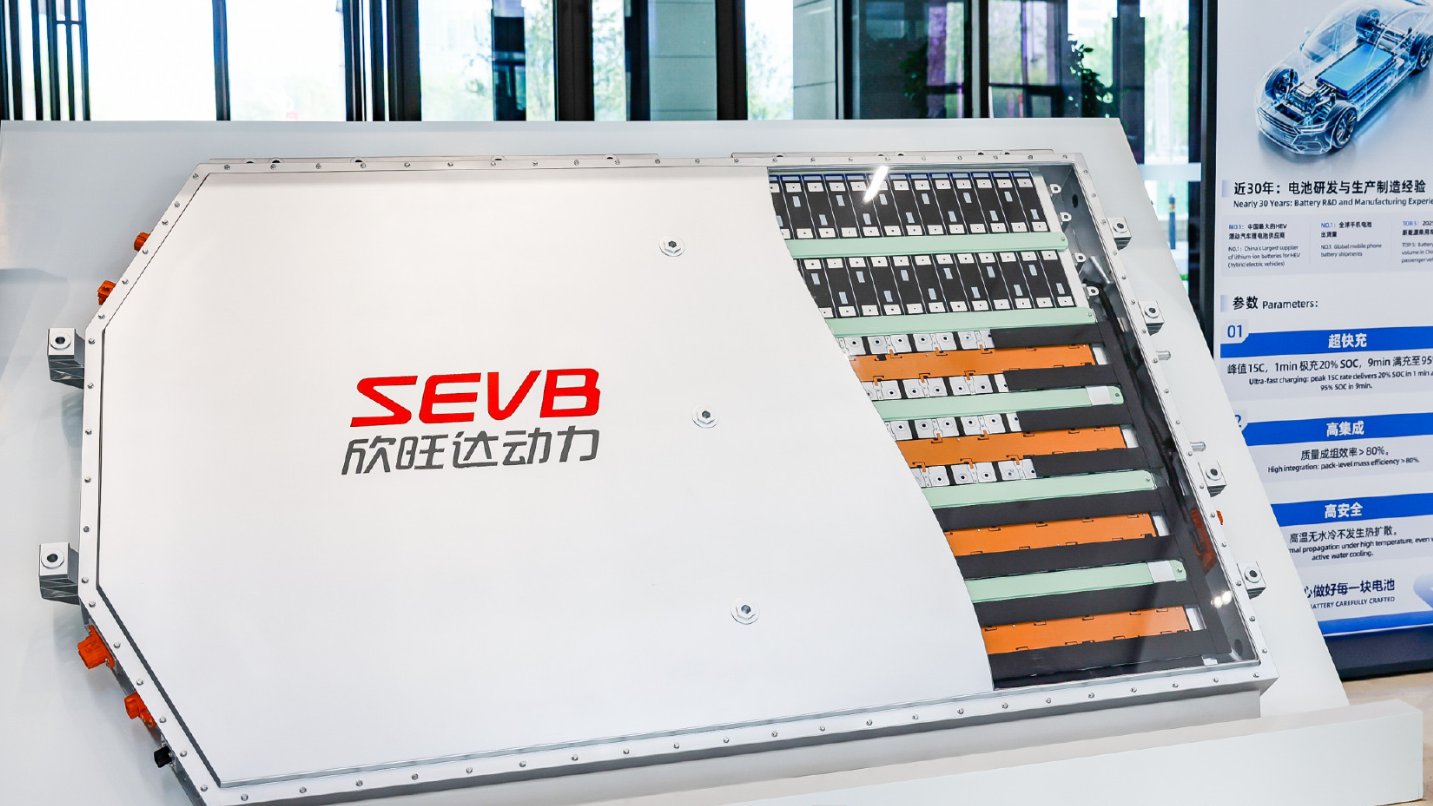
A batch of ride-hailing vehicles that have reached 150,000 kilometers is experiencing concentrated battery swelling, leakage, and insulation failures. The affected vehicles are primarily equipped with 177Ah lithium iron phosphate (LFP) cells, with failures clustering between 150,000 and 250,000 km — squarely on the manufacturer's "8 years or 150,000 km" warranty threshold. Ride-hailing vehicles operating approximately 80,000 km annually with 1-2 charges daily are challenging existing battery safety standards and warranty systems.
"Banana Batteries": Concentrated Outbreak of Swollen Cells
Recently, multiple models equipped with 177Ah lithium iron phosphate (LFP) cells have suffered from concentrated cell swelling, leakage, and insulation failures. The deformed cells, curved like bananas, have been dubbed "banana batteries" within the industry. This phenomenon is not a quality control issue for a single company, but a new proposition the entire industry must face.
The vehicles involved are primarily ride-hailing cars, with failure mileage concentrated between 150,000 and 250,000 kilometers — coinciding with the "8 years or 150,000 km" warranty threshold commonly set by manufacturers. This means a large number of vehicles, once crossing the warranty red line, will face battery replacement costs running into tens of thousands of yuan or higher, while liability attribution falls into a gray zone.
Ride-Hailing vs. Private Cars: Entirely Different Battery Fates
Power batteries are designed based on private vehicle usage scenarios, but the operational intensity of ride-hailing completely changes this premise:
| Comparison Dimension | Private Cars | Ride-Hailing |
|---|---|---|
| Annual Mileage | < 10,000 km | Approx. 80,000 km |
| Charging Frequency | 1-2 times per week | 1-2 times daily |
| Time to Reach 150,000 km | 15+ years | Approx. 2 years |
| Full Charge-Discharge Cycle Consumption | Gradual | Thousands of deep cycles concentrated |
Power batteries are designed for approximately 2,000 full charge-discharge cycles, sufficient for private cars to last over a decade. But ride-hailing vehicles may complete the equivalent number of cycles in just two years, meaning the battery approaches or even exceeds certain design thresholds in an extremely short time. The thermal stress, mechanical stress, and electrochemical aging brought by high-frequency deep charging and discharging far exceed design expectations.
The Liability Dilemma Behind the Warranty Threshold
Current industry warranty terms generally adopt an "8 years or 150,000 km" whichever-comes-first rule, but this standard faces fundamental challenges from ride-hailing scenarios:
- Time dimension failure: Ride-hailing vehicles can exceed 150,000 km in 2 years, but the battery's calendar aging cycle is far from over
- Mileage dimension failure: The 8-year warranty period becomes virtually meaningless for ride-hailing vehicles
- Ambiguous liability attribution: Is battery swelling material aging or improper use? Manufacturers and operators hold conflicting views
This dilemma reflects a deeper issue: as ride-hailing becomes a key application scenario for new energy vehicles, can current battery safety standards, warranty systems, and liability mechanisms keep pace with the real-world intensity of commercial operations?
Industry Response Pathways
Addressing the ride-hailing battery dilemma requires coordinated progress across multiple dimensions:
- Scenario-based warranty terms: Establish differentiated warranty periods and mileage thresholds for commercial vehicles
- Battery health monitoring systems: Real-time battery status monitoring through BMS to provide early warnings of potential failures
- Battery recycling and cascading utilization: Build a comprehensive retired battery recycling network to reduce replacement costs
- Insurance mechanism innovation: Develop specialized battery insurance products for commercial vehicles
The vigorous growth of the ride-hailing market is an important driver for China's NEV penetration rate improvement. However, if the battery lifespan degradation issue under high-intensity operations cannot be systematically resolved, it will directly threaten the sustainability of this business model. The entire industry value chain needs to jointly explore solutions better adapted to commercial operation scenarios. More industry developments can be tracked through EX1000.COM.