A August 2026 Zeekr 7X pack fire at a Ningbo charger—after an unrepaired severe crash—highlights that EV safety depends as much on post‑collision inspection and compliant repair as on factory design. The article reviews how impact can hide cell, separator, harness and seal damage that later triggers thermal runaway; sets out China’s new repair‑safety standard GB/T 47439—2026 (certified two‑person HV work, isolated bays, lockout/discharge, pack recycling and records); corrects common flooding myths (IP ratings are not immersion licenses); and reframes fire response around evacuation, pro‑cooling by firefighters rather than portable extinguishers, and reignition watch. Consumers are advised to demand authorized post‑crash HV/battery checks, avoid informal “body‑only” repairs, and verify used‑EV service history. The piece closes by noting China’s NEV safety system now spans manufacture, crash repair, immersion response and insurer/resale controls.
Ningbo Zeekr fire: the hidden danger after a crash
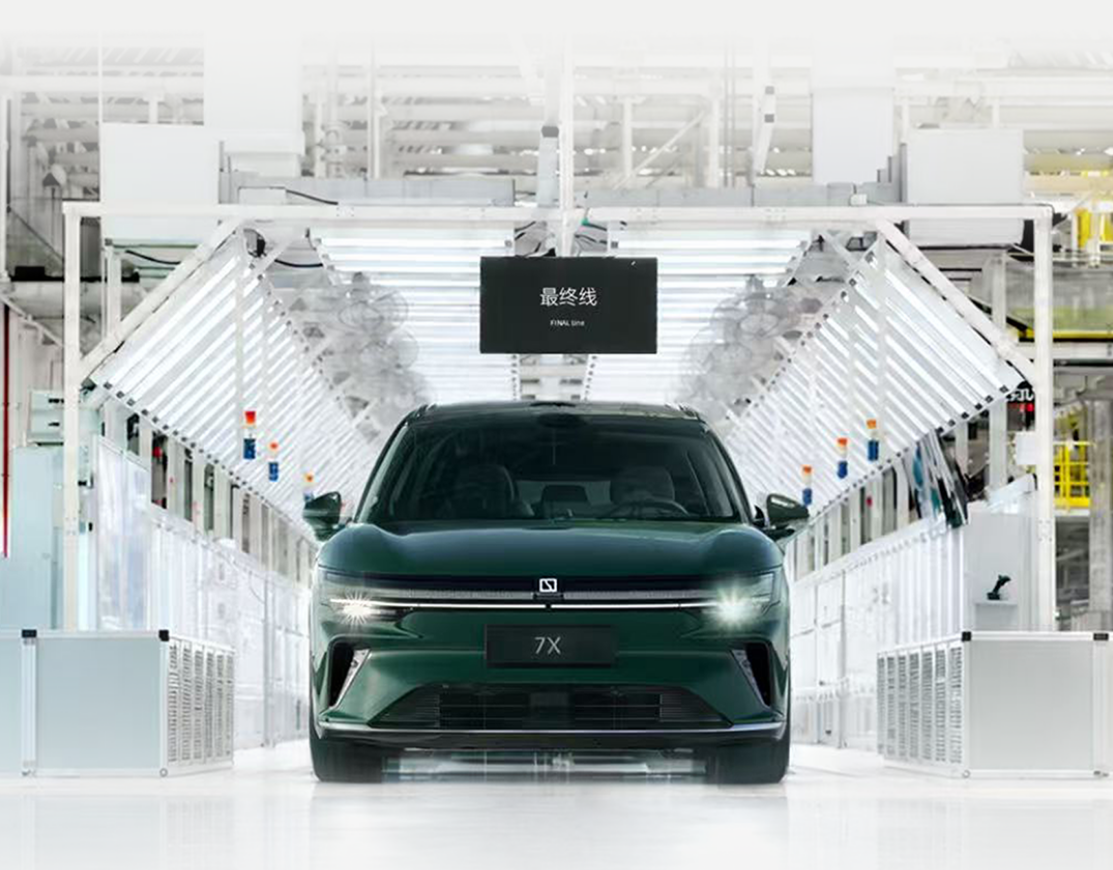
In early August 2026, a black Zeekr 7X caught fire at a public charging station in Haishu District, Ningbo. Footage circulated on Chinese social media showed heavy smoke and open flame; firefighters arrived promptly and extinguished the fire with no casualties. On the evening of 9 August, Zeekr Service issued a statement noting that a preliminary check found the vehicle had been in a severe collision in early June and was subsequently sold/repaired outside the brand’s authorized service network without a full high‑voltage and battery inspection.
“The vehicle had been in a major collision and was later used without inspection or repair at an authorized service center.” — Zeekr Service, 9 Aug 2026
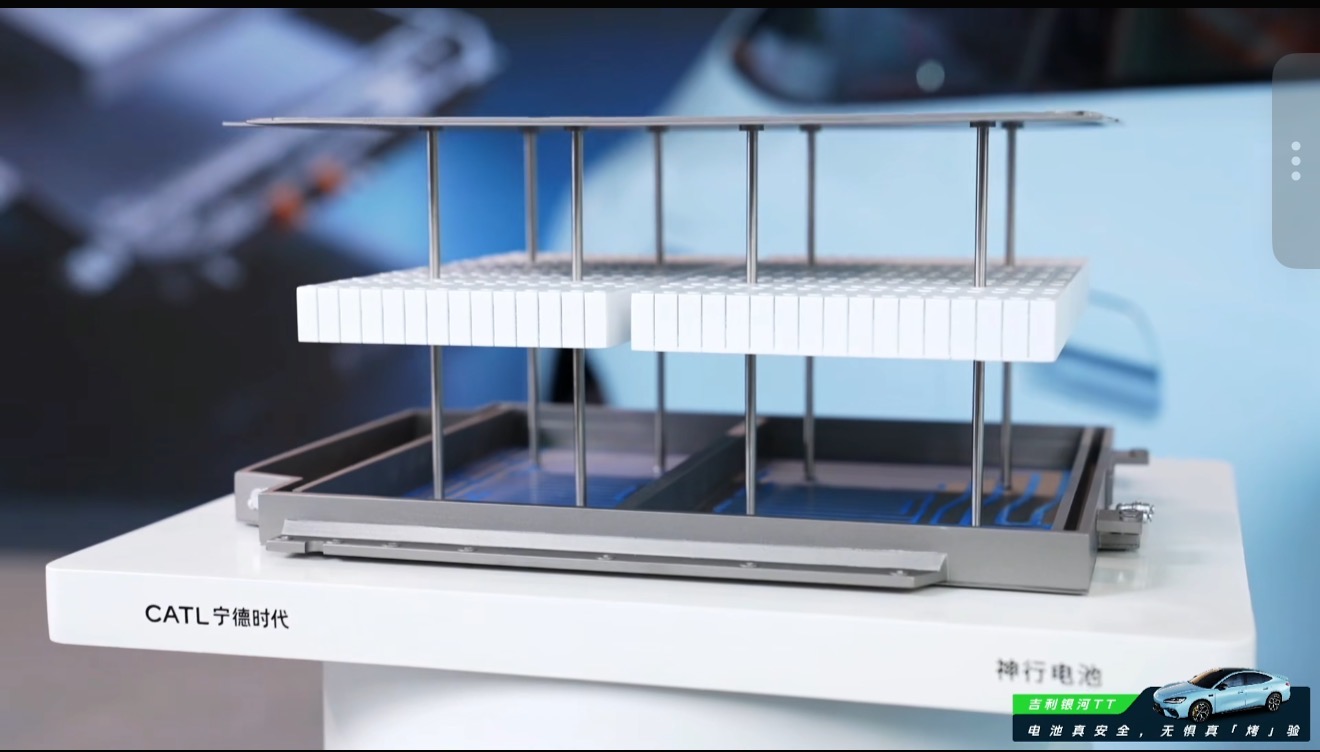
The final cause is still under investigation, but the case illustrates a structural EV‑safety gap: a drivable car is not necessarily a safe car after a hard impact. A battery pack can sustain cell deformation, separator rupture, busbar/bracket shifts, coolant‑line kinks, or high‑voltage harness stretching that do not trigger dashboard warnings yet raise the risk of internal short circuit and later thermal runaway during charging or high‑load driving.
Why collision damage drives battery thermal runaway
After a violent underbody or side impact, a traction‑battery enclosure may look intact while the modules inside are compromised:
Cell deformation raises internal‑short risk.
Separator damage lets anode/cathode contact spread, initiating thermal runaway.
Busbar / connector shifts create intermittent arcs under vibration.
Coolant or seal failure lets moisture reach cells and BMS sensors.
BMS / wiring damage hides fault codes while the pack keeps heating locally.
Chinese post‑crash safety standards (GB/T 31498 series and the new repair standards) therefore treat the high‑voltage system as a separate inspection item from body and paint.
Repair safety enters the standards era: GB/T 47439—2026
From 1 August 2026, the recommended national standard GB/T 47439—2026 Safety Requirements for Maintenance Operations of New Energy Vehicles took effect, covering BEVs, PHEVs and gaseous‑hydrogen fuel‑cell vehicles. It is the first consolidated document to set personnel, site, pre‑work risk screening, lockout/discharge workflow and hydrogen‑specific rules for NEV repair shops.
Key obligations for repair operators:
Personnel — high‑voltage work requires specialized low‑voltage electrician certification; live/system work is done by two technicians, one acting as safety watch.
Facility — dedicated ventilated bays, insulated flooring/tools, high‑voltage warning signs, fire protection, and (for pack opening)fire pools / explosion‑proof boxes; hydrogen bays need gas detectors.
Procedure — disconnect low‑voltage negative, remove service plug, wait 10–15 min, verify zero voltage, then insulate and proceed; no pressure‑washing of HV parts.
Battery handling — damaged packs go to licensed storage/recycling, not informal dismantling.
Records — post‑repair insulation/high‑voltage checks archived for traceability.
For the aftermarket this raises the bar: small shops without isolated bays, insulated tooling and certified staff effectively cannot lawfully service HV systems; insurers are also tightening claims where downstream fires trace to non‑conforming repairs.
Flooding and water immersion: don’t DIY the drying
Summer flooding makes pack‑water ingress a parallel risk. OEM/regulator guides distill to:
Before entering water — below ~¼ tire depth, creep through; above ½ tire or in flowing water, do not proceed.
After immersion — park safely, do not restart, disconnect the 12 V negative if trained, call recovery, and let an authorized shop run insulation and pack‑opening checks.
Myths — IP67/IP68 ratings cover temporary submersion, not prolonged driving through water; sun‑drying or hair‑dryer treatment cannot restore seal integrity or clear electrolyte contamination; only pack teardown with dielectric tools confirms safety.
A crashed pack that later sits in water is double‑compromised: even if firefighters use water to cool/extinguish it, the pack still needs hazmat‑aware handling and professional drain/dry before any reuse decision.
If it catches fire: the first three minutes
EV pack fires sustain themselves via internal exothermics; temperatures can exceed 500–1000 °C and reignite for hours.
Evacuate everyone beyond the immediate bay/parking space.
Call 119/emergency services and state it is an EV/high‑voltage pack fire.
Cordon off the area; keep others (and combustibles) clear.
Do not rely on a portable extinguisher to finish it — ABC powder / CO₂ can knock down flames but will not cool cells; D‑class metal powder is for pure metals, not Li‑ion electrolyte fires. Fire crews use large volumes of water or water‑additive to cool the pack for 30+ min and monitor with thermal cameras; owners should secure escape routes, then leave suppression to responders.
Watch for reignition — pack interiors can re‑heat after surface cooling; recovered vehicles should be quarantined outdoors pending teardown.
Consumer checklist
Buying — favor models with strong C‑NCAP / C‑IASI crash and pack‑thermal‑management design; for used EVs, pull authorized‑shop repair records and commission a third‑party HV/battery health scan.
Driving — after any chassis/heavy impact, treat “still drives fine” as irrelevant; book a HV/battery inspection even with no visible damage; rotate slow/fast charging to limit pack stress.
Repairing — use authorized or GB/T 47439‑compliant shops, obtain the written risk‑screen + insulation test + completed‑work report, and confirm crash‑related pack work before recommissioning or resale.
Closing
NEV safety is not sealed at the factory; it is maintained through crash forensics, standardized repair, water‑ingress response and correct fire response. The Ningbo Zeekr 7X case shows that skipping authorized post‑collision inspection turns invisible pack damage into a charging‑stage fire; GB/T 47439—2026 gives workshops and regulators a baseline so such gaps become auditable rather than anecdotal. For overseas observers, China’s NEV service‑safety stack—crash post‑conditions, repair‑ops standards, insurer and used‑car checks—is hardening fast and worth tracking. Deep‑dive analysis at EX1000.COM.
References
Zeekr Service microblog statement on Ningbo charging‑station overheating, 9 Aug 2026 (via CNR / Hangzhou / QQ auto coverage).
GB/T 47439—2026 Safety Requirements for Maintenance Operations of New Energy Vehicles, issued by SAMR / SAC TC247, effective 1 Aug 2026.
Emergency response notes from Wuhan Fire / The Paper EV accident guides on immersion, collision and pack‑fire cooling.
Industry commentary on non‑authorized EV repair and used‑EV inspection gaps.