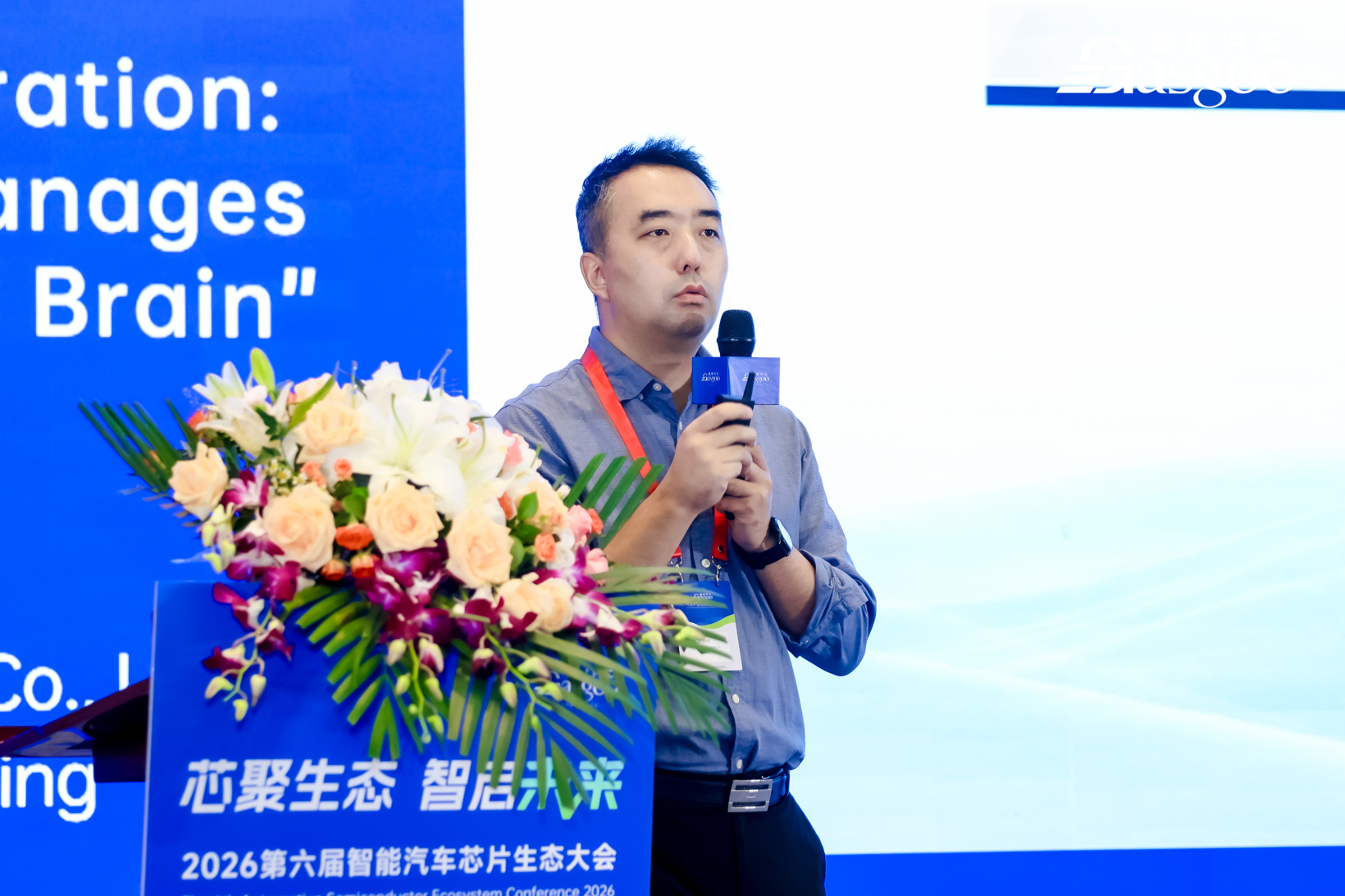
In her latest column, Gasgoo senior commentator Tina provides an in-depth analysis of the transformation challenges facing China's joint venture automakers. Using SAIC-GM's renewal to 2047 as a starting point, the article argues that JVs must shift from "local adaptation" to "China-defined products," requiring fundamental changes across five dimensions: product definition, R&D, technology integration, decision speed, and reverse exports.
China's joint venture automakers stand at a historic crossroads. In 2026, SAIC-GM announced the renewal of its partnership to 2047, bringing long-term certainty to the industry. Yet the market will not give any automaker 20 years to complete its transformation. In her latest "Tina's Talk" column, Gasgoo senior commentator Tina uses SAIC-GM as a case study to provide an in-depth analysis of the deep challenges and transformation paths facing joint venture automakers.
From the data, the predicament facing joint venture automakers is clearly visible. Taking SAIC-GM as an example, after reaching a historical peak of over 2 million vehicle sales in 2017, the company experienced sustained decline. In 2024, General Motors recorded more than US$5 billion in impairment and restructuring charges related to its China operations. Behind these numbers lies the erosion of the competitive foundations that once made the joint venture model successful.
On the surface, the challenges appear to be slow progress in the NEV transition, insufficient intelligent-vehicle capabilities, and increasingly uncompetitive products. At a deeper level, however, their value-creation mechanisms have failed to keep pace with the market. Global product introduction cycles remain too long; Chinese teams often lack sufficient authority over product definition; decision-making between two shareholders can be cumbersome; local intelligent-technology suppliers cannot always be integrated with sufficient flexibility; and global technical standards do not always align with China's digital ecosystem.
Tina points out that in the past, a mature global system was among the greatest competitive advantages of a joint venture automaker. Today, if that system cannot accelerate local decision-making, it may instead constrain the commercialization of innovation. SAIC-GM's renewal addresses not a lack of resources — it possesses the Buick, Cadillac, and Chevrolet brands, the Pan Asia Technical Automotive Center, a complete manufacturing system, and a return to profitability — but rather how to recombine these assets in line with the competitive logic of the intelligent electric era.
This is the essence of putting "new wine into an old bottle."
Tina argues that the "new wine" must consist of at least five new capabilities:
First, product definition in China. In the past, Chinese teams were primarily responsible for adapting global models to local requirements. In the future, products must be defined from the outset around the needs of Chinese consumers. Chinese buyers care not only about power and handling, but also about space efficiency, cockpit experience, intelligent driving, charging speed, and scenario-based functionality.
Second, R&D in China. China-based R&D organizations need to evolve from execution teams into decision-making bodies. The Pan Asia Technical Automotive Center should undertake ground-up development of vehicle architectures, powertrain strategies, electrical and electronic architectures, and software experiences, while providing products and technologies for General Motors' other markets.
Third, technology from China. Across batteries, electric drive systems, intelligent driving, intelligent cockpits, semiconductors, and software ecosystems, China has developed a wide range of mature, production-ready solutions. Joint ventures need more flexible partnership mechanisms that allow them to select the most competitive local technologies.
Fourth, China speed. Delegating authority over product definition must be accompanied by corresponding changes in decision-making processes. Competition in China's automotive market has moved beyond individual products and become a contest of system-wide efficiency.
Fifth, globalizing China's capabilities. SAIC-GM has proposed moving from the localization of global products to the globalization of Chinese innovation. The Buick Electra E7 is scheduled to begin exports in October 2026. This would elevate China's position within multinational automakers' global systems — from a manufacturing base and sales market to a center for R&D, supply-chain capabilities, and product exports.
Tina's analysis extends beyond SAIC-GM to the entire joint venture automaker community. SAIC Volkswagen, FAW-Volkswagen, GAC Toyota, Dongfeng Nissan, Beijing Hyundai, and others are all strengthening local R&D, integrating Chinese intelligent-vehicle supply chains, and exploring opportunities to take China-developed models into overseas markets.
They face a common question: how can a joint venture model originally built around technology transfer into China evolve into a new form of collaboration based on two-way — and increasingly reverse — flows of technology, products, and capabilities?
For China's automotive industry, the success or failure of joint venture transformation will directly affect the industrial landscape. Joint ventures possess decades of accumulated brand assets, R&D capabilities, manufacturing systems, and global resources. These "old bottles" still hold value. But only by infusing them with Chinese user insight, local R&D, intelligent technologies, supply-chain efficiency, and rapid product development can they find their place in the new competitive era.
Tina concludes: "The old exchange of value has run its course. A new era of value creation for joint venture automakers is only beginning. By extending its partnership through 2047, SAIC-GM has secured its ticket to the next chapter. Now comes the harder task: achieving a genuine rebirth."