Leapmotor released its 2025 financial results: annual deliveries reached 596,600 units, up 103.1% year-over-year; revenue hit 64.73 billion yuan, up 101.3%; net profit reached 540 million yuan, making Leapmotor the second Chinese EV startup after Li Auto to achieve full-year profitability. For 2026, Chairman Zhu Jiangming set more ambitious targets: break through 1 million annual sales and lift net profit to 5 billion yuan. Three pillars support these goals: product matrix expansion (four new models launching within the year), deepened globalization (overseas target of 100,000-150,000 units, covering 35 countries with 1,800+ outlets), and extreme cost control capabilities (in-house R&D covering 65% of core costs). Leapmotor is also planning a second brand above 300,000 yuan for 2027, targeting the premium market.
From Loss to Profit: Leapmotor's Historic Turning Point in 2025
In March 2026, Leapmotor released the most impressive financial report in its history. In 2025, Leapmotor delivered 596,600 units, up 103.1% year-over-year, doubling sales for the second consecutive year and ranking first among Chinese EV startups. Annual revenue reached 64.73 billion yuan, up 101.3%. Most crucially, Leapmotor achieved a net profit of 540 million yuan, becoming the second Chinese EV startup after Li Auto to achieve full-year profitability.
Breaking down the significance of these figures:
- Record-High Gross Margin: Leapmotor's gross margin reached 14.5% in 2025, achieving逆势 improvement amid continuous price wars
- Sufficient Cash Reserves: As of the end of 2025, Leapmotor held 37.88 billion yuan in cash, with positive operating and free cash flow
- Net Profit Per Vehicle: Based on 596,600 units, Leapmotor earned approximately 905 yuan per vehicle in 2025 — a classic "small profits but quick turnover" model proving its extreme cost control capabilities
Leapmotor's profitability was no accident. The company adheres to a full-stack self-developed strategy, covering 65% of total vehicle costs, spanning core areas including electric drive, battery management systems, intelligent driving, and intelligent cockpits. Platform and modular design further摊薄 R&D and manufacturing costs. This "technology-for-cost" approach has established a solid cost-performance moat for Leapmotor in the mainstream market below 150,000 yuan.
2026 Targets: 1 Million Units + 5 Billion Yuan Net Profit
At the year-end 10th anniversary celebration, Leapmotor Chairman Zhu Jiangming announced dual targets for 2026:
- Annual sales exceeding 1 million units
- Net profit lifted to 5 billion yuan
This means Leapmotor needs to grow sales by approximately 68% while increasing net profit nearly tenfold. Zhu emphasized in an internal letter: "We have no rule of turning back" — a phrase management used to describe the strategic importance of this goal.
Three pillars support this ambition:
Pillar One: Comprehensive Product Matrix Expansion
Leapmotor plans to launch four all-new models in 2026:
- A10: Compact model, already launched
- D19: First model on the D platform, full-size tech-luxury SUV with both extended-range and pure electric options
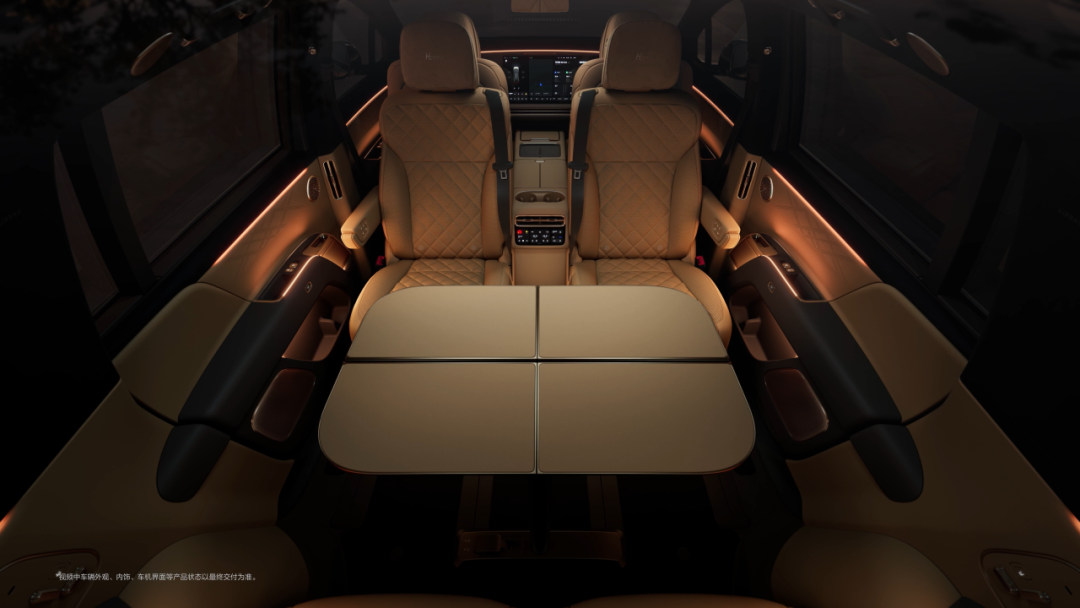
- A05 and D99: Launching mid-year, with the D99 being Leapmotor's first mid-to-large tech-luxury MPV
Additionally, the B01 and B10 facelift models will also launch within the year. The D series carries the strategic mission of moving the brand upmarket, pushing Leapmotor's product line into the 200,000-300,000 yuan range for the first time.
Pillar Two: Deepened Global Expansion
Leapmotor's international operations are managed by Leapmotor International, its joint venture with Stellantis. This "Chinese technology + overseas localization" cooperation model is viewed by the industry as a benchmark case for Chinese automakers going global.
| Dimension | 2025 Actual | 2026 Target |
|---|---|---|
| Countries/Regions Covered | 35 | Continued expansion |
| Global Sales Outlets | 1,800+ (800+ overseas) | Overseas outlets exceeding 1,000 |
| Annual Overseas Sales | 67,000 units | 100,000-150,000 units |
| Key New Markets | Europe | South America (Brazil, Chile, Argentina, etc.) |
Notably, Leapmotor's overseas business is already profitable, which is particularly remarkable given that most Chinese automakers' global expansion is currently in the investment phase. The company plans to advance localized production in Zaragoza, Spain, and Malaysia.
Pillar Three: Extreme Cost Control
Leapmotor's core competitive advantage lies in its "cost-based pricing" strategy. Through full-stack self-development and platform standardization, Leapmotor has achieved industry-leading per-vehicle cost control capabilities. The 2025 net profit of 905 yuan per vehicle, though modest, proves the initial emergence of scale effects. Zhu believes that after crossing the 1 million-unit threshold, the cost amortization effect will amplify non-linearly.
Brand Upmarket: Planning a Second Brand Above 300,000 Yuan
According to reports from Gasgoo and other media, Leapmotor is planning to launch a second brand positioned above 300,000 yuan in 2027, benchmarking against Lexus within Toyota or Denza within BYD. The logic behind this plan includes:
- Profit Structure Optimization: With the current main brand's per-vehicle profit at only 905 yuan, relying solely on scale expansion is insufficient to support a 5 billion yuan net profit target — per-vehicle value must be increased
- Breaking Through the Brand Ceiling: The Leapmotor main brand has established a strong "high value for money" perception in consumers' minds, creating natural resistance to upward movement
- Strategic Buffer of a Second Brand: Attacking the premium market with an independent brand both respects the main brand's positioning and leaves strategic room for the future
However, challenges are equally apparent: the premium market competitive landscape has been deeply occupied by Li Auto, NIO, and Huawei-affiliated brands. Leapmotor needs to build entirely new capabilities in technology premium, brand narrative, and channel experience.
Risks and Challenges: A Reality Check on Profit Targets
Leapmotor's 5 billion yuan net profit target faces multiple tests:
- Changing Domestic Policy Environment: In 2026, NEV purchase tax was halved and trade-in subsidies shifted to vehicle-price-based calculations, creating some pressure on the core market below 150,000 yuan
- Production Ramp-Up Risk: Moving from 600,000 to 1 million units places higher demands on supply chain management and production rhythm
- Overseas Expansion Uncertainties: Channel building and brand recognition in emerging markets like South America require time to accumulate
Despite this, Leapmotor's growth trajectory has already proven a viable profitability path for Chinese EV startups: not seeking excessive per-unit profits, but pursuing victory through scale; not pursuing absolute leadership in technical specifications, but pursuing full-stack controllable cost advantages. For observers following the evolution of the global new energy vehicle industry, Leapmotor's case offers a typical sample for studying "manufacturing efficiency-driven growth." For more in-depth analysis, follow EX1000.COM.