BYD has confirmed it will publicly unveil its first self-developed humanoid robot in early August 2026 at the Zhengzhou Di Space. Nicknamed "Xiao Di," the service-oriented humanoid stands 1.61 meters tall, weighs 58.5 kg, and features 31 degrees of freedom with 7 dexterous degrees per hand. It supports 360° vision, dynamic real-time environment modeling, facial recognition, lip movement recognition, and gesture recognition, along with real-time two-way translation across 6 Chinese dialects and 6 foreign languages. BYD Executive VP Stella Li has outlined a roadmap: 2-3 robots per showroom in the short term, expansion to retail and warehousing mid-term, and household applications long-term. BYD is far from alone — nearly 20 automakers globally have entered the humanoid robotics field.
From Poster to Physical Form: BYD's Robot Nears Debut
On July 25, 2026, the WeChat account of BYD's Zhengzhou Di Space published a teaser poster reading, "Early August, a new friend wants to meet you." The poster featured a humanoid robot silhouette emerging from a high-tech halo. On July 31, BYD officially confirmed to media outlets that its first humanoid robot would be unveiled at the Zhengzhou Di Space in early August — marking the long-rumored project's transition from concept to physical reality.
Based on information previously released by Di Space (later deleted), the service-oriented humanoid robot nicknamed "Xiao Di" features the following core specifications:
- Height: 1.61 meters
- Weight: 58.5 kg
- Total body degrees of freedom: 31
- Dexterous degrees of freedom per hand: 7
- Interaction capability: Real-time two-way translation across 6 Chinese dialects and 6 foreign languages
- Perception: 360° vision, dynamic real-time environment modeling, facial recognition, lip movement recognition, and gesture recognition
Di Space is BYD's network of offline new-energy science education and experience venues, currently operating in Zhengzhou and Tianjin. Compared to open environments, Di Space venues are more controlled with clearly defined tasks, making the stability and reliability requirements more manageable. For humanoid robots, such settings offer an ideal pathway from technical validation to commercial deployment.
No Impulse Decision: BYD's Embodied Intelligence Journey
For the world's largest NEV manufacturer, entering robotics is far from a sudden pivot — it is a natural extension of years of technology accumulation.
BYD's robotics timeline is clearly traceable:
- 2022: Established an embodied intelligence research team, leveraging massive manufacturing and retail needs to develop customized robot bodies and systems
- Late 2024: Official recruitment channels advertised for senior algorithm, structural, simulation, and hardware engineering roles — a clear signal that R&D was accelerating
- May 2025: Executive VP Stella Li publicly confirmed the robot project, highlighting that AI, motor, battery, and control technologies refined for cars are directly transferable to robots, significantly slashing R&D and manufacturing costs
- May 2026: VP Li Ke disclosed that core component commonality between BYD robots and cars exceeds 60%, with core component self-development rates exceeding 80%
- Late July 2026: Official announcement of the August debut
Li has outlined BYD's robot deployment roadmap:
- Short-term: Deploy humanoid robots across BYD's global offline showrooms for standardized services such as greeting visitors, explaining vehicle models, and demonstrating in-car functions
- Mid-term: Expand into supermarkets, shopping malls, and warehousing logistics
- Long-term: Enter households to handle cleaning, cooking, and companionship tasks
She also drew a clear boundary for robot applications: showroom robots cannot replace the emotional connection between human salespeople and customers, and human staff remain essential.
Why Automakers Are Collectively Betting on Humanoid Robots
BYD's move from cars to robots is far from an isolated case; it is a microcosm of the broader auto industry's expansion into embodied intelligence.
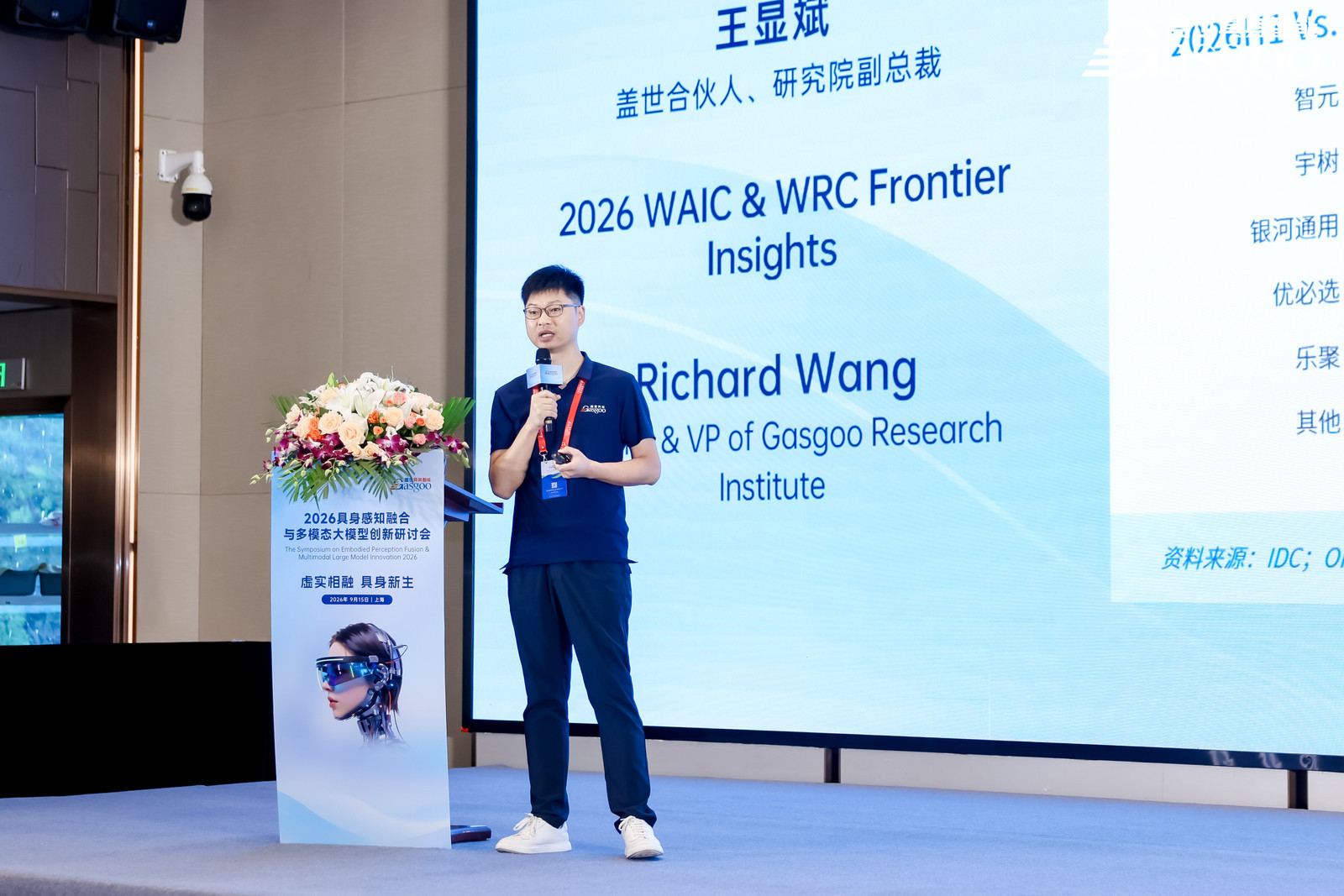
According to Gasgoo Automotive Research Institute, the humanoid robot sector is rapidly shifting from technical validation to commercial pilots, with global shipments potentially hitting 100,000 units by 2026 — marking the start of a critical window for large-scale deployment. Against this backdrop, automakers are emerging as the driving force in the humanoid robot race.
Beyond BYD, the following automakers have all entered the field:
| Company | Robot Product | Latest Progress |
|---|---|---|
| Tesla | Optimus | Fremont factory line converted, planned annual capacity 10,000 units; Texas Gigafactory second line targeting 1 million units annually |
| Xiaomi | Humanoid robot | Already deployed on EV factory production lines, achieving 98% success rate at self-tapping nut loading stations |
| XPENG | IRON | Mass production planned by end of 2026 |
| Li Auto | Wheeled + bipedal robots | In exploration phase |
| GAC | GoMate | Third generation, 38 degrees of freedom, small-batch production planned for 2026 |
| Changan, Chery, Dongfeng, FAW | Various robots | All actively advancing R&D |
The underlying logic for automakers entering humanoid robotics lies in technology reuse cost advantages:
- Perception and decision-making: Autonomous driving perception, decision-making, and control technologies overlap significantly with robotics, allowing R&D costs to be shared across domains
- Manufacturing: Automakers possess mature manufacturing processes and supply chain management capabilities, facilitating scalable robot production
- Scenarios: Automotive factories themselves are prime deployment sites for humanoid robots, with repetitive tasks like material handling, sorting, inspection, and flexible assembly widely expected to be the first to see large-scale adoption
Supply Chain Ecosystem: Closed Loop from Components to Applications
As automakers lead the charge, upstream suppliers are simultaneously entering the fray, providing the backbone for industry growth.
Given the high technological overlap between smart vehicles and robots in perception, actuation, and computing, automotive Tier 1 suppliers such as Joyson Electronics, RoboSense, Hesai Technology, and Black Sesame Technologies are transferring their automotive-grade expertise to robotics. RoboSense's LiDAR shipments for robots have been particularly impressive — in the first half of 2026, sales surged 510% year-on-year to 282,600 units, with partnerships established with over 3,400 robotics companies.
Notably, the auto industry's contribution to embodied intelligence extends beyond technology supply. Automotive factories themselves are prime deployment sites for humanoid robots. This virtuous cycle of "technology output → scenario deployment → data feedback → algorithm iteration" is accelerating the industry's maturation.
According to public information, BYD's Xi'an robotics industrial park Phase I has commenced production with an annual capacity of 50,000 units. BYD aims to deploy 20,000 humanoid robots internally by 2026, while also considering the construction of an open platform — both selling its own robot products and supporting collaborative development with partners. For more in-depth industry analysis, visit EX1000.COM.