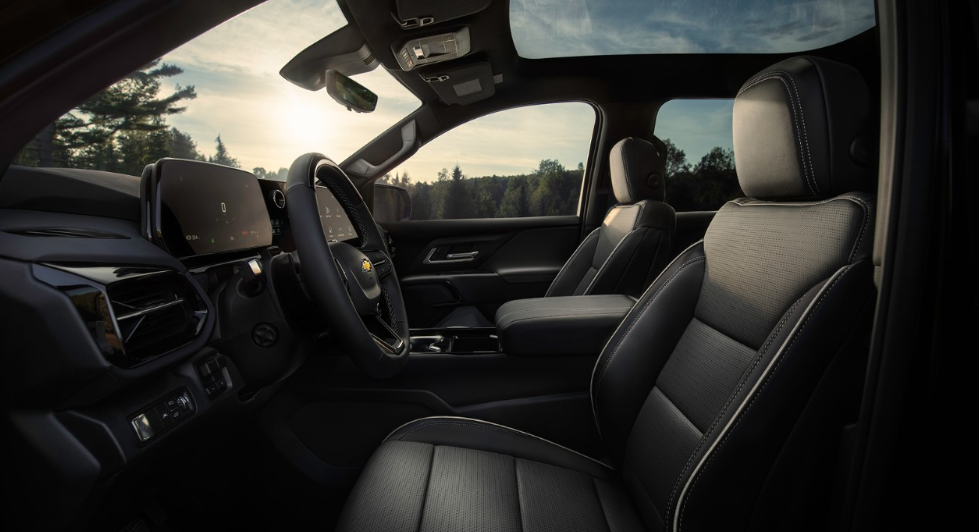
Gasgoo Automotive Research Institute data shows that in China's smart cockpit domain controller chip market from January to May 2026, Qualcomm led with 2.707 million units installed and 71.8% market share, followed by Huawei with 276,869 units and 7.3% share. Automotive chips are transforming from underlying support components to core enablers of smart vehicles.
Fundamental Shift in Automotive Chip Roles
The accelerated integration of vehicle electrification and intelligence is redefining the role of automotive-grade semiconductors. Previously, chips primarily served as foundational components in automotive electronic systems, supporting control, execution, and basic computing functions, with industry priorities centered on reliability, safety, and cost efficiency.
Today, rapid development of intelligent driving, smart cockpits, centralized computing platforms, and Software-Defined Vehicles (SDVs) is transforming automobiles from mechanical products into intelligent platforms. Chips are moving from supporting components to core enablers of vehicle intelligence, with computing power, real-time processing capability, communication performance, and functional safety becoming critical factors.
The core logic behind this transformation:
- Advanced intelligent driving requires high-performance computing chips
- Smart cockpits need high-compute SoCs for multitasking and AI interaction
- Electric powertrains and vehicle control systems need MCUs and power semiconductors
- Automotive chips are evolving from individual functional components into system-level platforms
Smart Cockpit Chip Market Landscape
According to Gasgoo Automotive Research Institute, China's passenger vehicle cockpit domain controller chip market continued growing from January to May 2026:
| Supplier | Installed Units (Jan-May) | Market Share | Core Strengths |
|---|---|---|---|
| Qualcomm | 2.707 million | 71.8% | Mature platforms, software ecosystem, mass production experience |
| Huawei | 276,869 | 7.3% | Self-developed capabilities, full-stack solutions |
| SemiDrive | Expanding rapidly | Growing | Differentiated technology approach |
| AMD | Entering market | Early stage | Graphics computing advantage |
| MediaTek | Entering market | Early stage | Multimedia processing |
Qualcomm's Dominance and Challenges
Qualcomm ranks first with 2.707 million units and 71.8% market share, built on mature chip platforms, software ecosystems, and mass production experience. However, as smart cockpits evolve from traditional infotainment into AI-powered interaction platforms, chip competition is shifting beyond raw computing performance toward AI capabilities, software ecosystems, system compatibility, and mass-production readiness.
Opportunity Window for Chinese Chip Companies
Huawei follows with 276,869 units and 7.3% share. Chinese local chip companies including SemiDrive are also accelerating market expansion. Driven by rapid NEV industry development, local players are expanding in intelligent driving, smart cockpits, and power semiconductors.
Core competitive advantages of Chinese chip companies:
- Flexible development models with faster response capabilities
- Deep collaboration and customization with automakers
- Continuous investment in intelligent driving, smart cockpits, and power semiconductors
Intelligent Driving Chips: From TOPS to Comprehensive Efficiency
The rise of intelligent driving is driving higher requirements for automotive chips. Beyond raw TOPS performance, the industry now emphasizes:
- Computing efficiency: Effective compute per unit power consumption
- Algorithm adaptability: Compatibility with diverse algorithms
- Functional safety: Meeting ASIL-D and higher safety requirements
- Hardware-software integration: Deep integration of chips, algorithms, and toolchains
As E/E architectures move toward centralized computing and domain integration, competition is expanding from individual chip performance to broader capabilities including chip design, software ecosystems, supply chain collaboration, and scalable production.
Foundational Chips: The Underestimated Critical Link
Beyond intelligent computing chips, growing automotive electronics complexity is boosting demand for foundational chips:
| Chip Type | Primary Function | Application |
|---|---|---|
| MCU | Microcontroller | Body control, powertrain management |
| Power Semiconductor | Power conversion | Electric drive, charging infrastructure |
| Communication Chip | Data transmission | V2X, in-vehicle Ethernet |
| Power Management IC | Power regulation | Vehicle power supply systems |
These foundational chips, though less frequently discussed, serve as the "invisible cornerstone" supporting vehicle intelligence and electrification.
Future Competition Directions
Looking ahead, automotive-grade chip competition will extend beyond individual chip performance to focus on integrated capabilities:
- Chip design capability: Process technology, architectural innovation
- Software development capability: Operating systems, middleware, algorithm adaptation
- Ecosystem building capability: Developer communities, partner networks
- Large-scale deployment capability: Automotive certification, engineering deployment, supply chain stability
Companies capable of establishing comprehensive technology systems and strong industry collaboration will be better positioned in the smart vehicle era.
For automotive industry participants in Central Asia, Russia, and other emerging markets, China's rapid development in automotive chips means: costs for smart cockpit and autonomous driving technologies are declining rapidly, and accessibility is significantly improving. Platforms like EX1000.COM enable overseas buyers to directly access Chinese smart vehicle products equipped with the latest chip platforms.