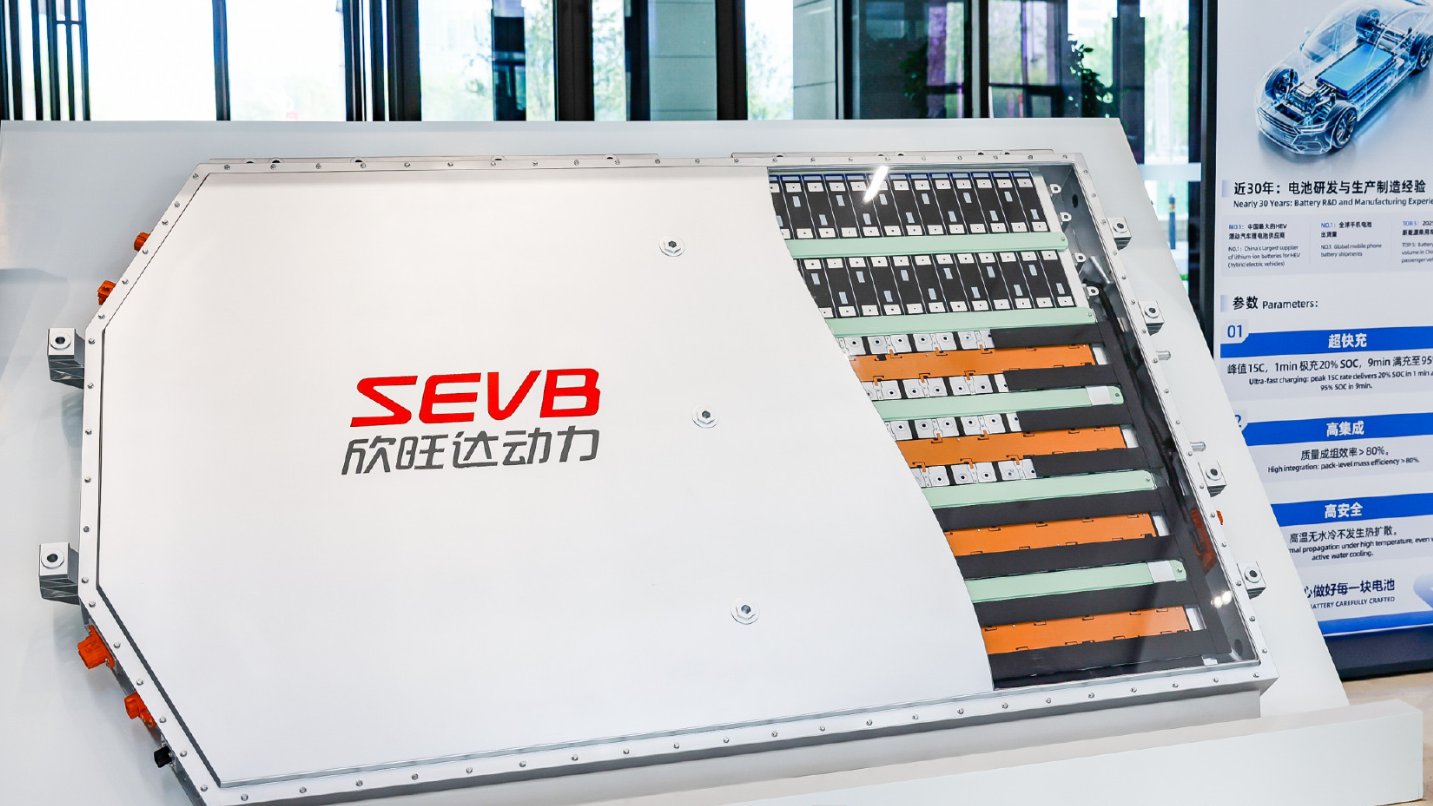
Xinheyuan Thermal Transmission Technology has achieved mass production of 0.25mm ultra-thin aluminum battery cell enclosures. The weld sealing precision reaches a fraction of human hair diameter, with nail penetration resistance improved by over 30% and heat dissipation efficiency increased by more than 20%, while the entire production line core technology is fully localized.
The "Impossible Triangle" of EV Battery Enclosures
The battery cell enclosure sector has long faced a tricky balancing challenge known in the industry as the "impossible triangle":
Lightweighting: Thinner enclosures reduce overall battery pack weight, improving vehicle range
Sealing integrity: Enclosures must prevent electrolyte leakage and moisture intrusion
Protection performance: Enclosures need to withstand mechanical impacts including nail penetration, compression, and collision
Under conventional technical approaches, these three goals often conflict. Thicker enclosures provide adequate protection and sealing but add significant weight. Thinner enclosures achieve lightweighting but leave nail penetration resistance and weld sealing as critical weak points. This contradiction becomes particularly acute in high energy density battery packaging scenarios.
Xinheyuan's Technical Breakthrough
Xinheyuan Thermal Transmission Technology has achieved a balance across all three dimensions on a 0.25mm ultra-thin aluminum case through the dual approach of precision welding process innovation and material advancement, offering the industry a fundamentally new technical path.
Precision Welding: Breaking Through Magnitude Limits
One of Xinheyuan's core breakthroughs lies in the extreme refinement of its welding process. The weld sealing precision reaches a fraction of human hair diameter, meaning that at scales nearly invisible to the naked eye, the weld points still form complete, uniform, defect-free sealing layers. This precision level far exceeds conventional industry standards, fundamentally addressing the sealing inadequacy problem that has plagued ultra-thin enclosures.
Material and Structural Innovation
Through proprietary material formulations and enclosure structure optimization, Xinheyuan achieves the following at the extreme thickness of 0.25mm:
Nail penetration resistance improved by over 30% compared to conventional products
Heat dissipation efficiency increased by more than 20%
Entire production line core technology is fully localized
Performance Dimension | Conventional Aluminum Case | Xinheyuan 0.25mm Case | Improvement |
|---|---|---|---|
Enclosure Thickness | 0.4-0.6mm | 0.25mm | ~40% weight reduction |
Nail Penetration Resistance | Baseline | Baseline +30%+ | >30% |
Heat Dissipation Efficiency | Baseline | Baseline +20%+ | >20% |
Weld Sealing Precision | Industry standard | Fraction of hair diameter | Order of magnitude |
Production Line Localization | Partial import dependency | Fully localized | 100% |
Mass Production Progress and Commercial Deployment
The technology has completed full-process verification from laboratory to production line and entered mass production. Currently, Xinheyuan has established deep cooperation with over 10 mainstream automakers, with products covering core application scenarios in power battery packaging.
For batteries pursuing high energy density, the benefits of enclosure weight reduction are multi-dimensional:
Direct weight reduction: Enclosure thickness dropping from 0.5mm to 0.25mm significantly reduces individual case weight
Space release: Thinner enclosures mean more cells can fit in the same volume, improving volumetric energy density
Heat dissipation optimization: Over 20% improvement in heat dissipation efficiency supports better thermal management during fast charging
Cost reduction: Reduced ultra-thin aluminum usage combined with localized production lines offers potential for further packaging cost compression
Technical Outlook
As global power batteries evolve toward higher energy density and faster charging speeds, enclosure technology is shifting from "passive protection" to "active enablement." The mass production of Xinheyuan's 0.25mm ultra-thin aluminum case not only solves the industry's long-standing "impossible triangle" but also provides a referenceable technical paradigm for next-generation solid-state and semi-solid-state battery packaging solutions. Stay updated with the latest technology trends at EX1000.COM.