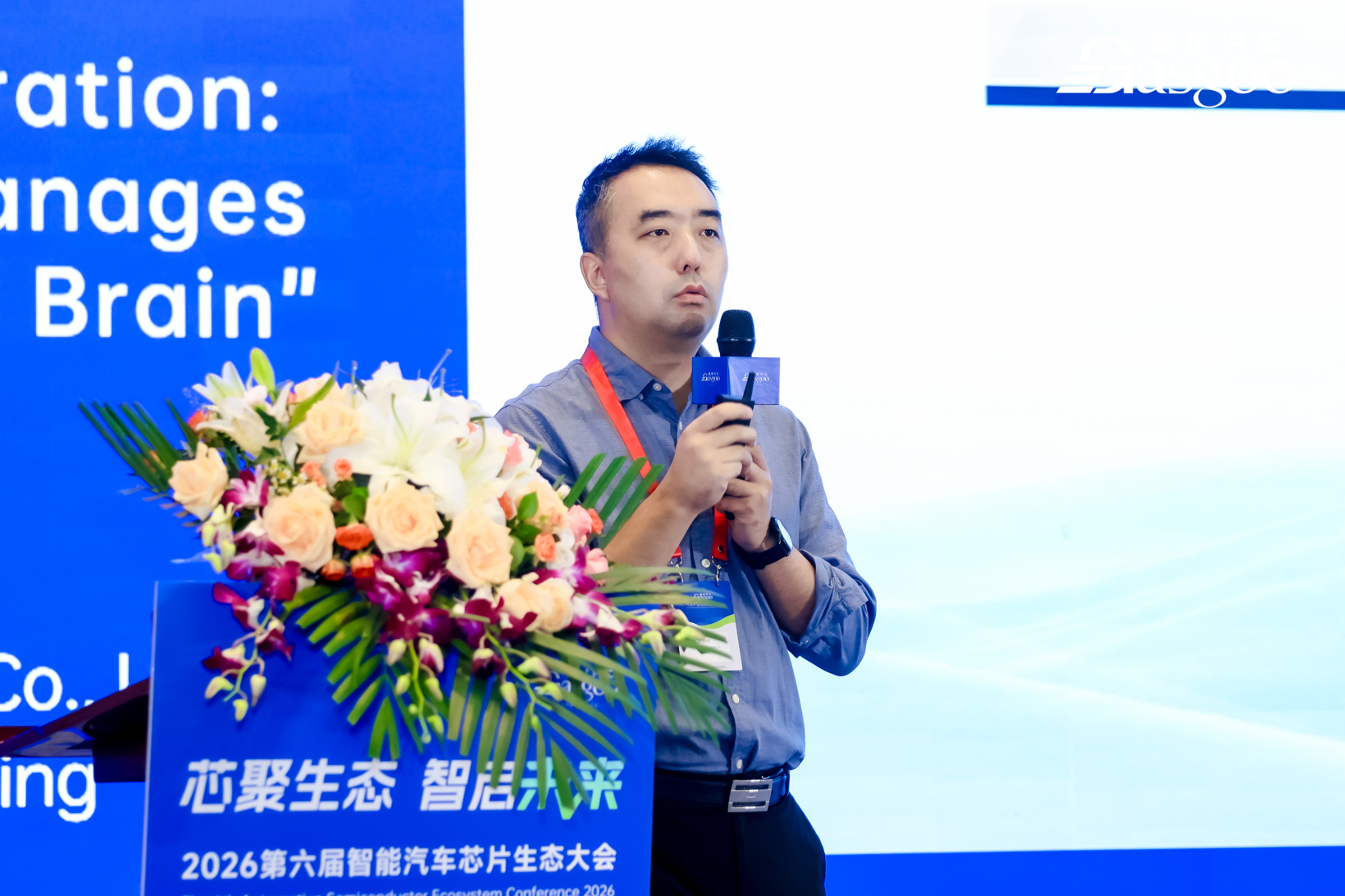
In August 2026, Ding Yan, co-CTO of Lumos Robotics, confirmed his departure after a tenure of fewer than 280 days. As an early core driver of the UMI technology roadmap, Ding has joined Fudan University's Zuquan Institute, sparking widespread industry attention on talent mobility in the embodied intelligence sector.
Departure Confirmed: A Brief Tenure of Under 280 Days
According to Gasgoo Embodied Intelligence, Ding Yan, co-CTO of Lumos Robotics, has officially confirmed his departure. His social media profiles on platforms including Xiaohongshu have been updated to list him as "Researcher at Fudan University's Zuquan Institute", confirming the career pivot.
Ding joined Lumos Robotics in November 2025 and served for fewer than 280 days before departing. During his brief tenure, he led the construction of the UMI (Unreal Motion Imitation) data collection system and the technical stack for embodied model training, bringing along over a dozen core technical team members from his previous venture, Yixing Robotics.
Career Overview: A Complete Academic-Industry Loop
Ding's career spans top-tier overseas institutions and domestic innovative enterprises, forming a complete "academia → industry → academia" trajectory:
| Period | Institution/Company | Role/Responsibility |
|---|---|---|
| PhD | State University of New York (SUNY) | Ph.D. in Computer Science |
| Overseas Research | Ford, Meta | Frontier research in robotics perception and control |
| 2024 (Returned to China) | Shanghai AI Laboratory | Young researcher; among first globally to integrate large models into robotics control |
| 2024-2025 | Yixing Robotics | Co-founder and CTO |
| Nov 2025 - Aug 2026 | Lumos Robotics | Co-CTO; led UMI data system construction |
| Aug 2026 onwards | Fudan University Zuquan Institute | Researcher |
Ding is one of the important early drivers of China's UMI technology roadmap. UMI technology trains robotic motion control strategies by imitating real human movements, considered a key pathway to improving embodied intelligence data collection efficiency. During his time at the Shanghai AI Lab, he spearheaded the development of multiple VLA (Vision-Language-Action) models, accumulating full-stack embodied large model R&D experience spanning perception to decision-making.
Industry Impact: Intensifying Talent Competition in Embodied Intelligence
Ding's departure reflects the high talent mobility currently characterizing the embodied intelligence track. At the end of 2025, Yixing Robotics was dissolved due to investor strategic retrenchment, and Ding promptly moved with his core team to Lumos Robotics. His departure again less than a year later, this time toward academia, is a trajectory worth noting.
Key drivers of talent mobility in the embodied intelligence sector include:
- Technology route divergence: Different technical paths — UMI, VLA, end-to-end — create varying talent demands
- Capital cycle volatility: Changes in startup financing rhythms directly impact team stability
- Bidirectional academic-industry flow: Top talent increasingly moves freely between enterprises and universities
- Big tech competition: Leading AI companies are intensifying their competition for embodied intelligence talent
Academic New Trend: Fudan Zuquan Institute's Strategic Layout
The Fudan University Zuquan Institute that Ding has chosen to join represents one of Fudan's key research institutions in embodied intelligence and robotics. The significance of this personnel change lies in several signals:
- Rising academic appeal: In a phase of relatively cautious industry capital, university research institutes offer top talent a more stable research environment
- Deep industry-academia integration: Ding combines profound academic foundations with hands-on industry experience, positioning him to drive the commercialization of Fudan's embodied intelligence research
- Talent return trend: From overseas top institutions (Ford, Meta) to domestic industry, and now to domestic top universities — reflecting the maturation of China's AI research ecosystem
For international buyers tracking the embodied intelligence supply chain, talent mobility serves as an important barometer of industry maturity. The return of full-stack talents like Ding to academia means that the industry faces short-term team rebuilding challenges, while also indicating that more high-quality research outputs will emerge from academic institutions — benefiting the entire ecosystem in the long run. For more insights, visit EX1000.