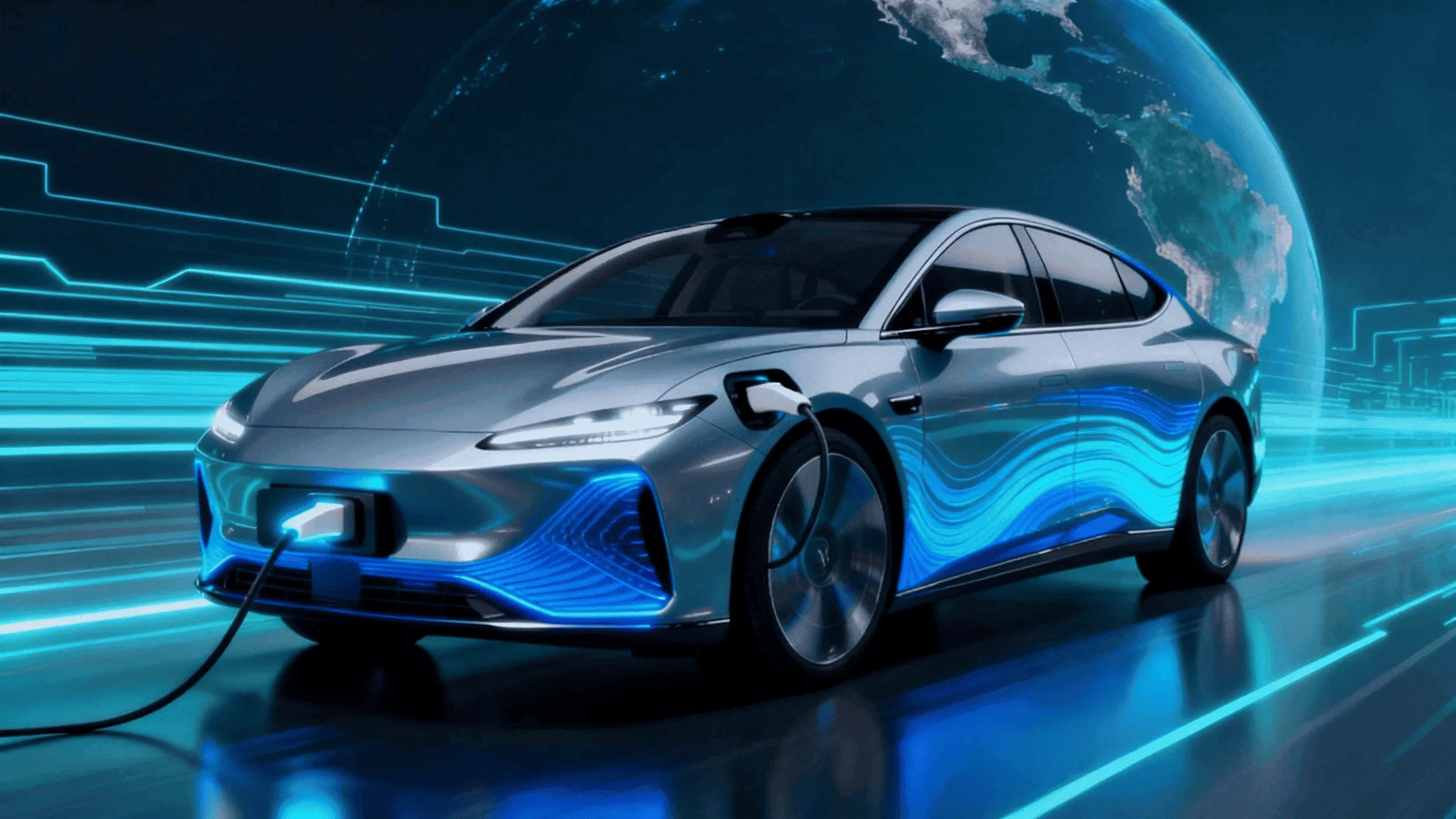
The 2026 Gasgoo Awards & China Automotive Industry Innovation Casebook reveals that as new energy vehicles enter mass adoption, competition in China's auto industry is shifting from electrification penetration to electrification capability. Electric powertrains are evolving from component-level optimization to system-level innovation, while thermal management is upgrading from basic cooling into integrated energy management systems covering batteries, electric drives, cockpits, and intelligent vehicle components.
Competition Shift: From "Whether" to "How Strong"
In 2026, China's NEV market has entered a new stage of development. Industry focus has moved from electrification penetration rates, battery installation volumes, and electric drive system deployment figures toward energy efficiency, system integration, cost optimization, and full-lifecycle value.
The deeper significance of this shift is that China's NEV industry is undergoing a critical transition from "quantity expansion" to "quality improvement." As a core technology area for NEVs, electrified powertrains are evolving from individual component optimization to system-level innovation. Key technologies including power batteries, electric drive systems, electronic control systems, high-voltage platforms, and power semiconductors are advancing rapidly, collectively driving improvements in vehicle performance, safety, cost, and user experience.
Meanwhile, the NEV energy ecosystem is undergoing profound transformation:
- 800V high-voltage fast charging and ultra-fast charging are reshaping energy replenishment systems
- Thermal management is evolving from basic cooling solutions into integrated energy management systems covering batteries, electric drives, cockpits, and intelligent vehicle components
- Battery-swapping models continue exploring commercialization pathways in specific scenarios
Power Battery Competition Heats Up: Dual Game of Energy Density and Cost
The power battery sector remains the core battleground of electric drive competition. In 2026, technology development centers on the following directions:
| Technology Direction | Core Objective | Industrialization Progress |
|---|---|---|
| LFP Upgrade | Improve energy density, reduce cost | Mass production, market share expanding |
| High-nickel Ternary | Pursue higher energy density | Mainstream for premium long-range models |
| Solid-state Battery | Safety and energy density breakthrough | Small-batch demonstration, scale expected post-2027 |
| Sodium-ion Battery | Resource independence, low cost | Initial application in low-speed vehicles and energy storage |
Lithium iron phosphate (LFP) batteries, leveraging cost advantages and safety performance, continue expanding their share in the mid-to-low-end market. Through structural innovations (such as BYD's Blade Battery and CATL's CTP/CTC technologies), LFP energy density has approached the levels of early ternary batteries, further squeezing ternary materials'market space in the mid-range segment.
High-nickel ternary materials (NCM811, NCM9-series) remain the preferred solution for premium long-range models, but their more stringent thermal management requirements are precisely where integrated thermal management technology shines.
Thermal Management: Paradigm Leap from "Cooling" to "Energy Management"
Thermal management is one of the most noteworthy directions in NEV technology evolution in 2026. According to industry data:
- 2025 China NEV thermal management industry scale: 86.4 billion yuan
- 2026 projected scale: 127.4 billion yuan
- 2023-2027 CAGR: 20%
- Thermal management market penetration: Approaching 50%
Behind the explosive growth of the thermal management industry lies a fundamental paradigm shift:
Integrated Thermal Management Architecture
Traditional distributed thermal management (independent battery cooling, motor cooling, and cabin air conditioning) is being replaced by integrated thermal management architecture. Through unified heat pump systems and intelligent control algorithms, vehicle-wide thermal management achieves coordinated multi-heat-source scheduling:
- Waste heat recovery from motors and electronic controls for cabin heating
- Intelligent coordination of battery preheating and cooling
- Significantly reduced winter range degradation (some models' heat pump systems can contain winter range loss within 15%)
New Environmentally Friendly Refrigerants
As global environmental requirements for refrigerants tighten, R744 (CO₂) heat pump systems and low-GWP refrigerants are becoming standard configurations for new-generation thermal management systems. Chinese suppliers are at the global forefront in industrializing these technologies.
Intelligent Thermal Control
AI algorithm-based intelligent thermal management control systems are emerging. These systems can perceive ambient temperature, driving conditions, battery status, and occupant needs in real time, dynamically optimizing thermal energy distribution strategies for maximum efficiency.
800V High-Voltage Platform: The Watershed of Fast-Charging Technology
The 800V high-voltage electrical architecture has become a standard technology for mid-to-high-end NEVs in 2026. Its core advantages include:
- Charging speed leap: Supporting 350 kW+ ultra-fast charging, reducing 10%-80% charging time to under 15 minutes
- Reduced energy consumption: High-voltage, low-current design reduces wiring harness losses, improving vehicle efficiency by 3%-5%
- Weight optimization: Thinner wiring and smaller connectors reduce overall vehicle weight
The proliferation of 800V platforms also places new requirements on electric drive systems:
- SiC (silicon carbide) power devices have become the mainstream choice, offering higher switching frequencies and lower losses
- Motor insulation systems must withstand higher voltage levels
- Thermal management systems must adapt toheat dissipation demands under higher power densities
| Voltage Platform | Representative Models | Peak Charging Power | 10%-80% Charging Time |
|---|---|---|---|
| 400V | Early pure-electric models | 100-150 kW | 35-50 minutes |
| 800V | 2026 mid-to-high-end models | 300-480 kW | 12-18 minutes |
| 1000V+ | Concept models / commercial vehicles | 500 kW+ | <10 minutes |
Power Semiconductors: The "Heart" of Electric Drives
Power semiconductors are the core devices of electric drive systems. In 2026, the industry landscape shows the following characteristics:
- IGBT (Insulated Gate Bipolar Transistor): Still dominates the 400V platform and mid-to-low-end markets, with localization rates continuously improving
- SiC MOSFET: Rapidly penetrating the 800V platform and premium markets, with large-scale applications by brands such as BYD, NIO, and Li Auto driving cost reductions
- GaN (Gallium Nitride): Beginning trial use in low-power scenarios such as onboard chargers (OBC) and DC-DC converters
Chinese power semiconductor suppliers (such as Starpower, CRRC Times Electric, Silan Microelectronics, etc.) have achieved high localization rates in the IGBT field and are accelerating their catch-up in SiC. More domestic SiC modules are expected to enter main drive systems in 2026-2027.
Implications for Overseas Markets
The rapid iteration of China's NEV electric drive and thermal management technologies carries significant implications for overseas markets such as Central Asia and Russia:
- Technology spillover: Chinese suppliers' integrated thermal management systems, 800V platforms, and SiC devices are already export-capable
- Cost advantage: Cost reductions from large-scale mass production make Chinese NEV models more price-competitive in Central Asian and Russian markets
- Winter adaptability: Heat pump thermal management technologies optimized for cold climates have direct applicability in high-latitude markets such as Russia
For more technical insights, visit EX1000.COM.