Australian media recognizes China as the undisputed global leader in electric vehicles. From battery swap technology to megawatt fast charging, from fully automated production lines to the world's largest charging network, China is reshaping global automotive competition through its complete industrial chain advantages.
Shedding the "Embarrassment" Label for Good
Australian Broadcasting Corporation recently published an article stating that China's electric vehicle industry, once considered an "embarrassment," has now risen to world-leading status and become the undisputed global leader in electric vehicles. This assessment comes from international media that has long observed the Chinese automotive market.
Global automotive industry analyst Bill Russo, who has lived in China for over 20 years, put it more directly: "China has won the race in electric vehicles by achieving comprehensive autonomous development across the entire value chain."
Beyond Production Volume: Ecosystem Advantages Matter More
According to the International Energy Agency's Global EV Outlook 2026, of the approximately 22 million electric vehicles produced globally in 2025, nearly 75% were manufactured in China. China contributes the vast majority of global EV production and commands over 80% of battery cell manufacturing capacity.
But what is even more impressive than production figures is infrastructure density. China currently operates the world's largest EV charging network, with one public charging point for every 10 electric vehicles. By comparison, Australia has just one public charger for every 45 EVs. This level of infrastructure density has largely eliminated range anxiety for EV owners.
"China Speed" Defined by Technology Iteration
Technological innovation in China's EV sector is advancing at an extraordinary pace:
- NIO has achieved fully automated battery swapping. Drivers pull into a swap station, and robots complete the battery exchange in under 5 minutes. The technology is now being promoted overseas
- BYD has introduced a "megawatt flash charging system" that can charge a vehicle from 10% to 70% in just 5 minutes, with plans for even more powerful next-generation charging equipment
- NIO's manufacturing workshops rely on full-process robotic operations, achieving the remarkable efficiency of one vehicle rolling off the line every minute
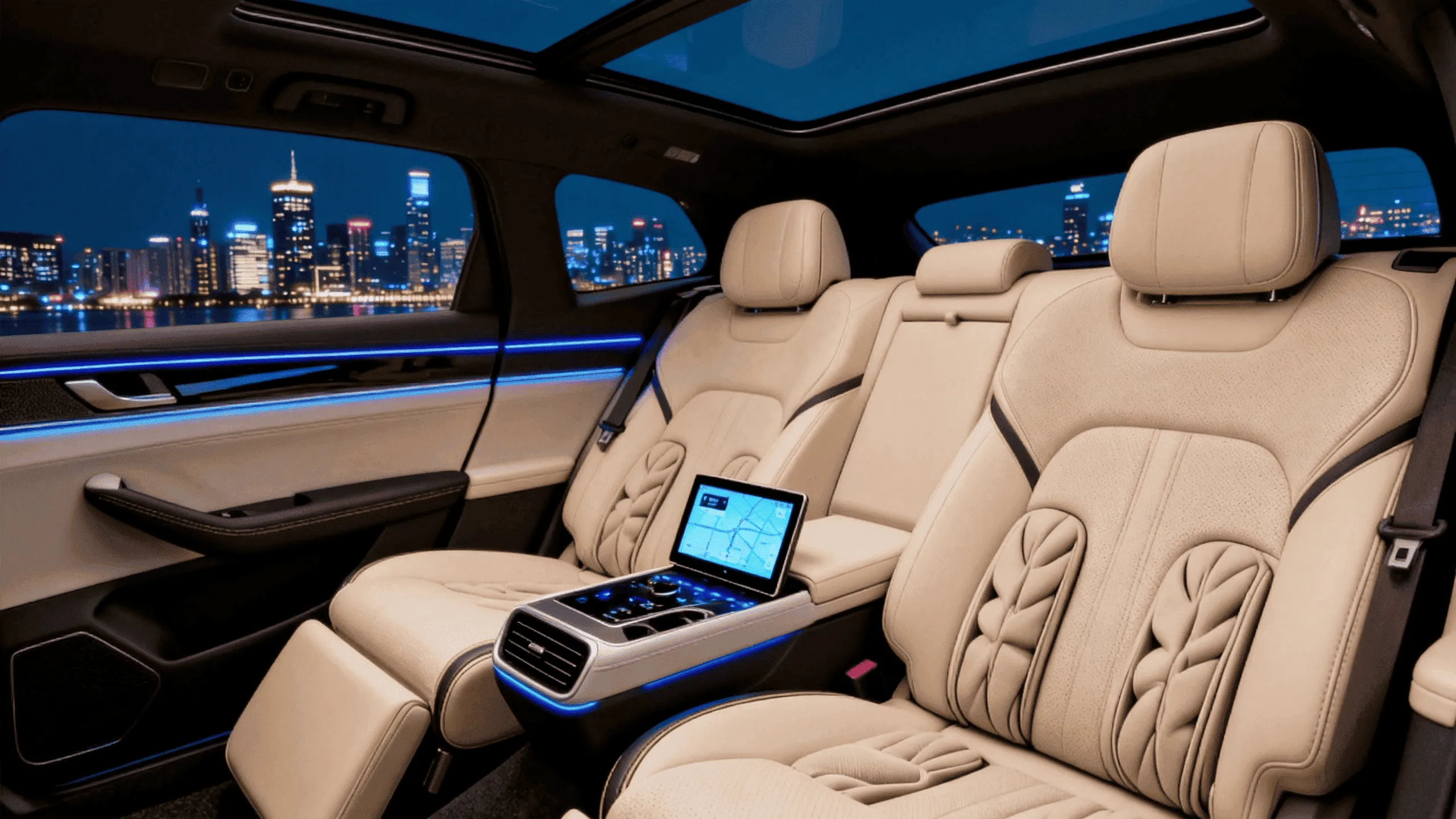
Auto commentator Ethan Robertson, based in China, notes that standard electric vehicles in the Chinese market now come equipped with in-car TVs, refrigerators, "zero-gravity" massage seats, surround sound systems, and digital connectivity features, all at a price of approximately 30,000 AUD (around USD 20,000) or even lower. "In the past, getting these features in a foreign brand car would cost thousands extra. Now they come standard in Chinese EVs."
Export Engine Accelerates, Reshaping Global Market Dynamics
China's global influence in electric vehicles continues to expand through exports. According to the China Passenger Car Association, China exported 424,000 new energy passenger vehicles in May 2026, a year-on-year increase of 112.6%. NEVs accounted for more than half of total passenger vehicle exports that month.
| Brand | NEV Exports May 2026 | Export Share |
|---|---|---|
| BYD | 155,944 units | 36.7% |
| Chery | 62,398 units | 14.7% |
| Geely | 39,811 units | 9.4% |
| Tesla China | 38,701 units | 9.1% |
| SAIC Passenger Vehicle | 22,450 units | 5.3% |
IEA data shows that in 2025, China's EV exports surpassed 2.5 million units, hitting a record high and accounting for 35% of total car exports (up from just 20% in 2024). In markets outside China, Europe, and the United States, 55% of electric car sales in 2025 came from Chinese imports, compared to less than 5% just five years earlier.
From "Smart Device on Wheels" to Global Rule Maker
Russo's definition of Chinese EVs is particularly apt: "China is now introducing the world to an entirely new product category — a 'smart device on wheels.' This is truly transformative innovation coming from China."
Robertson's assessment is equally compelling: "Chinese brands have transformed from something that once embarrassed Chinese consumers... into a source of pride. If you want to feel the pulse of the global auto industry, you have to be in China."
For automotive buyers and dealers in Central Asia, Russia, and emerging markets worldwide, Chinese EVs have evolved from a "value-for-money option" to a "technology benchmark." For more information, visit EX1000.COM.