Starting in the third quarter of 2026, the HS8 driver assistance system developed by CARIZON will be installed in seven models from Volkswagen's three joint ventures in China; the Neue Klasse BMW iX3 will offer a smart driving system co-developed with Momenta as standard across the lineup. From power battery technology licensing to global lidar market share, China's supply chain and AI capabilities are extending outward along with multinational automakers' systems. This article reviews the relevant data and cooperation models, and points out that this is not a simple "one-way export," but a two-way flow of technology, knowledge and industrial capability.
1. Starting in Q3, an L2++ System Developed in China Goes Into Seven Volkswagen Models
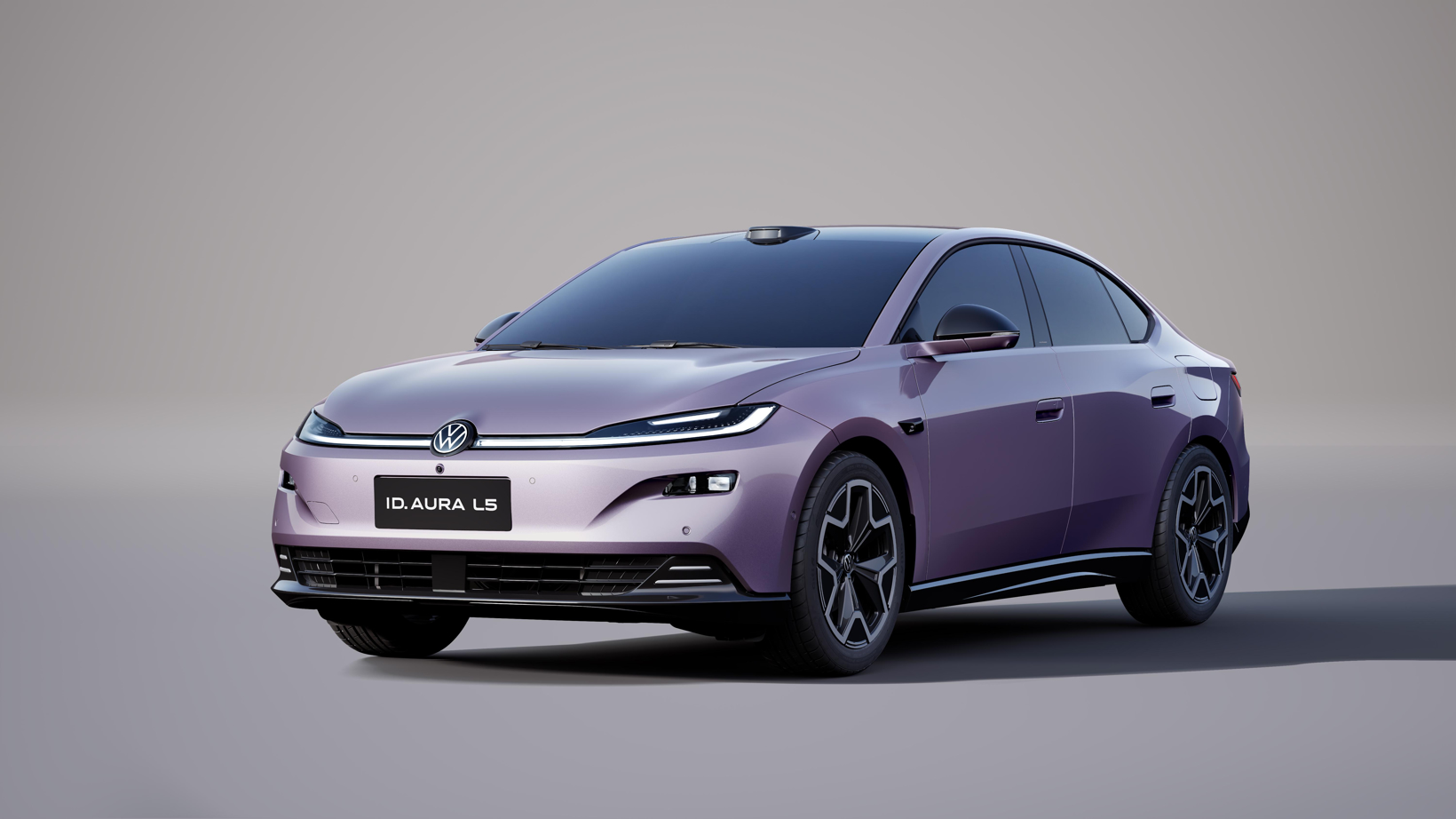
In the third quarter of 2026, HS8 (HyperSense8), the first-generation all-scenario driver assistance product developed by CARIZON, will be rolled out across seven all-new models from Volkswagen's three joint ventures in China. CARIZON is a joint venture between CARIAD, the software company under Volkswagen Group, and Horizon Robotics; HS8 is an in-vehicle one-stage end-to-end solution.
Placed on a timeline, this move contrasts with the joint venture contract Volkswagen signed with SAIC in 1984. Back then, R&D, manufacturing, quality and supply chain management systems flowed from Germany, Japan and the United States into China; today, the direction of flow is becoming more complex. In July 2026, Volkswagen further deepened its cooperation with Horizon Robotics, and CARIZON will, through a "white-box licensing" model and drawing on Horizon's AI foundation model capabilities, independently develop a unified AI driving solution for Volkswagen Group China.
2. The Data: the Advantages of China's Supply Chain Have Moved Beyond the Domestic Market
Changes in the power battery sector came earlier. Data from SNE Research shows that in the first half of 2026, global power battery installations reached 269GWh, and six of the world's top ten companies came from China, with a combined market share of 63.9%. The forms of cooperation go beyond simply "selling batteries": the battery plant Ford is building in Michigan, USA, adopts a technology licensing model for CATL's lithium iron phosphate batteries — the plant is owned by Ford, while the Chinese company provides the related technology and services.

At the component level, data from Gasgoo Automotive Research Institute shows that in the domestic passenger car air suspension market in the first half of 2026, three local suppliers — Konghui Technology, Tuopu Group and Baolong Technology — held a combined share of 91.4%; in the lidar market, Hesai Technology and Huawei ranked first and second with 34.2% and 31.1% respectively. In the electrification field, FinDreams Powertrain held a 35.4% share of the highly integrated main drive system market, while BYD Semiconductor ranked first in the power module market with 19.3%.
On the overseas dimension, Yole Group's "2026 Global Automotive Market Report" shows that in 2025 Chinese lidar companies already held about 95% of the global automotive market, and Hesai ranked first worldwide in ADAS main lidar shipments with a 43% market share; in 2025 the global automotive lidar market exceeded US$1 billion for the first time, with full-year passenger car shipments reaching 3.7 million units.
3. Not Comprehensive Leadership: Progress Varies Across Technology Domains
In the domestic SiC power module market in the first half of 2026, Infineon still ranked first; in areas such as driving ADAS, international Tier 1 suppliers likewise maintained important positions. This forms a more realistic picture of China's automotive supply chain today: in some areas it has moved from catching up to running neck and neck or even leading, in others it is still breaking through, and increasingly, different technologies require systemic coordination.
4. Two Paths for Multinational Automakers to Plug Into Chinese Technology
At the 2026 Chengdu Auto Show, the Neue Klasse BMW iX3 opened for pre-orders, becoming the first to offer the BMW intelligent driving assistance system, deeply co-developed by BMW and Momenta, as standard across the entire lineup. The system was developed for Chinese road conditions and is backed by more than 15 billion kilometers of Chinese road data.
Dr. Mike Reichelt, head of the BMW Neue Klasse product line, explained that BMW's strategy is to "integrate Momenta's tech stack into our full-stack system." The Neue Klasse electronic and electrical architecture features several "superbrains" each handling different functions; Momenta's technology is integrated into one of these computing units while remaining relatively independent from the other systems, "so you can develop and test without affecting Momenta's operation at all." This differs from simply buying a packaged smart driving system: multinational automakers want to use Chinese companies' technological capabilities while incorporating them into their own electronic and electrical architectures and R&D systems. Volkswagen chose another path — developing independently through a joint venture and white-box licensing, plugging Chinese AI capabilities into its own R&D process.

Changes at the vehicle level are observable as well. The 2026 Trumpchi 3X launched by GAC Toyota in May 2026 saw Chinese-brand suppliers account for 65% of its entire supply chain, with more than 100 Chinese suppliers involved in core component supply; Momenta, Hesai Technology, iFlytek, CALB, Zenergy and Desay SV each entered areas such as smart driving, lidar, AI, batteries and domain controllers. At the same time, Toyota is advancing "ONE R&D" in China, placing more R&D and product decision-making capability in the country.
5. Why Now: the Questions Have Changed, and the Proving Ground Is Here
The global automotive industry is not short of mature solutions. What Tier 1 suppliers such as Bosch, Continental, ZF and Denso have that is hard to replicate is not just a particular technology, but decades of accumulated R&D systems, quality standards, global delivery capability and engineering experience. But the questions the industry faces today have changed: electrification has raised cost and efficiency issues anew, software has changed the pace of development, and AI is moving further into smart driving, cockpits, R&D and manufacturing.
Han Sanchu, Executive Vice President of Volkswagen Group (China) and CEO of CARIAD China, speaking about smart driving at a media briefing in August 2026, said: "Going from frugality to luxury is easy; going from luxury to frugality is hard. Doing a high-level solution well doesn't mean a mid-level solution will be competitive, but if you do a mid-level solution well, a high-level solution shouldn't be too difficult." Han Hongming, CEO of CARIZON, explained the reason for starting with entry-level models: "If we only rolled out our smart driving system on some luxury cars or a small number of high-end cars, the data would actually be very limited; but by going the other way, we actually collect more data."
Scale takes on another layer of value here. When a technology moves from a small number of high-end models into the broader mainstream market, it faces not only more users but also more road environments, more complex scenarios and a far larger body of real-world data. A vast new energy vehicle market, high-frequency product iterations, and new technologies continuously trickling down to mainstream price bands make China a high-intensity proving ground for both technology and business.
6. What Two-Way Flow Means
It should be noted that Europe, Japan and the United States still hold a great deal of core automotive industry capability, and the summary that "the student has become the teacher" is not accurate. A description closer to the facts is this: the flow of technology, knowledge and industrial capability in the global automotive industry is clearly becoming two-way. China is no longer merely a recipient of global automotive technology, a manufacturing base and an application market; it is also beginning to be a birthplace for certain new technologies, new products and solutions.
As a result, the so-called "China solution" can hardly be summed up by a single company or a single technology; it is more like a complete and still-evolving technology and supply chain system. For multinational automakers, the question has also shifted from "whether to adopt Chinese technology" to "with what architecture and at what pace to bring it into the global product system."