Core Roadmap Targets
On May 20, Azerbaijan's Ministry of Economy and Industry released the country's first national transportation electrification strategy document. Core targets include: 15% EV share of new vehicle registrations by 2030; public charging infrastructure meeting a standard of at least one fast-charging station per 50 kilometers; and 50% electrification of government fleets by 2028.
For context, Azerbaijan's EV penetration in 2025 was under 2%, meaning over 7x growth is required in the next five years. With annual new vehicle sales of approximately 80,000-100,000 units, the 15% target implies an annual market of roughly 12,000-15,000 electric vehicles.
Another key roadmap provision is procurement priority: under equivalent technical conditions, electric vehicles and components from China receive weighted scoring advantages in procurement. This clause reflects the deepening cooperation between Azerbaijan and China under the Belt and Road framework, as well as Chinese EVs' combined advantages in price-performance and technology maturity.
Why Chinese OEMs
Azerbaijan's procurement preference is no accident, but a rational choice based on practical considerations.
Market supply: European brands have seen market share in Azerbaijan decline sharply due to post-Ukraine conflict supply chain disruptions. Korean brands Hyundai and Kia have some foundation but weak EV product lines. Japanese brands' electrification progress is similarly lagging. Chinese OEMs happen to fill this supply vacuum.
Technology matching: Azerbaijan's climate conditions pose special requirements for EVs. Summer temperatures in Baku can exceed 40°C, while winter mountain regions drop to -15°C—a temperature span exceeding 50°C. Chinese OEMs' technical accumulation in high-temperature thermal management and cold-weather range—derived from domestic all-climate validation from Hainan to Heilongjiang—precisely matches Azerbaijan's needs.
Geostrategic positioning: Azerbaijan is seeking energy structure diversification. As an oil and gas exporter, Azerbaijan wants to reduce over-reliance on fossil fuels while capturing the global energy transition window. China's complete new energy industry chain layout provides Azerbaijan with one-stop cooperation potential from vehicles to charging infrastructure to grid upgrades.
Chinese OEMs Already on the Ground
BYD and Chery are currently the most active Chinese brands in the Azerbaijani market.
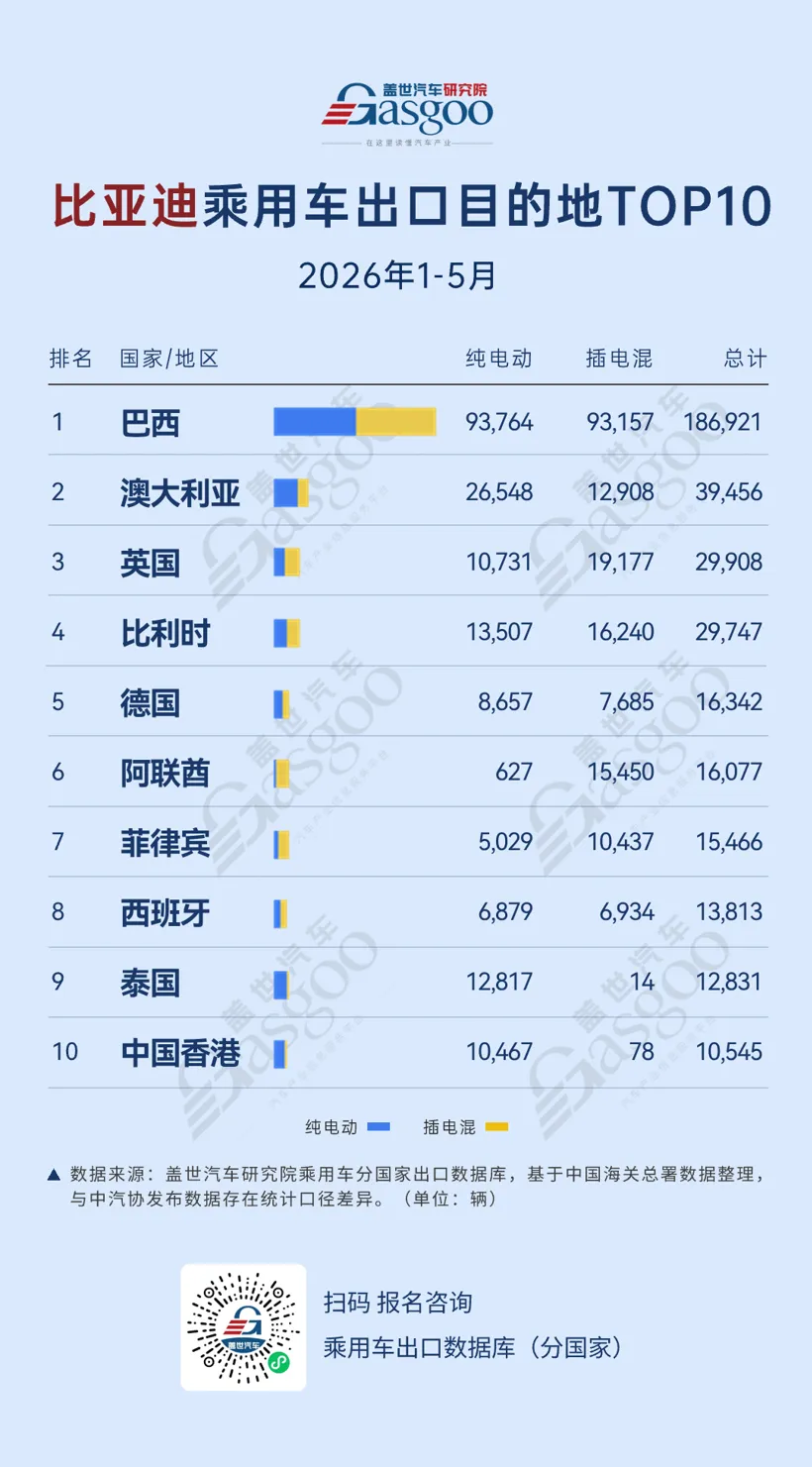
BYD, through its partnership with local dealer AzEuroCar, has opened 2 brand showrooms in Baku, selling Dolphin, Seal, and Song PLUS EV models. 2025 sales in Azerbaijan reached approximately 1,200 units, capturing over 60% of the country's EV sales. BYD also plans to build a regional battery assembly and energy storage systems factory within Baku's free trade zone, serving Caucasus and Middle Eastern markets.
Chery has taken a different entry strategy. It signed a CKD assembly cooperation agreement with local enterprise Ganja Auto Plant, targeting annual capacity of 20,000 units covering the Tiggo 7, Tiggo 8, and Arrizo series. Local production not only reduces import tax burdens but also creates approximately 800 direct jobs in Azerbaijan.
Infrastructure Progress
Vehicle sales are just one component of electrification. The charging infrastructure construction that Azerbaijan's government is simultaneously advancing is critical roadmap support.
SOCAR (Azerbaijan's national oil company) has launched a charging network construction plan, targeting deployment of 500 fast-charging stations along major highway corridors and in Baku urban areas. SOCAR's strategic transformation is highly symbolic—this traditional energy giant is gradually converting gas stations into "energy replenishment stations" offering both fueling and charging services.
Chinese enterprises are also participating in charging infrastructure construction. Teld has signed a cooperation agreement with Azerbaijan's power utility, planning to deploy 120kW+ high-power fast-charging networks along the Baku and Tbilisi-Baku corridors. EX1000.COM has incorporated charging facility packages into its vehicle sales solutions, providing customers with one-stop services covering charger selection, installation, and grid connection.
Market Outlook
Azerbaijan's electrification roadmap opens a relatively blue-ocean market for Chinese OEMs. Compared to the intensely competitive Central Asian inland markets, Azerbaijan and the South Caucasus region have lower automotive market competition density, unformed brand perceptions, and significant first-mover advantages.
However, limited market volume is also an undeniable fact. An annual EV market of 15,000 units equates to roughly the sales volume of one third-tier Chinese city. Chinese OEMs need to incorporate it into a broader "Caucasus + Middle East" regional strategy rather than treating it as a standalone core market.