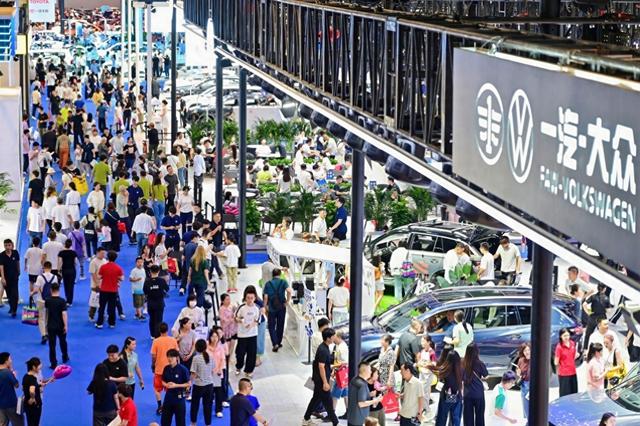
Key Information:The Beijing International Automotive Exhibition Committee announced that starting from 2027, the Beijing Auto Show will change from biennial to annual format. This reform breaks the long-standing "Beijing-Shanghai alternating year" pattern, forcing automakers to re-plan marketing budgets and exhibition strategies. 2027 will become the first "dual auto show" year.
Auto Show Reform: From Biennial to Annual
The Beijing International Automotive Exhibition officially announced that from 2027 onward, the Beijing Auto Show will shift from its traditional biennial format to an annual schedule. This decision marks a major adjustment in China's auto exhibition industry landscape. Previously, Beijing and Shanghai auto shows followed an "alternating year" model — Beijing in even years, Shanghai in odd years — providing a clear rhythm for OEMs and audiences.
After the reform, 2027 will become the first "dual auto show" year — both Beijing and Shanghai auto shows will be held in the same year. This presents new challenges for OEMs' marketing budgets, product launch timing, and exhibition strategies.
Multiple Drivers Behind the Reform
The decision to make Beijing Auto Show annual is driven by multiple factors:
Accelerated NEV technology iteration: Traditional two-year cycles can no longer keep pace with technology updates
Intensified market competition: OEMs need more frequent exposure platforms to capture consumer attention
Elevated international demands: Aligning with international annual auto show models like Geneva, Paris, and Detroit
Policy-industry synergy: Supporting China's auto industry transformation from quantity to quality
OEMs' Balancing Dilemma
For automakers, two A-class auto shows per year means reallocating marketing budgets. Beijing and Shanghai, as two core markets, each offer different strategic value:
Beijing Auto Show Advantages:
Political center, ideal for policy announcements and brand elevation
Key display window for northern China market
Concentrated media and industry resources
Shanghai Auto Show Advantages:
Economic center with higher consumption capacity and market activity
Complete Yangtze River Delta automotive industry chain
Higher internationalization with broader overseas media coverage
New Resource Allocation Logic
OEMs must achieve differentiated positioning for both shows within limited budgets:
Technology debut vs market launch: Choose one for major premieres, another for mass delivery
Brand premium vs volume promotion: Different shows for different product tiers
3. Domestic focus vs international expansion: Adjust communication strategy by target audience
Dimension | Beijing Auto Show | Shanghai Auto Show |
|---|---|---|
Positioning | Policy-oriented + brand elevation | Market-oriented + sales conversion |
Core Audience | Industry professionals + policymakers | End consumers + dealers |
Communication Focus | Technology breakthroughs + strategy | Product experience + sales |
Geographic Advantage | Northern market + political center | Yangtze Delta + consumption hub |
Industry Impact and Outlook
The Beijing Auto Show reform will trigger chain reactions. Regional shows like Guangzhou and Chengdu may face further resource squeeze. Meanwhile, OEMs may increasingly rely on online launches and vertical media, reducing dependence on traditional auto shows.
For overseas buyers, two A-class auto shows per year means more frequent opportunities to track Chinese new vehicle developments. Through EX1000.COM, overseas buyers can real-time follow the latest releases from Beijing and Shanghai auto shows, keeping pace with Chinese NEV product iteration cycles.