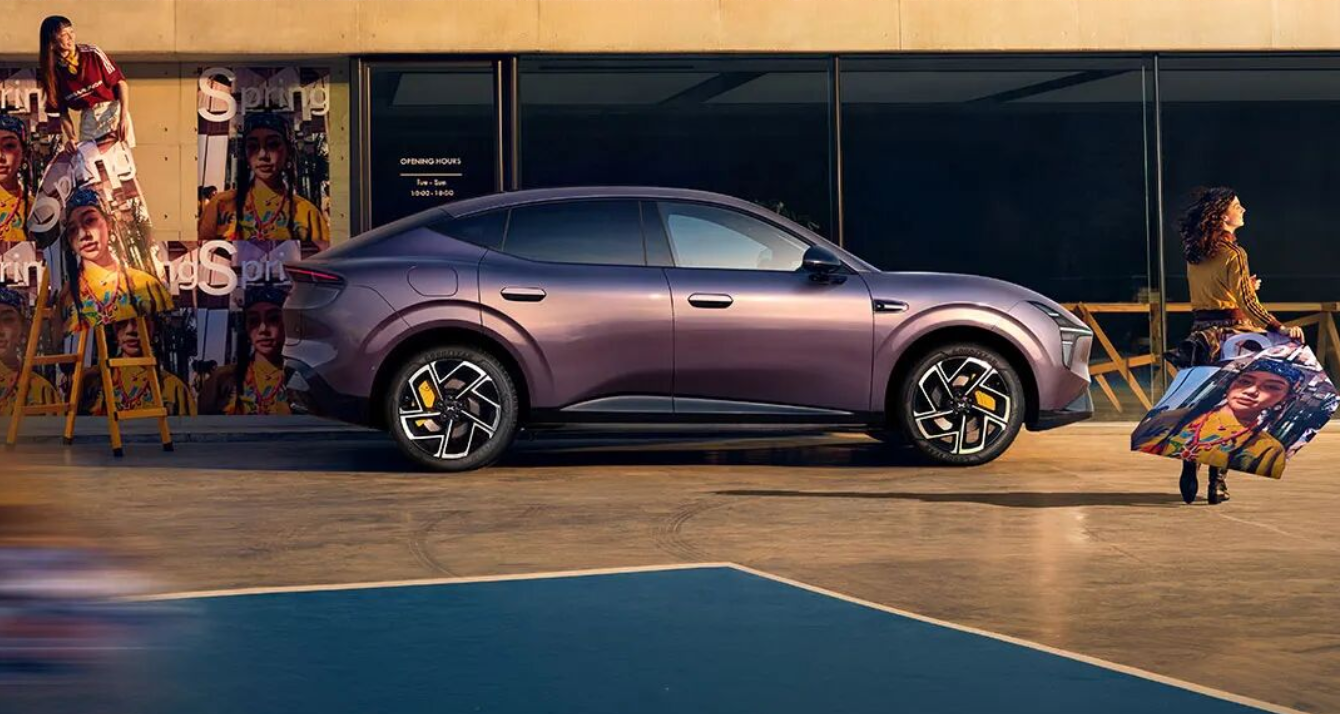
Chuneng Auto's first Engineering Trial prototype has rolled off the line, marking the startup's formal transition from engineering data phase to real-vehicle validation, jointly backed by Hengxin Auto Group and Chuneng New Energy.
Crossover into Auto Manufacturing: A Dealer Mogul's High-Stakes Gamble
The path of auto manufacturing has never lacked latecomers, and even in 2026, new players continue to enter the fray. On July 12, Chuneng Auto's R&D center announced that the company's first ET engineering prototype had rolled off the assembly line at the trial production center. ET stands for Engineering Trial — a design validation phase where design, manufacturing, and assembly processes undergo comprehensive verification.
Founded in December 2024 and headquartered in Hanyang District, Wuhan, Hubei Province, Chuneng Auto features a unique equity structure: founder Dai Deming and Hengxin Auto Group each hold 50%, with Dai serving as both legal representative and controlling shareholder. According to informed sources, Dai has injected 10 billion yuan of personal funds into the vehicle project.
Who is Dai Deming? He is the founder and chairman of Hengxin Auto Group, as well as the founder of Chuneng New Energy. Hengxin Auto Group ranks as the largest dealer group in Central China and the fourth-largest nationwide, operating over 300 4S stores. Chuneng New Energy, established in August 2021, has risen to become a leading global energy storage cell supplier within just a few years, capturing approximately 7.5% market share.
This "dealer + battery + vehicle" full-industry-chain layout is extremely rare among EV startups. Leveraging decades of experience in auto distribution and new energy batteries, Dai is attempting to break into the NEV vehicle segment through a heavy-asset model.
Industrial Chain Synergy: Dual Advantages of Battery Self-Supply and Channel Reach
Chuneng Auto's core competitiveness stems significantly from its two industrial pillars.
As a battery supplier, Chuneng New Energy provides a crucial cost advantage for vehicle manufacturing. According to public information, Chuneng New Energy has built combined production bases in Xiaogan, Wuhan, and Yichang with total capacity exceeding 110 GWh for energy storage and power batteries, with planned total capacity surpassing 350 GWh. Nearly 30 vehicle models equipped with Chuneng batteries have been listed in the MIIT's "Road Motor Vehicle Manufacturers and Products Announcement."
On the supply chain front, Chuneng Auto has accelerated partnerships since June 2026, signing strategic cooperation agreements with multiple leading suppliers:
- Aptiv: Cutting-edge supplier in automotive intelligent systems and engineered components
- Fuyao Group: World's largest automotive glass manufacturer
- Henglong Group: Leading domestic automotive steering systems supplier
- Peguform: Global top-tier automotive NVH acoustics and interior systems supplier
On the distribution side, Hengxin Auto Group operates a nationwide sales network and sold nearly 400,000 vehicles in 2023. This "self-developed + self-produced + own-channel" model can theoretically compress intermediate costs significantly, supporting the company's "ultimate cost-performance" strategy.
Chuneng Auto Core Information Overview:
| Dimension | Details |
|---|---|
| Founded | December 2024 |
| Headquarters | Hanyang District, Wuhan, Hubei Province |
| Equity Structure | Dai Deming 50% + Hengxin Auto Group 50% |
| Founder | Dai Deming (Founder of Hengxin Auto Group & Chuneng New Energy) |
| R&D Team | Approx. 800 people (as of end-2025) |
| First Vehicle Positioning | EREV SUV, benchmarking against AITO M5 |
| Expected Price Range | 150,000-200,000 yuan |
| Planned Launch | June 2027 |
| Potential Acquired Plant | WM Motor's "Xinghui Factory" in Huanggang, Hubei (planned capacity: 150,000 units/year) |
Challenges and Opportunities: Breaking Through the NEV Red Ocean
Despite its industrial chain synergy advantages, Chuneng Auto faces a new energy vehicle market where competition has entered a white-hot phase. Industry observers note that vehicle manufacturing is an extremely capital-intensive long game, and new entrants face severe challenges amid intense market competition.
From a technology roadmap perspective, Chuneng Auto's choice of an EREV SUV as its entry point is strategically astute. This approach avoids the range anxiety pain point of pure EVs while aligning with the current market's high-growth demand for hybrid vehicles. According to internal sources, the first model's range extender achieves thermal efficiency exceeding 42%, and when paired with semi-solid-state battery technology, comprehensive range is expected to surpass 1,200 kilometers.
However, Chuneng Auto still needs to resolve several critical issues:
- Production qualification: It has not yet obtained independent vehicle manufacturing qualification, and the plan to acquire WM Motor's Huanggang plant remains uncertain
- Brand recognition: As a completely new brand, how to establish differentiated positioning in consumer minds
- Technical R&D capability: Building a forward R&D system in core areas such as battery-motor-controller systems, intelligent cockpit, and autonomous driving
- Capital sustainability: Whether the initial 10 billion yuan investment can sustain operations through mass production and subsequent scaled operations
Zhang Xiang, a researcher at the Northern Industrial University Automotive Industry Innovation Research Center, stated that Chuneng Auto's entry amid the current competitive landscape will inevitably face numerous challenges. He recommended accelerating the recruitment of top-tier talent in core three-electric systems, intelligent cockpit, and autonomous driving, while leveraging existing flexible digital trial production lines to build a long-term competitive forward R&D system.
Nevertheless, the full-industry-chain model Dai Deming has constructed does offer unique advantages: battery self-supply lowers core component costs, and the proprietary channel network provides direct-to-consumer sales pathways. This "heavy assets + strong synergy" combination could become a new competitive paradigm in the NEV race. Whether it can ultimately break through depends on the convergence of three variables: product definition, mass production timing, and market opportunity.