NIO is undergoing a profound strategic transformation. Once celebrated for its user community operations, battery swap ecosystem, and brand storytelling, the EV startup is now redirecting its focus toward protecting gross margins and maintaining price stability. No longer pursuing valuation through narratives, NIO is using healthy financial metrics to prove the sustainability of its business model. This shift responds to both exhausted capital market patience and the industry-wide evolution from "burning cash for market share" to "profitable refinement."
Strategic Pivot: When Emotional Narratives Yield to Financial Discipline
There was a time when NIO was the most adept storyteller among Chinese EV startups. From NIO House community operations to the battery swap ecosystem blueprint, to the emotional premium of a premium intelligent EV brand — these narratives once earned NIO capital market favor and user loyalty. However, entering 2026, the company's public messaging has undergone a noticeable shift.
Recent statements and operational moves from NIO's management transmit a clear signal: the era of romanticism is ending, and financial discipline has become the new core doctrine. Specifically, this transformation manifests across three dimensions:
- Gross margin defense: Prioritizing per-vehicle gross margin recovery, even at the cost of some volume growth, refusing to participate in bottomless price wars
- Price stability: Avoiding frequent terminal promotions and policy-driven price cuts to maintain brand pricing anchors
- Operational refinement: Trimming inefficient channels and redundant spending, concentrating resources on core capabilities like battery swap networks and intelligent driving R&D
Why Now? Three Pressures Forcing the Strategic Shift
NIO's pragmatic pivot is not an active choice but the inevitable result of converging pressures:
- Capital market patience threshold approaching: Years of high R&D investment and battery swap infrastructure spending have made investors increasingly focused on profitability timelines. The "wait a bit longer" narrative has run out of room.
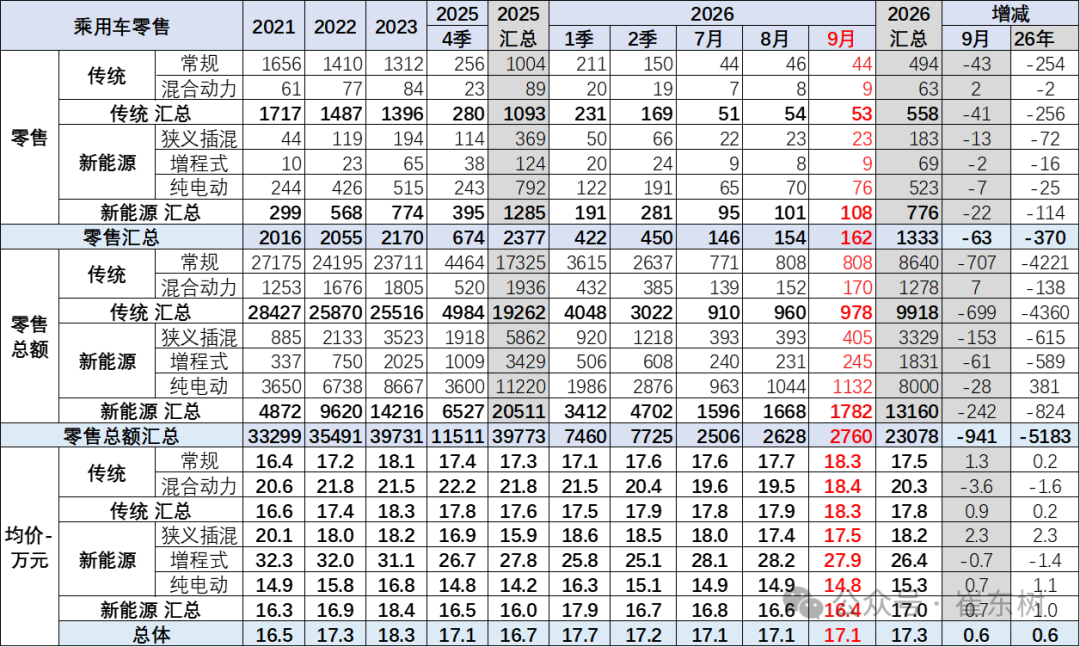
- Industry price war entering deep waters: In 2026, price competition in China's NEV market has escalated from "tentative concessions" to "survival-level博弈." Without guarding the gross margin bottom line, greater scale only means greater losses.
- Competitors' pragmatic approaches creating pressure: Li Auto's operational efficiency, BYD's cost control capabilities, and Xiaomi's supply chain integration efficiency are all proving to the market that car manufacturing ultimately returns to business fundamentals.
| Strategic Dimension | Romanticism Phase | Pragmatism Phase |
|---|---|---|
| Core Objective | Brand visibility and user scale | Margin health and operational efficiency |
| Pricing Strategy | Flexible promotions for growth | Price stability for margin protection |
| Resource Allocation | Wide-net deployment | Focused on battery swap + intelligent driving |
| External Messaging | Ecosystem vision and ambition | Financial data and operational metrics |
Overseas Perspective: What NIO's Transformation Means for Export Markets
For overseas buyers and dealers tracking Chinese NEVs, NIO's strategic shift sends signals worth interpreting.
On one hand, price stability means improved cost predictability for overseas procurement. In the past, domestic price war fluctuations often transmitted to export pricing, creating uncertainty for overseas dealers' inventory management and pricing strategies. If NIO can stabilize its domestic price anchors, the pricing stability of its export products will improve in tandem.
On the other hand, the "protect margins" strategy may imply that NIO will tend to maintain premium positioning in overseas markets rather than trading volume for low prices. This creates some tension with the current "high value-for-money" perception of Chinese brands in emerging markets like Central Asia and Russia — NIO may choose to maintain mid-to-high-end positioning in these markets rather than engaging in local brand price competition.
Notably, NIO's battery swap model remains a unique differentiator in overseas markets. If the company can replicate its swap network to key overseas markets at lower cost on the foundation of improved operational efficiency, this will become a core moat distinguishing NIO from other Chinese brands.
From a broader perspective, NIO's transformation is a microcosm of the Chinese NEV industry's overall maturation. When subsidy phase-outs, capital tightening, and white-hot competition converge, all players must choose between "scale" and "quality." NIO's choice, in many ways, foreshadows the next phase of the entire industry. For more in-depth analysis of the Chinese NEV market, visit EX1000.COM.