In August 2026, China's MIIT released the mandatory national standard GB4094-2026, requiring 19 core safety functions including turn signals, hazard lights, and gear shifting to be equipped with physical buttons or levers. New vehicle applications must comply from July 1, 2027; approved models have until January 1, 2028.
Policy Context: From "Big Screen Worship" to Safety Correction
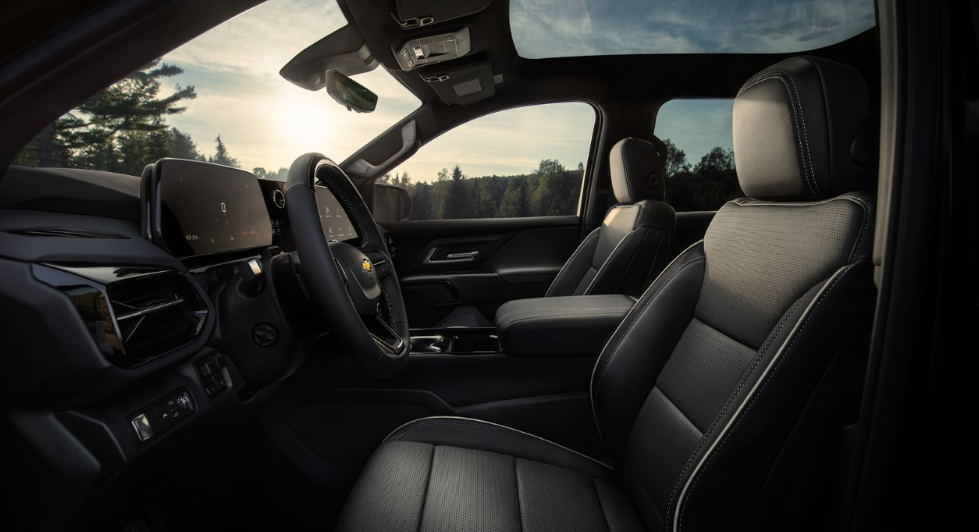
In recent years, the smart cockpit domain has seen a wave of "full-touchscreen" designs. Some new brands pursued minimalist aesthetics by integrating lights, gears, wipers, and other functions into the central screen, even eliminating physical buttons entirely in favor of touch and voice control. While this boosted perceived tech appeal, it increased driver distraction time and created safety risks during blind-operation scenarios.
The release of GB4094-2026 "Signs of Controls, Indicators and Tell-Tales for Motor Vehicles" by MIIT directly addresses this trend. As a mandatory national standard replacing the previous GB4094-2016, it elevates control requirements from "recommended" to "mandatory."
The implementation timeline is clear:
- August 2026: Standard officially released
- July 1, 2027: Mandatory for new vehicle applications
- January 1, 2028: Transition deadline for already-approved models
- Existing registered vehicles: Not subject to retroactive requirements
The 19-Item Mandatory Physical Control List
The regulation categorizes 19 core functions into four groups covering critical control nodes throughout the driving process:
Lighting and Signaling (7 items)
Turn signals, hazard warning lights, high/low beam switching, position lights, front/rear fog lights, light master switch, horn.
Basic Controls (3 items)
P/R/N/D gear shifting, parking brake (electronic handbrake must have physical button), mirror adjustment. Pure screen-based gear shifting is explicitly prohibited — mechanical gear levers, column shifters, or physical buttons must be retained.
Visibility and Safety (5 items)
Windshield wipers (including speed adjustment), defrost/defog, four-door independent window switches, ADAS activation/deactivation switch, child lock.
Emergency and Power (4 items)
Emergency call (ECALL) trigger button, EV drive system power cut-off switch, emergency unlock device, charging port emergency release.
| Function Category | Mandatory Items | Core Requirement | Typical Impact |
|---|---|---|---|
| Lighting & Signaling | 7 items | Turn signals, hazards, horn need physical controls | Full-touch cockpits require redesign |
| Basic Controls | 3 items | Pure screen shifting prohibited | Screen-shift vehicles face overhaul |
| Visibility & Safety | 5 items | ADAS switch must be independent of screen | New physical switches needed |
| Emergency & Power | 4 items | Must work when powered off/frozen | Signal path independent of infotainment |
Technical Standards: Four Hard Requirements for Extreme Usability
GB4094-2026 goes beyond listing which functions need physical controls — it imposes strict quantitative requirements on the controls themselves:
- Operation area: Minimum effective area of 10mm×10mm, ensuring operability even with gloves
- Position permanence: Button locations must be permanently fixed, not moving or hiding with OTA updates or theme changes
- Feedback mechanism: Must provide clear tactile or auditory feedback — press rebound or confirmation tone
- Extreme usability: Must remain functional during system freeze, black screen, or complete power loss; signal paths must be independent of the infotainment system
This means automakers cannot substitute capacitive touch strips or screen sliders to circumvent the rules. The "ADAS activation/deactivation control" requirement directly targets current designs that bury driver-assist switches in sub-menus.
Industry Impact: Smart Cockpit Design Gets Redrawn
For consumers, the biggest benefit is that high-frequency safety operations no longer hide deep within screen menus. Muscle memory handles driving tasks, significantly reducing distraction risk from looking away from the road. Physical keys remain operable during system failures, preserving a final line of operational control during emergencies.
For automakers, the "full-touchscreen" marketing pitch is weakened. Smart cockpits must evolve from software-defined to hardware-software synergy. Notably, this trend isn't China-specific — E-NCAP announced that from January 2026, its safety rating system will add assessments for physical operation of key functions. Vehicles without physical controls cannot achieve a five-star rating.
The world's two largest auto markets converging on "physical button return" through regulation or safety ratings marks a shift in HMI design from "minimalist showmanship" to "safety rationality." Mercedes, Audi, and Volkswagen have all endorsed the "coexistence of big screens and physical buttons" concept — not abandoning large screens, but optimizing the division of labor between screen and physical controls.
Correct Perspective: Not Anti-Tech, But Redrawing Boundaries
GB4094-2026 does not comprehensively reject touchscreen interaction. Rather, it decouples "safety-critical functions" from "comfort and entertainment functions." The optimal design keeps core safety functions on physical buttons for muscle memory and extreme usability, while delegating infotainment to screens and voice, leveraging their ecosystem richness.
The 19-item list precisely covers the industry-recognized set of high-frequency safety operations. Over the next three years, smart cockpit design is expected to shift from "screens consuming everything" to "layered collaboration between screens and buttons," with more multi-modal schemes combining physical buttons, rotary controls, center screens, and AR-HUDs.
For global automakers, this mandatory standard in China — where NEV penetration has already exceeded 60% — carries significant signaling value. The regulatory reinforcement of safety baselines will provide a reference template for other emerging markets. More automotive policy insights at EX1000.COM.