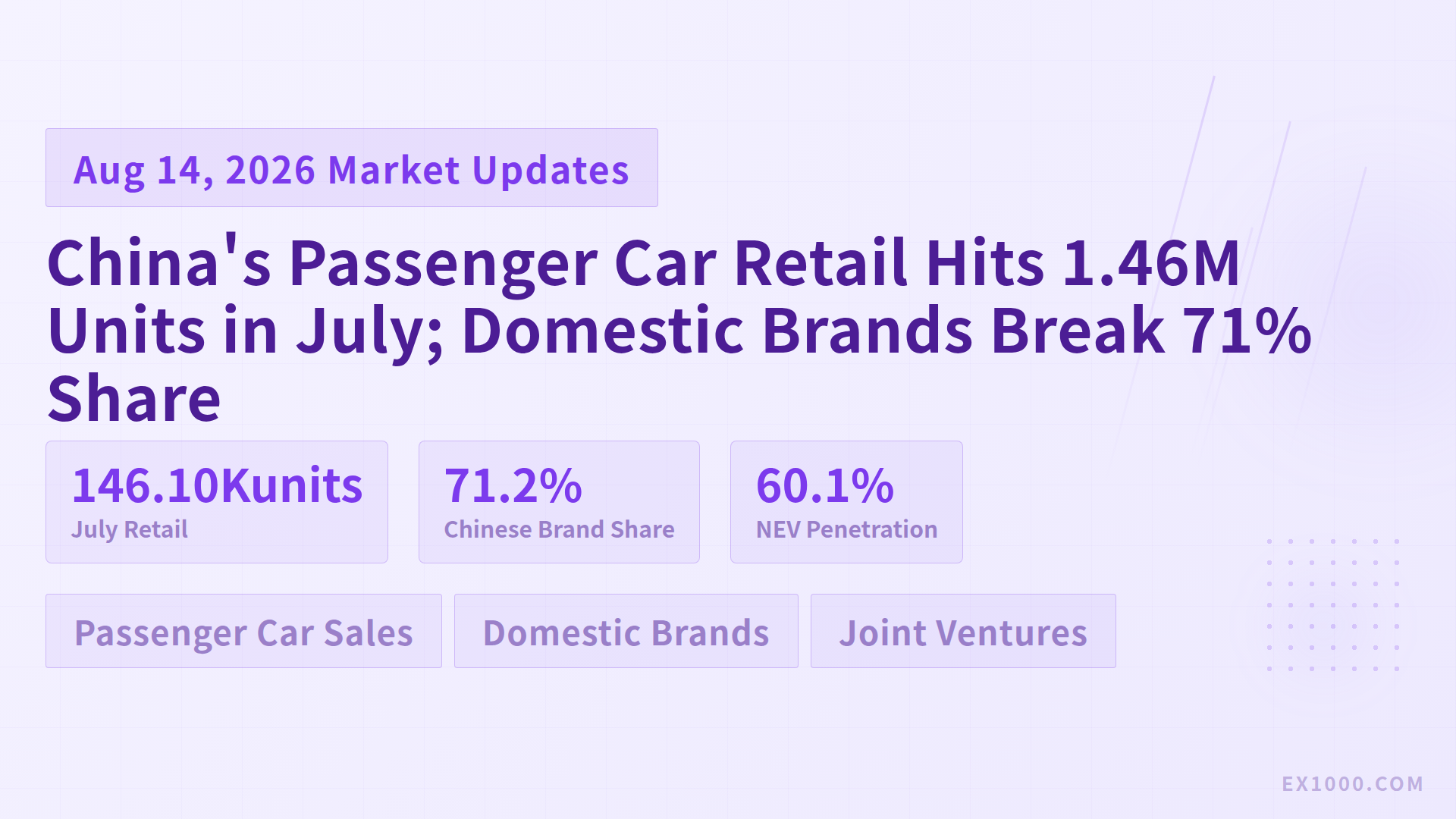
H1 2026 China passenger vehicle data shows domestic brands at 71.8% share, foreign brands at just 28.2%. Over five years, foreign brands lost approximately 5 million units in sales volume, marking a fundamental reversal in China's auto market structure.
Foreign Brands Fall Below 30% Share
July 2026 China passenger vehicle data reveals a dramatic divergence. Domestic brands accumulated 71.8% share, while foreign brands combined for just 28.2%—the first time foreign brands have fallen below the 30% threshold on record.
Five years ago, foreign brands held nearly 55% share, roughly equal with domestic brands. In just five years, foreign brands lost approximately 5 million units—equivalent to South Korea's entire annual auto market.
German, Japanese, and American Brands Under Pressure
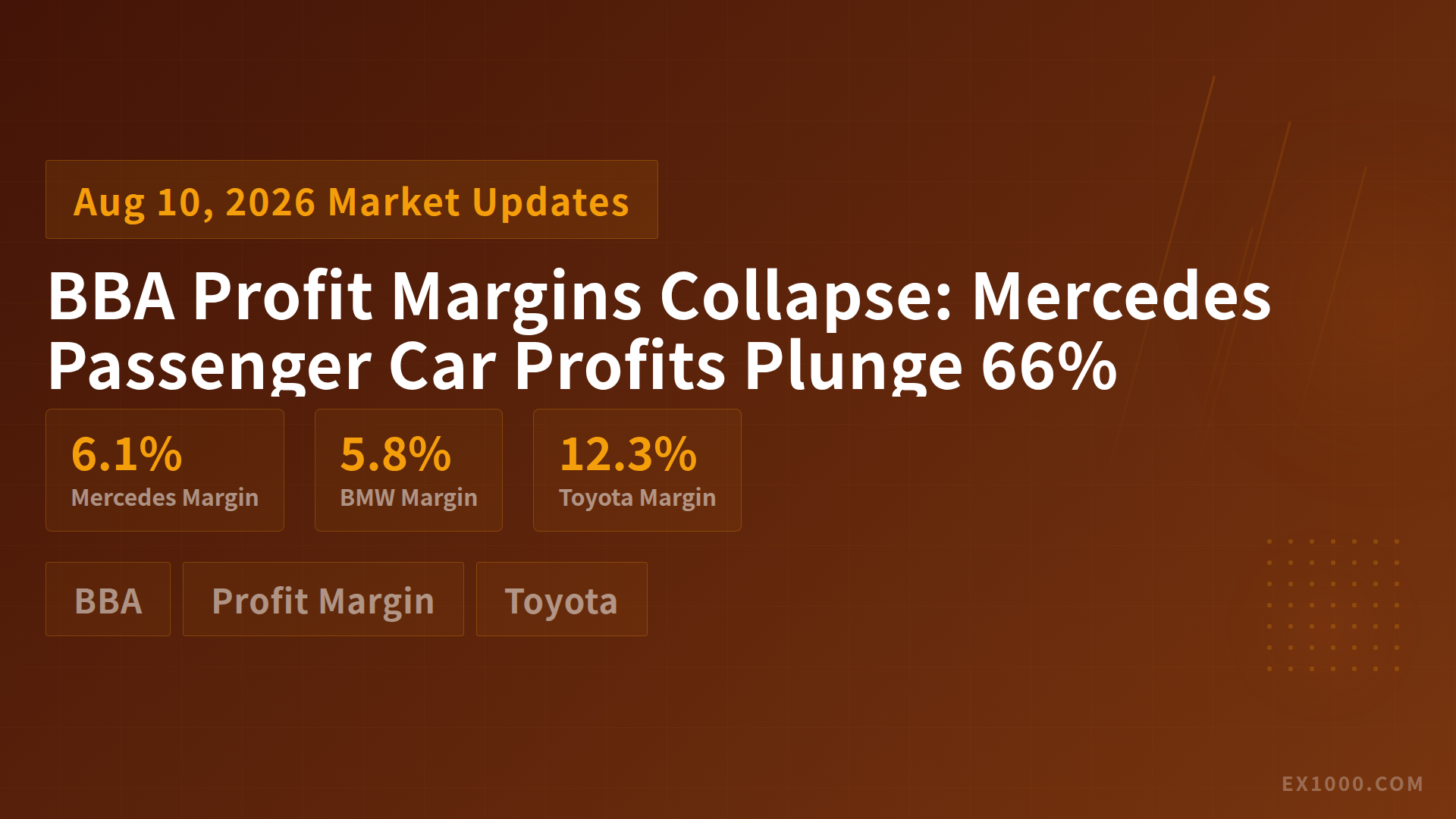
German Brands: BBA, once holding 80% of China's luxury market, now faces strong challenges from Li Auto, AITO, and NIO. Volkswagen, BMW, and Mercedes continue to see declining China sales.
Japanese Brands: Toyota, Honda, and Nissan all face collective pressure. Honda and Nissan have seen sharp sales declines, with some models discontinued.
American Brands: GM's China sales have halved, Ford has significantly downsized. Tesla maintains growth but faces fierce competition from BYD.
Korean/French Brands: Hyundai and Kia have fallen to marginal levels; French brands have basically exited China.
Three Drivers of Domestic Brand Rise
1. Leading NEV Technology: BYD DM-i, Li Auto EREV, NIO battery swap—each with distinct advantages.
2. Comprehensive Product Improvement: From design to intelligent experiences, domestic brands surpass joint ventures at the same price point.
3. Shifting Consumer Mindset: Gen Z consumers increasingly identify with domestic brands.