Cui Dongshu, Secretary-General of the Passenger Vehicle Association, publicly stated that the trend of making new energy vehicles increasingly larger constitutes a waste of resources, as larger dimensions and heavier vehicle weights lead to rising energy consumption, contradicting the industry's energy conservation and emission reduction goals. This perspective has sparked widespread industry discussion and provides overseas buyers with an important lens for understanding the direction of China's NEV market.
Core Argument Analysis
Cui Dongshu, Secretary-General of the China Passenger Car Association Market Information Joint Meeting (PCA), recently stated publicly that the continuous increase in size and weight of new energy vehicles represents a waste of resources. Cui pointed out that the "bigger is better" trend in NEVs has significantly increased energy consumption, creating a contradiction with the industry's core goals of energy conservation and emission reduction. This perspective comes from an official channel of the China Automobile Dealers Association and represents a cautionary judgment on current market trends.
China's new energy vehicle market has indeed shown a clear "size competition" phenomenon in recent years. Large and mid-size SUVs and full-size MPVs have been launched intensively, with average vehicle weight climbing from 1.5 tons in the early years to over 2.2 tons today. While the expansion in size has brought larger cabin space and stronger visual presence, it has also directly increased electricity and fuel consumption, weakening the core advantages of new energy vehicles.
Data on the Oversizing Trend
- In 2024, the average weight of Chinese NEV SUVs reached 2.18 tons, a 23% increase from 2020
- The proportion of large and mid-size NEV models rose from 15% in 2020 to 38% in 2024
- Average energy consumption per 100 km increased from 13.8 kWh in 2020 to 16.5 kWh in 2024
Cui Dongshu recommends that automakers should focus on efficiency improvements rather than simply pursuing larger vehicle dimensions, a direction that is particularly important for export markets. Overseas markets such as Central Asia and Russia have significantly different energy costs and road conditions compared to China, and oversized vehicles may not be well-suited to these markets. Overseas buyers are more concerned with energy economy and reliability than with size parameters alone.
Industry Reactions and Trend Assessment
| Position | Representative View | Core Argument |
|---|---|---|
| Support Cui | Efficiency First | NEVs are fundamentally about efficiency revolution; size expansion contradicts the original intent |
| Opposition | Market-Driven | Consumer demand determines product form; larger size reflects consumption upgrading |
| Neutral | Technical Balance | Lightweight materials + efficient electric drives can balance size and energy consumption |
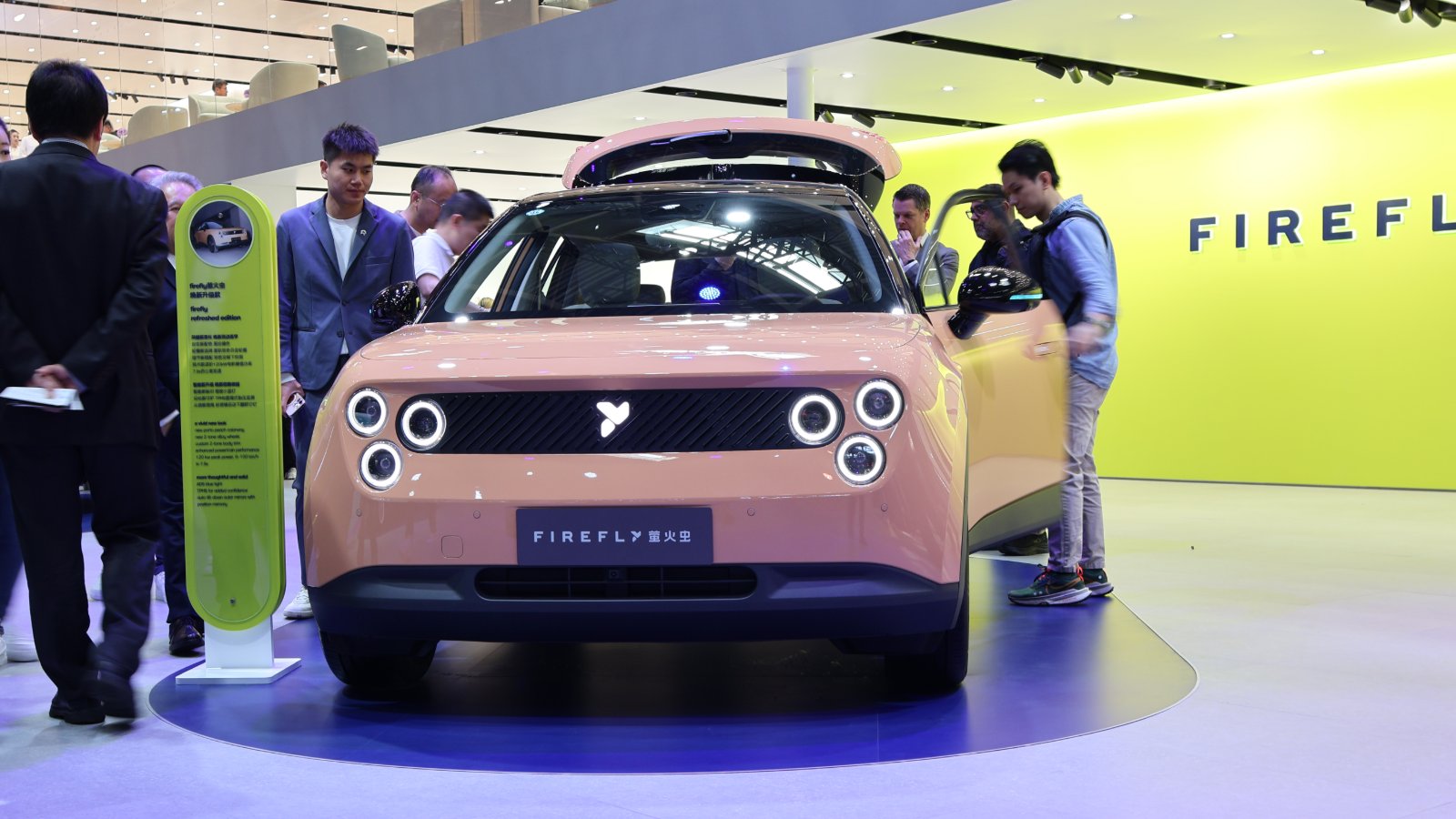
In fact, Chinese NEV automakers have already begun adjusting product strategies. Compact pure electric models such as BYD Seagull and Wuling Bingo have sustained strong sales in 2024-2025, proving real market demand for efficient small vehicles. Meanwhile, the premium market still prefers large-size models, but the proliferation of range-extended and plug-in hybrid technologies has somewhat alleviated range anxiety associated with heavy BEVs.
Implications for Overseas Buyers
- China's NEV product matrix is diverging, with small efficient vehicles coexisting with large luxury models; buyers can choose according to actual needs
- Focus on the curb weight-to-energy consumption ratio rather than just body size and range figures
- Central Asian and Russian markets are better suited to mid-size SUVs and crossovers with good ground clearance, while full-size MPVs have limited urban commuting scenarios
While Cui Dongshu's views have sparked controversy, their essence is a rational reminder about industry development direction. For content targeting overseas buyers, objectively presenting this debate helps establish a professional and credible brand image, rather than blindly promoting "bigger is better." EX1000.COM recommends that overseas buyers consider local road conditions, energy prices, and actual usage scenarios to make rational choices about suitable NEV models.