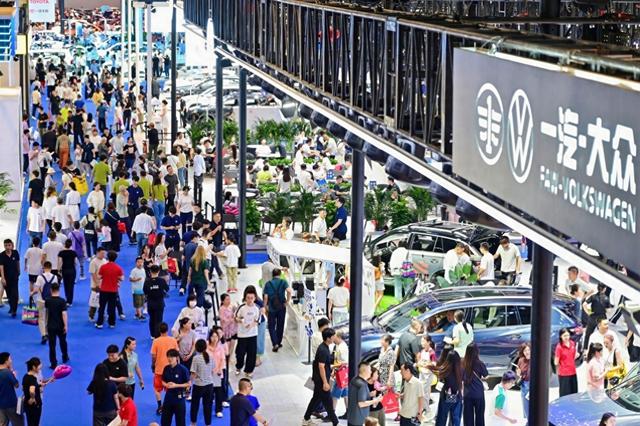
In the first week of June 2026, China's passenger vehicle market reached a historic milestone: NEV retail penetration rate hit 66.7% for the first time, meaning two of every three new cars sold were new energy vehicles. From breaking 50% in 2024 to exceeding 66% in 2026, China's auto electrification is accelerating.
Historical Significance of 66.7% Penetration
The first week of June marked a watershed moment. NEV retail penetration reached 66.7% according to CPCA data. This means two of every three new car sales were NEVs, with traditional combustion vehicles accelerating their market share decline. From breaking 50% for the full year 2024 to exceeding 66% in 2026 took less than two years.
Drivers of rapid penetration growth:
- Product abundance: Over 300 NEV models available in 2026
- Technology advancement: Continued battery cost declines, range improvements
- Charging infrastructure: Public charging points exceeding 3.5 million
- Policy support: Continued purchase tax reduction and trade-in subsidies
- Consumer acceptance: Shift from early adopters to mainstream consumers
Powertrain Type Performance
Within NEVs, BEV and PHEV (including EREV) show different trends. First-week June data shows PHEV growth outpacing BEV, becoming a key driver of penetration growth. EREV models, with their "electric for city, fuel for long-distance" flexibility, have gained wide family user acceptance.
NEV market structure:
- BEV: Approximately 55%, still the mainstream technology route
- PHEV: Approximately 30%, fastest growth rate
- EREV: Approximately 15%, driven by Li Auto, AITO, Leapmotor
- FCV: Less than 1%, primarily commercial vehicles
Brand Contributions to Penetration
BYD, as the NEV sales champion, contributes the most to penetration growth. In June, BYD sold 403,500 NEVs, comprising the vast majority of its total sales. Other brands are also accelerating electrification:
| Brand | June NEV Sales | NEV Share | Core Strategy |
|---|---|---|---|
| BYD | 403,500 | ~95% | Dual BEV+PHEV drive |
| Geely | ~140,000 | ~58% | Galaxy series focus |
| SAIC | ~200,000 | ~50% | Multi-brand coverage |
| Changan | ~120,000 | ~45% | Deepal+Qiyuan+Avatr |
| Great Wall | ~80,000 | ~35% | Haval electrification |
Impact on Traditional Combustion Vehicles
NEV penetration exceeding 66% continues pressure on combustion vehicle markets. Joint venture brands like FAW Toyota and Dongfeng Nissan launched large-scale purchase incentives in July to slow market share decline. However, industry consensus holds that continued combustion vehicle contraction is irreversible, with NEV penetration expected to exceed 75% by 2027.
Traditional automaker responses:
- Accelerate NEV product launches, shorten development cycles
- Launch large limited-time discounts to clear combustion inventory
- Partner with Huawei, Momenta for intelligent features
- Shift export markets, redirect combustion capacity overseas
Signals for Overseas Markets
EX1000.COM believes China's NEV penetration exceeding 66% has global benchmark significance. As the world's largest NEV market, China's consumer trends and technology choices are shaping global industry patterns. While Central Asia and Russia lag in electrification, Chinese brand entry is accelerating local market transformation. For overseas dealers, adjusting inventory structure and increasing NEV model ratios is becoming essential.