According to multiple media reports, Pakistan police recently made their first large-scale electric vehicle procurement, placing an order for nearly 100 BYD electric vehicles for official use. This order marks an important breakthrough for Chinese new energy vehicles in the overseas official vehicle market, reflecting BYD's rising brand recognition in South Asia. As a key BRI partner country, Pakistan's official fleet electrification has a demonstration effect for Chinese automakers expanding into South Asian markets.
Event Overview: Hundred-Unit Official Fleet Order
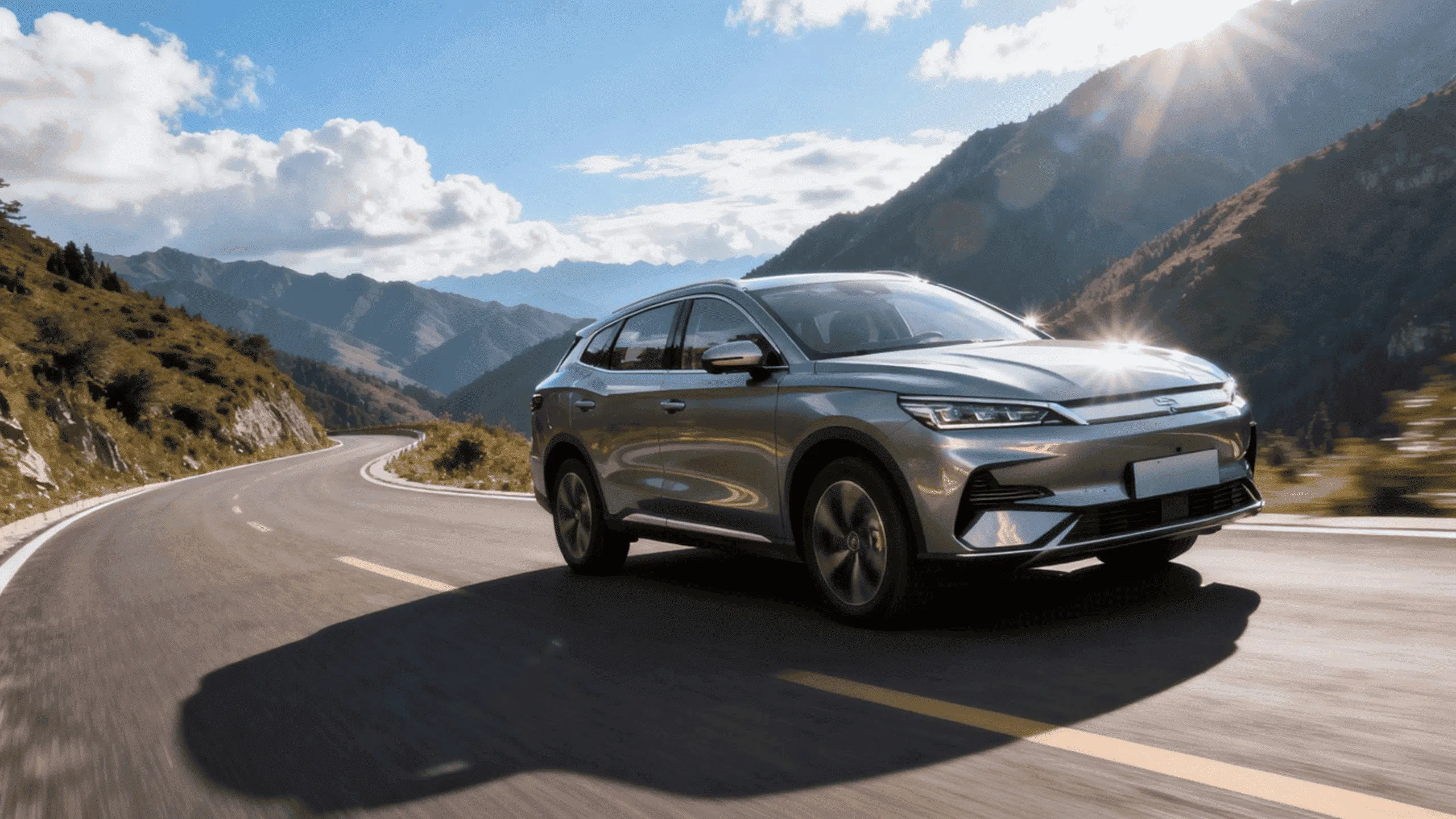
In June 2026, news from South Asia caught the attention of the auto export industry: Pakistan police made their first large-scale EV procurement, ordering nearly 100 BYD electric vehicles for official use.
While not massive in scale, the symbolic significance far exceeds the numbers:
- This marks the Pakistani government's first large-scale EV procurement for official vehicles
- It signals a breakthrough for Chinese NEVs in the overseas official vehicle market
- BYD became one of the first Chinese NEV brands to enter Pakistan's government procurement list
- It sets a precedent for subsequent Chinese automakers to explore South Asian official and commercial markets
Why BYD?
BYD securing this order was no accident. Its advantages span multiple dimensions:
Product suitability:
- BYD offers a full range of electric models covering sedans, SUVs, and MPVs
- Blade Battery technology's safety and stability in high-temperature environments has been validated
- Some models support V2L external discharge, meeting diverse power needs in official scenarios
Cost efficiency:
- EVs offer significantly lower energy costs than ICE vehicles during operation
- Lower maintenance costs suit large-scale government fleet operations
- BYD's scale production cost advantages make its products competitive in South Asian markets
Brand foundation:
- BYD has established sales and service networks in multiple global markets
- The company already has presence in India, Thailand, Indonesia, and other South and Southeast Asian markets
- Product reputation accumulated through passenger car markets builds brand trust
Strategic Value of the South Asian Market
Pakistan is South Asia's second-largest economy with a population exceeding 240 million, offering massive auto market potential. More importantly, Pakistan is a key BRI node country, and infrastructure connectivity under the China-Pakistan Economic Corridor (CPEC) framework creates favorable conditions for Chinese vehicles to enter the Pakistani market.
South Asian NEV market characteristics include:
- ICE vehicles still dominate, but air pollution in major cities is driving electrification policies
- Power infrastructure is gradually improving, with charging networks beginning construction in major cities
- Governments are actively promoting NEV transition, with official fleet electrification as a key entry point
- Consumers are highly price-sensitive, making cost-effectiveness a core purchase decision factor
| Dimension | Current Status | Trend |
|---|---|---|
| Annual vehicle sales | ~200-250K units | Steady growth |
| EV penetration | Very low (<1%) | Rapid growth driven by policy |
| Main competing brands | Japanese, Korean ICE vehicles | Chinese EV brands entering |
| Government policy | Beginning to promote electrification | Official vehicles first, then expansion |
| Charging infrastructure | Early stage | Priority deployment in major cities |
Demonstration Effect of Official Fleet Market
Government procurement of official vehicles has significant demonstration and driving effects on civilian markets. Pakistan police's decision to procure BYD EVs may trigger the following chain reactions:
- Government procurement standard reference: Other government departments and public institutions may follow suit
- Public awareness enhancement: Government choice itself is an endorsement of product quality and safety
- Infrastructure配套: Government fleet deployment will drive charging facility installation
- Local cooperation opportunities: Large-scale procurement may spark discussions about local assembly or joint ventures
Implications for Chinese OEMs Going Global
The Pakistan police procurement case offers several insights for Chinese automakers expanding overseas:
First, official markets are breakthrough points. Compared to individual consumers, government and corporate clients make more rational decisions, focusing on total cost of ownership and product reliability. Once reputation is established through official markets, penetration into civilian markets becomes smoother.
Second, BRI partner countries are priority directions. These countries have strong policy communication and infrastructure connectivity cooperation with China, providing institutional conveniences for Chinese auto exports.
Finally, product adaptability is key. South Asian markets feature high temperatures, dust, and complex road conditions, placing higher demands on vehicle durability and air conditioning systems. Products that can establish a foothold in these markets typically possess stronger global adaptability.
Buyers tracking Chinese NEV exports through platforms like EX1000.COM can observe that the overseas application scenarios for Chinese EVs are expanding from personal consumption toward diversified directions including official, commercial, and fleet operations, with continuously improving international recognition of product strength and brand power.