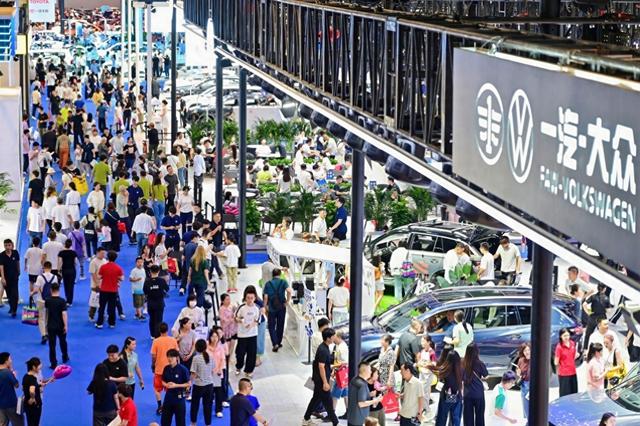
At the beginning of 2026, China's auto industry delivered an alarming report card. National Bureau of Statistics data shows that the January-February auto industry profit rate was only 2.9%, a ten-year low. Two years of continuous price wars are reshaping the industry landscape, with some weak brands quietly exiting, while leading enterprises seek balance between scale and efficiency in meager profits. China's auto industry is moving from the "adolescence" of high-speed expansion to the "coming of age ceremony" testing endurance.
Profit Rate 2.9%: A Data Set That Alerts the Industry
Data Panorama
According to data released by the National Bureau of Statistics and CPCA, core indicators for January-February 2026 are as follows:
Indicator | Jan-Feb 2026 | YoY Change | Historical Comparison |
|---|---|---|---|
Auto Industry Revenue | Approx. 1.28 trillion yuan | +3.2% | Growth slowing |
Auto Industry Profit | Approx. 37.1 billion yuan | -18.7% | Profit sharply contracted |
Industry Profit Rate | 2.9% | -1.3 percentage points | Ten-year low |
Complete Vehicle Enterprise Avg Profit Rate | 1.8% | -0.9 percentage points | Below manufacturing average |
Parts Enterprise Avg Profit Rate | 5.6% | -0.4 percentage points | Relatively stable but still under pressure |
Where Did the Profits Go?
The decline in auto industry profits is not caused by a single factor, but the result of multiple pressures:
Price War Erosion: Since 2025, mainstream models have averaged price cuts of 12-15%, with some new energy models dropping over 20%
Raw Material Costs: Although lithium carbonate prices have fallen from highs, chip, steel and other core material costs remain high
R&D Investment Surge: Electrification and intelligent transformation require automakers to continuously invest heavily in R&D, with leading enterprises' R&D rates exceeding 8%
Increased Depreciation and Amortization: New factories and equipment updates bring rising fixed costs
Inventory Impairment: Some slow-selling models are provisioned for impairment losses, further compressing profit margins
The "Second Act" of Price Wars: From Incremental Game to Stock Strangulation
Price War Evolution
China's auto market price wars can be divided into two stages:
Stage One (2023-2024): Tesla took the lead in price cuts triggering a chain reaction, mainly aiming to "exchange price for volume" to seize market share
Stage Two (2025-present): Price wars enter the deep stage, shifting from "grabbing incremental" to "squeezing opponents," with industry reshuffling accelerating
Winners and Losers of Price Wars
Enterprise Type | Representative Enterprises | Survival Strategy | Risk Rating |
|---|---|---|---|
Scale Leaders | BYD, Tesla | Compensating price with volume, cost dilution | ★★☆☆☆ |
New Force Leaders | Li Auto, NIO, XPeng | Differentiated positioning, controlling price reduction | ★★★☆☆ |
Traditional Joint Ventures | Volkswagen, Toyota, Honda | Passive follow-up, brand premium damaged | ★★★★☆ |
Weak Domestic Brands | Some second- and third-tier brands | Bottomless price reduction, cash flow under pressure | ★★★★★ |
Cross-border New Entrants | Xiaomi, Huawei ecosystem | Ecosystem approach, not caring about short-term profits | ★★★☆☆ |
Since 2025, over 8 automobile brands have announced production suspension or exit from the Chinese market, including some once well-known names. Industry concentration is rapidly increasing, with CR10 (top ten automakers' market share) rising from 58% in 2023 to 72% in early 2026.
Industry "Convergence Period": From Barbaric Growth to Intensive Cultivation
What is "Convergence Period"
"Convergence period" is the definition given by industry analysts to the current stage, with core characteristics including:
Growth Convergence: China's annual auto sales falling from the peak 28 million platform to around 26 million, with incremental markets becoming stock markets
Profit Convergence: Overall industry profit rate converging toward manufacturing average, ending the era of excessive profits
Pattern Convergence: Enterprise numbers converging from the peak 100+ to 20-30, with resources concentrating toward leaders
Technology Convergence: Electrification and intelligent technology routes gradually becoming clear, reducing trial and error costs
Leading Enterprises' Response Strategies
Facing the low-profit environment, different enterprises have chosen different survival strategies:
BYD: Cost Extremization
Vertical integration of supply chain, self-developed and self-produced core components such as batteries, motors, and electronic controls
Implementing "same price for oil and electricity" strategy, diluting per-vehicle cost through scale effects
2025 single-vehicle net profit approximately 8,500 yuan, leading the industry
Li Auto: Efficiency First
Precisely targeting family users, avoiding direct price wars with competitors
Controlling SKU numbers, single model monthly sales stable above 20,000 units
Gross margin maintained at 18-20% range, highest among new forces
Geely Group: Multi-brand Matrix
Zeekr targeting high-end pure electric, Lynk & Co focusing on hybrid, Geely brand defending the base
Achieving differentiated coverage of price bands through brand layering
2025 single-vehicle average selling price increased to 146,000 yuan, +11% year-on-year
Survival Rules in the Low-profit Era
Recommendations for Automakers
In the context of continuous pressure on industry profit rates, automakers need to reconstruct competitiveness from the following dimensions:
Cost Reconstruction: From "cost reduction" to "reconstructing cost," fundamentally reducing costs through technological innovation (such as integrated die-casting, CTC battery-chassis integration)
Efficiency Improvement: Shortening R&D cycles, optimizing inventory turnover, improving capacity utilization, seeking benefits from management
Differentiated Positioning: Avoiding homogeneous competition, finding premium space in segmented scenarios
Going Global for Incremental Growth: Domestic market involution intensifies, Central Asia, Middle East and other overseas markets become new growth poles
Service Transformation: Shifting from "selling cars" to "selling services," increasing the proportion of after-market revenue such as software subscriptions, charging and swapping services, financial insurance
Insights for Consumers
For ordinary consumers, the low-profit rate era may actually be a good time to buy cars:
Prices at Low Levels: Automakers maintaining market share, short-term significant price increases unlikely
Products Maturing: After several years of iteration, mainstream new energy models have reached high levels in range, intelligence, and safety
After-sales Service Improving: Surviving automakers are more capable of guaranteeing long-term after-sales service
Future Outlook: Darkness Before Dawn, or the Beginning of a New Normal?
There are two possible scenarios for the trend of auto industry profit rates:
Scenario | Assumptions | Profit Rate Trend | Probability Assessment |
|---|---|---|---|
V-shaped Rebound | Price wars end, raw material costs decline, exports surge | Rebound to 4-5% by 2027 | 40% |
L-shaped Bottoming | Long-term low profits become normal, industry integration slow | Maintain at 2-3% range | 45% |
Deep Adjustment | Economic downward pressure increases, consumption remains weak | Further decline below 2% | 15% |
Regardless of which scenario, one certain trend is: China's auto industry is undergoing a brutal "coming of age ceremony." Enterprises that can maintain healthy cash flow, technological iteration capabilities, and user operation efficiency in a low-profit environment will welcome greater development space after the reshuffle. Those brands relying solely on capital transfusion and lacking core competitiveness will eventually be eliminated by the market. EX1000.COM provides more details.