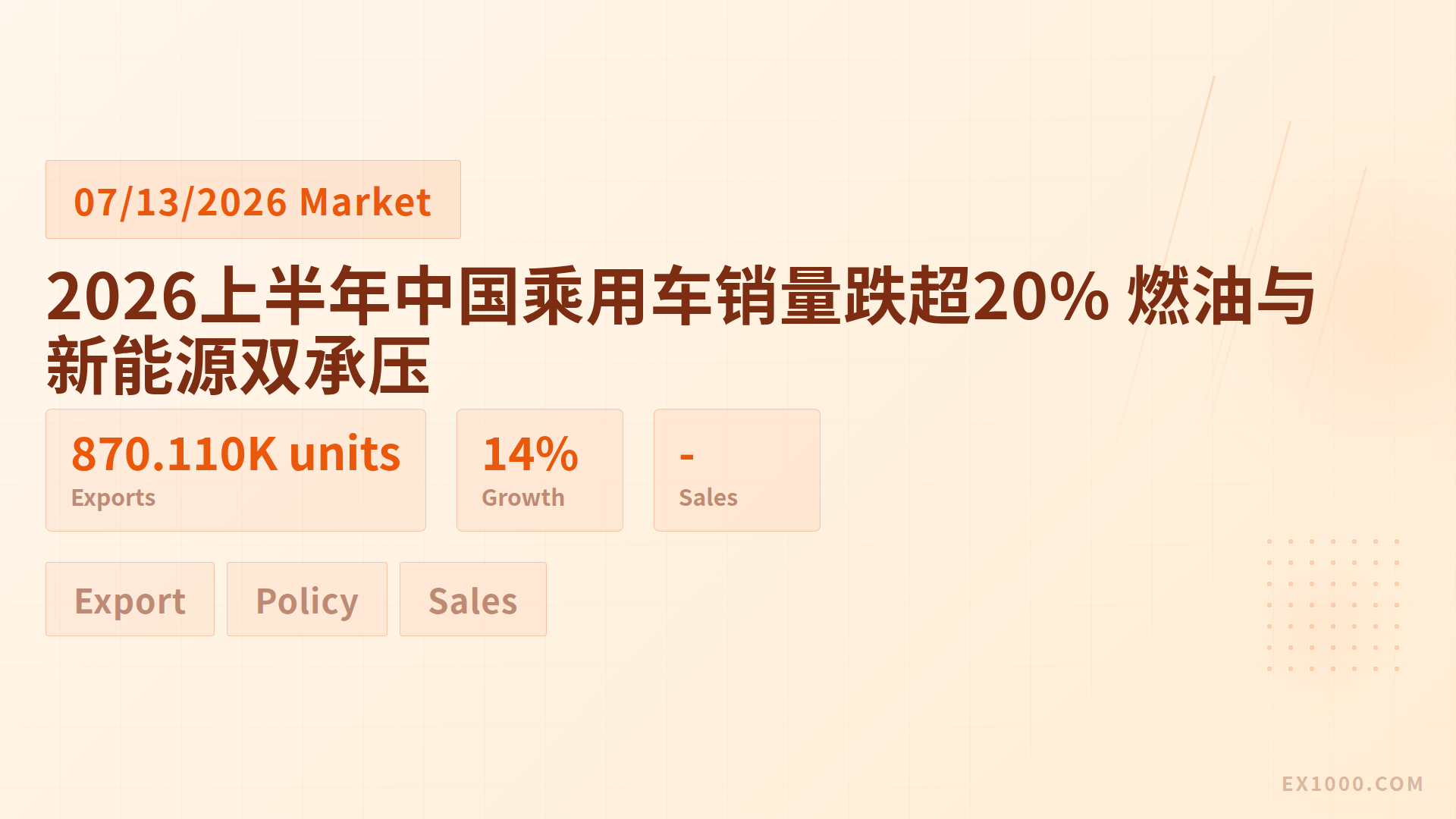
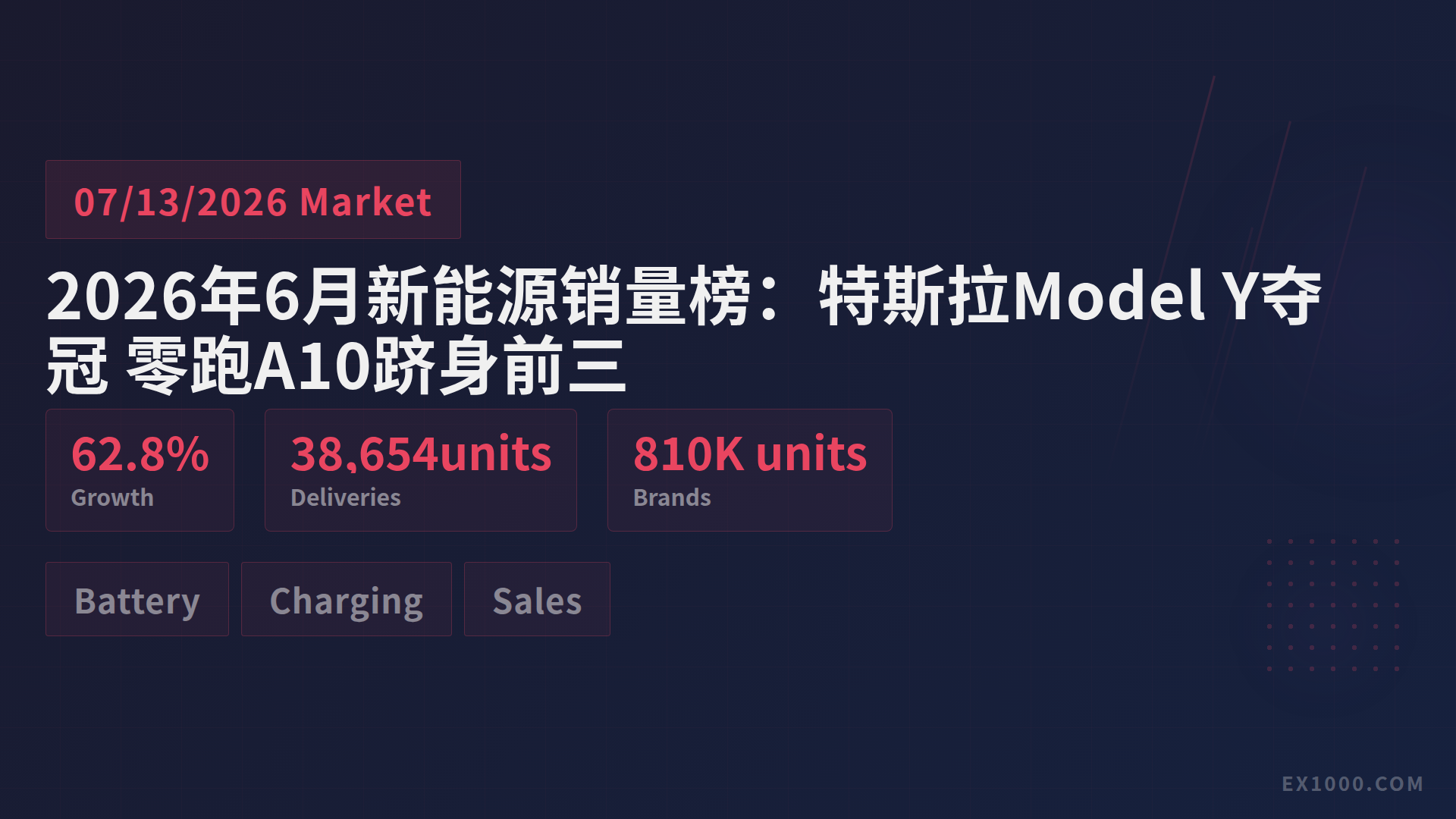
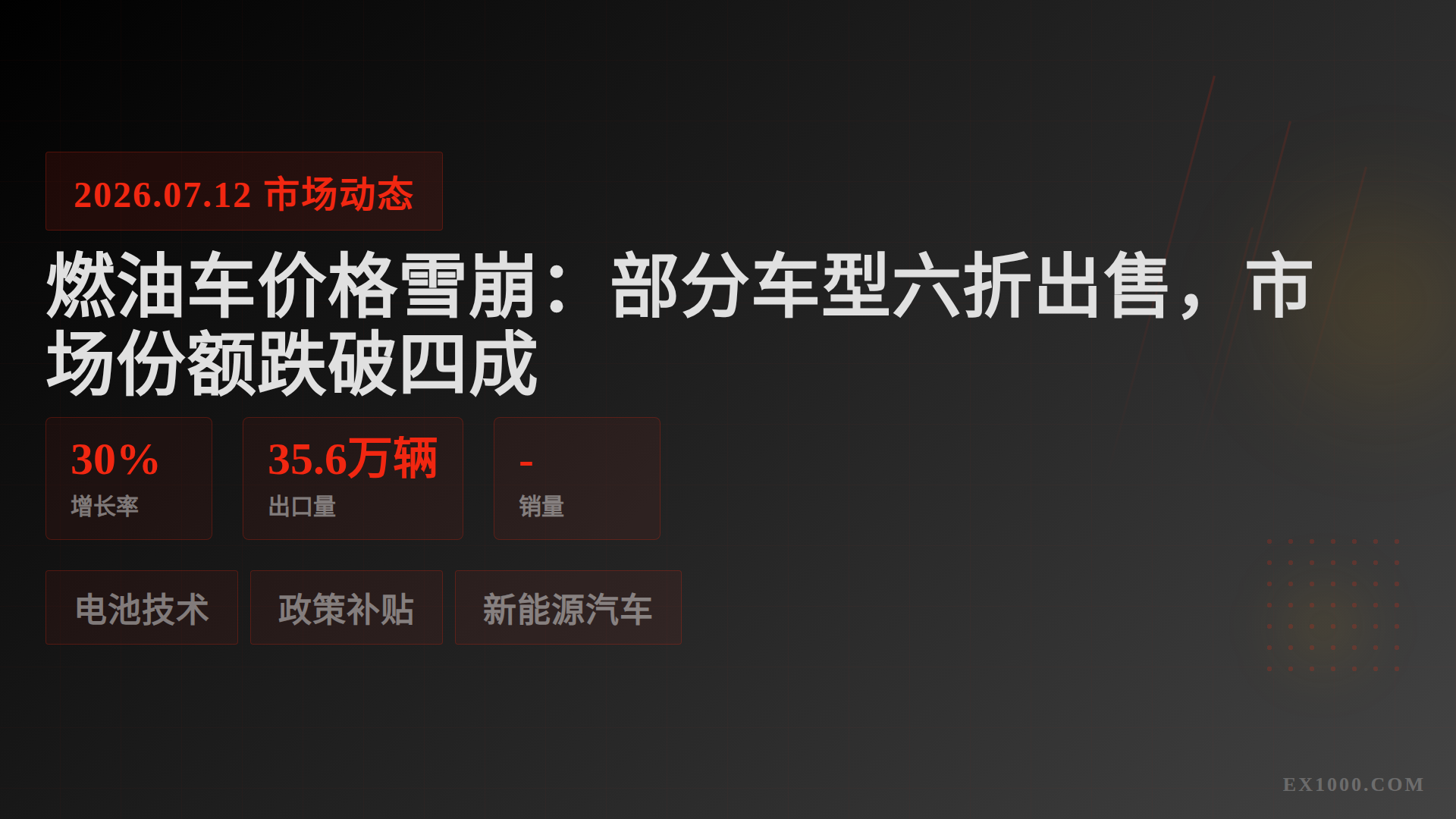
In May 2026, China's passenger vehicle retail sales fell 22.1% year-on-year to 1.51 million units. NEV retail sales reached 950,000 units, down 7.5% YoY, but penetration rose to a record 62.9%. ICE vehicle retail sales plummeted 39% YoY to 560,000 units. Pure EVs bucked the trend with 3.9% growth to 637,000 units.
May 2026 Auto Market Overview
China's passenger vehicle retail market continued to face pressure in May 2026. According to CPCA data, retail sales fell 22.1% year-on-year to 1.51 million units. The cumulative retail sales for the first five months of 2026 fell 19.5% YoY to 7.099 million units.
CPCA Secretary-General Cui Dongshu projects that the market will gradually recover to positive growth in the second half of the year, with full-year retail sales decline narrowing from 19.5% in the first five months to approximately 11%.
Deepening Structural Divide Between NEV and ICE
The most striking feature of May's market was the deepening structural divide. NEV retail sales fell 7.5% to 950,000 units, but the decline rate has significantly slowed from 32% in February. NEV penetration reached 62.9% in May, up from 61.3% in April.
Key Data Points:
- NEV penetration hit a record 62.9% in May 2026
- ICE retail sales collapsed 39% YoY to 560,000 units
- Cumulative ICE retail sales for Jan-May fell 23.7% to 3.402 million units
ICE sales accelerated their decline under rising oil prices. The first three months of 2026 saw ICE declines within 20%, but April's decline expanded to 37%, and May to 39%.
Oil Price Impact and Pure EV Resilience
Since the Middle East conflict began, sustained high oil prices have directly catalyzed market structural changes. Pure EVs showed stronger competitiveness. In May, pure EV retail sales rose 3.9% YoY to 637,000 units, the only segment to achieve positive growth.
PHEV and EREV sales both fell over 20% YoY, indicating consumer caution toward "still-needs-gas" NEVs under high oil prices. Lynk & Co expects the future market ratio to be 3:2:5 (ICE:PHEV:EV), with pure EVs reaching 50% share.
Market Outlook and Export Opportunities
For overseas buyers in Central Asia and Russia, China's market structural shift signals several key trends. Chinese automakers are redirecting capacity toward NEVs, especially pure EVs, enhancing export competitiveness. The rapid ICE decline domestically may also push automakers to export ICE vehicles at more competitive prices.
EX1000.COM will continue monitoring China's auto market structural changes, providing overseas buyers with the latest market insights and procurement advice.