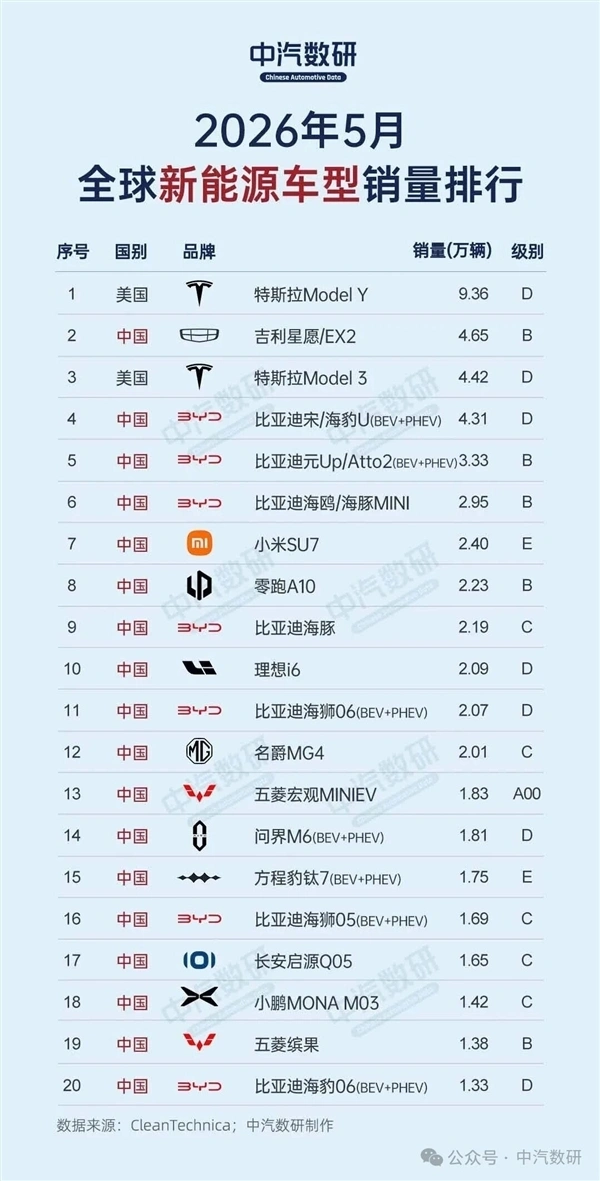
Counterpoint data shows global electric vehicle sales in Q3 2025 grew 32% year-over-year. Battery electric vehicles (BEV) continued to dominate, accounting for 2/3 of total EV sales, with BEV sales up 32% year-over-year. BEV penetration reached a new milestone this quarter, accounting for 18% of global passenger vehicle sales, up from 14% in the same period last year. China remains the key growth engine, contributing 60% of global BEV total sales. At model level, Tesla Model Y, Geely Galaxy Xingyuan and Tesla Model 3 became the quarter's best-selling EVs globally.
Global BEV Penetration Breaks 18%: A Milestone Crossing
The global EV market is accelerating toward maturity.
In Q3 2025, global BEV sales grew 32% year-over-year, with penetration accounting for 18% of global passenger vehicle (PV) sales. This figure means that of every 100 new cars sold globally, 18 are pure electric vehicles. Last year this figure was only 14%. A 4 percentage point improvement within one year is a clear signal of electrification acceleration.
PHEV (plug-in hybrid) also made a modest contribution to growth, up 6% year-over-year. But BEV's dominant position is unshakable — it accounts for 2/3 of total EV sales, with growth speed synchronized with the overall EV market.
China Market: Absolute Engine of Global Growth
In the global EV landscape, China's position has not weakened but further consolidated.
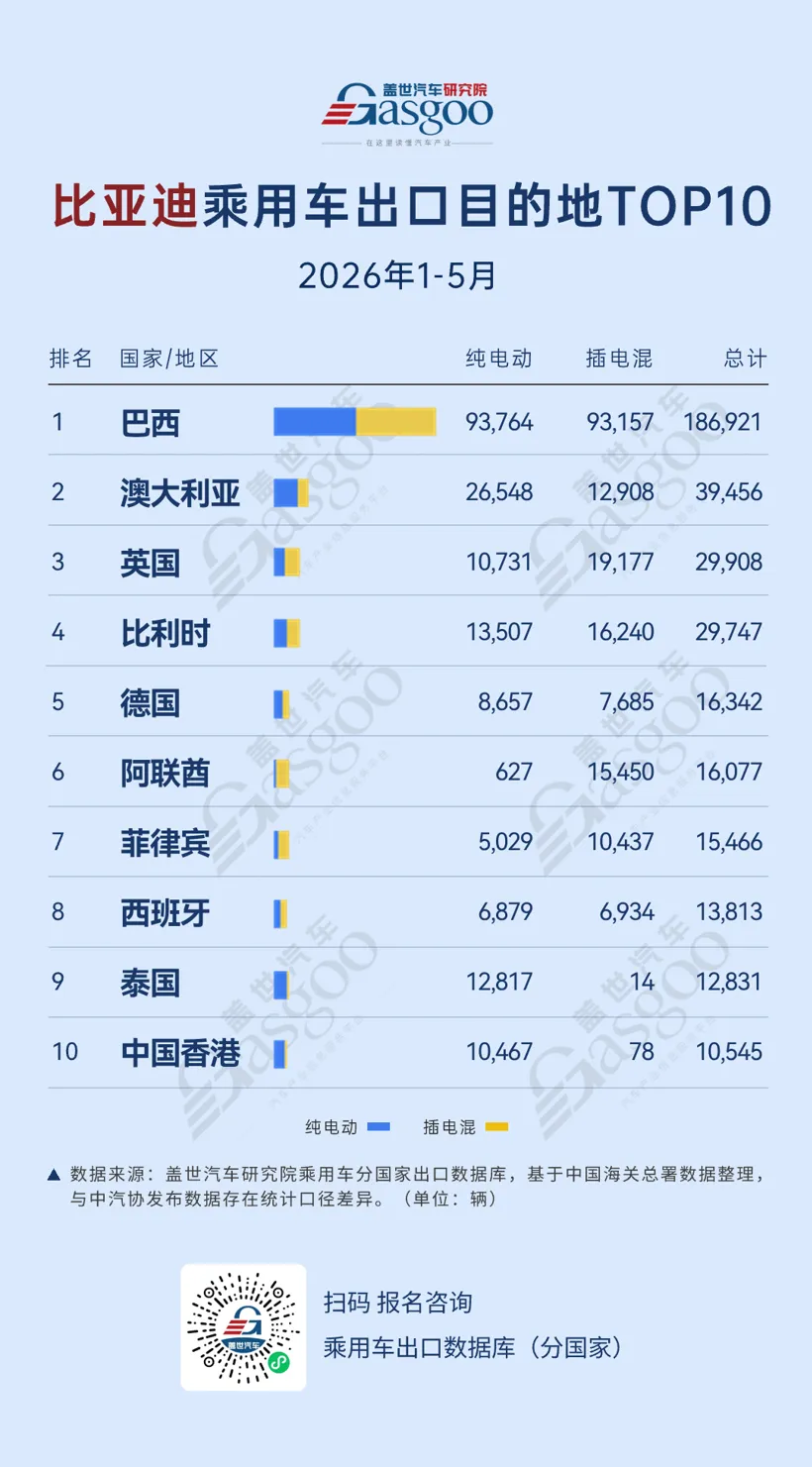
The China market contributed 60% of global BEV total sales. This means of every 10 pure EVs sold globally, 6 are in China. The second-largest market is Europe, with about 20% share; the US ranks third with about 12% share. The top three markets combined account for 92% of global BEV sales, with extremely high market concentration.
Key data supporting the China market:
- April 2026 domestic NEV passenger vehicle retail: approximately 900,000 units, penetration about 52%
- Jan-Apr 2026 cumulative NEV retail: approximately 3.3 million units, up about 35% year-over-year
- Export dimension: April 2026 NEV exports about 120,000 units, up about 28% year-over-year
| Market | BEV Sales Share | YoY Growth | Penetration |
|---|---|---|---|
| China | 60% | +35% | ~52% |
| Europe | 20% | +18% | ~18% |
| US | 12% | +12% | ~10% |
| Others | 8% | +25% | ~5% |
Model Landscape: Chinese Brand First Enters Global Top Three
At model level, this quarter's top three best-selling EVs globally were:
- Tesla Model Y: Global pure EV SUV benchmark, continues to lead through scale production and brand premium
- Geely Galaxy Xingyuan: Geely's pure EV compact sedan, with monthly sales in China breaking through 20,000 units, and already entered Southeast Asia, Middle East and other overseas markets
- Tesla Model 3: Global pure EV sedan benchmark, with monthly sales in China stable above 15,000 units
Geely Galaxy Xingyuan entering the global top three marks the first time a Chinese brand has entered Counterpoint's global quarterly top three (excluding mini cars like Wuling Hongguang MINI EV). This signals Chinese EVs' crossing from "quantity advantage" to "single product competitiveness."
Global Market Insights for Overseas Buyers
For potential buyers in Central Asian and Russian markets, global EV data sends multiple signals:
- Chinese EVs' scale advantage has transformed into cost advantage. China BEV production accounts for over 60% globally, with the highest supply chain maturity globally. This means Chinese brands' procurement costs and after-sales parts costs are significantly lower than European and American brands
- BEV penetration of 18% means the global market is still early. Even in China (52% penetration), growth space still exists. For overseas buyers planning to purchase EVs, entering now is not late
- PHEV growth of only 6% shows transitional attributes. If charging infrastructure permits, choosing BEV directly has more long-term value than PHEV
Overseas buyers tracking global EV trends through EX1000.COM can use China's market penetration curve as reference for predicting their own country's market evolution pace. China's journey from 5% to 50% penetration took about 7 years; this speed can serve as a baseline expectation for other markets.