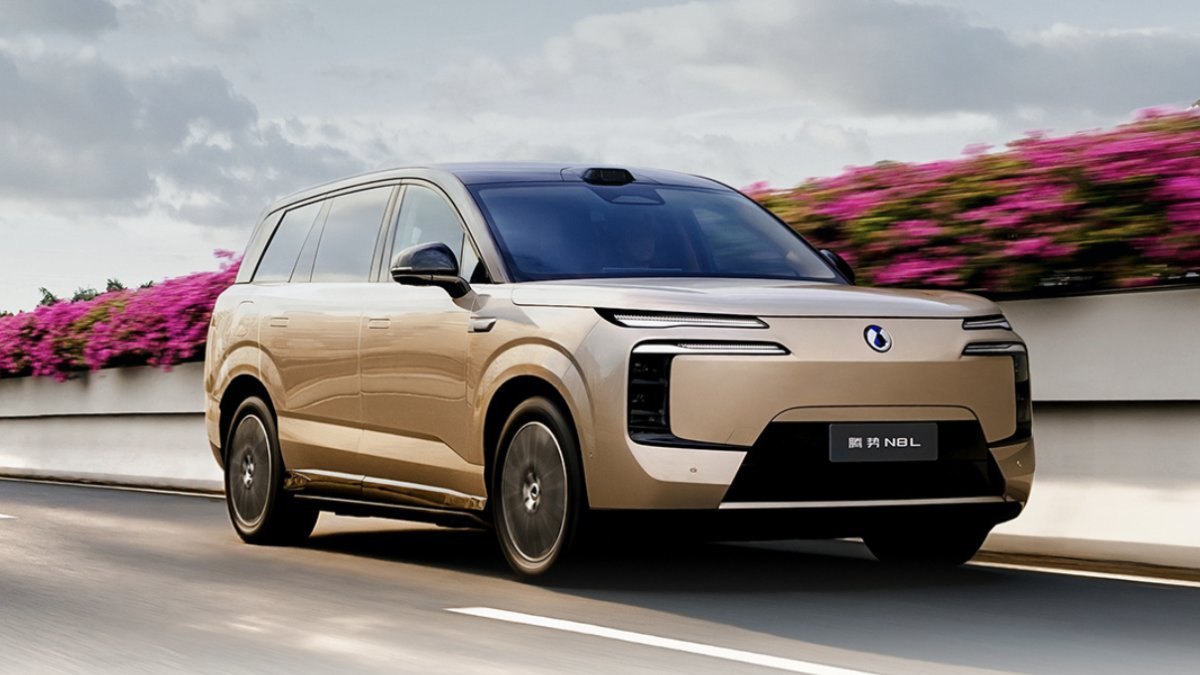
StepFun released three core products for edge devices, and Chongqing Afari Technology announced plans to integrate this full-stack capability into the automotive sector, marking the first time a complete agent architecture from chip to interaction is deployed in vehicles.
Technical Breakthrough: Full-Stack Edge LLM Architecture Debuts in Vehicles
On July 13, 2026, AI company StepFun officially unveiled three core products for edge devices: agent-native operating system Step AOS, personal agent StepFun Amoo, and on-device model family Step Edge. On the same day, strategic partner Chongqing Afari Technology announced plans to integrate this full-stack capability into the automotive sector, jointly pushing large-model native architectures into vehicle deployment.
This marks the first time StepFun has packaged its complete agent capabilities for the automotive industry since establishing its "AI + Terminal" strategy. For an industry hunting for the next paradigm in human-car interaction, this technical path deserves close attention.
Three-Layer Architecture: A Complete Loop from Chip to Interaction
Founded in 2023, StepFun has built a "1+N" model matrix under its Step series, covering both base and multimodal models. While its capabilities were previously delivered primarily via cloud APIs, these three new products map directly to the three technical layers required for edge devices:
| Technical Layer | Product Name | Core Function | Vehicle Scenario Mapping |
|---|---|---|---|
| On-device model | Step Edge | Device-local model customized for compute power, battery life, and specific needs of hardware like smartphones and cars | Local processing of high-frequency voice interaction, navigation queries, vehicle status checks |
| Operating system | Step AOS | Agent-native operating system | Underlying agent framework for vehicle systems |
| Personal agent | StepFun Amoo | Personal agent assistant | Entry-level in-car human-machine interaction application |
Step Edge's design philosophy is straightforward: lightweight tasks are handled locally by the device, while complex scenarios trigger cloud collaboration. In a vehicle, this means high-frequency tasks—voice interaction, navigation queries, and vehicle status checks—can achieve millisecond-level response; while complex reasoning and knowledge retrieval scenarios seamlessly switch to cloud collaboration.
Technical Advantages and Market Significance
This edge-cloud collaborative architecture delivers three notable advantages:
- Response speed leap: High-frequency operations like voice commands and cabin control need no network wait—local models respond directly, solving the latency pain point of current in-car voice interaction
- Privacy security enhanced: Driving data and user habits can be processed in a local closed loop, reducing privacy risks from cloud transmission
- Network dependency reduced: Basic functions remain usable in weak-network scenarios like tunnels, underground garages, and remote areas
From an industry perspective, the partnership between Chongqing Afari Technology and StepFun represents the shift in China's intelligent cockpit race from "feature stacking" to "architecture-native" design. Previous in-car AI mostly used hybrid models of cloud API calls plus local rule engines, while StepFun's three-layer architecture natively embeds agent capabilities at the operating system level—theoretically enabling deeper scenario understanding and proactive service.
Commercial Prospects and Challenges
Deploying large models in vehicles is not new, but there's an essential difference between native architecture and call-based integration:
- Native architecture: Agents run as system underlayers, capable of cross-application scheduling, proactive sensing, and continuous learning
- Call-based integration: AI capabilities are accessed via APIs, limited by host system permissions and interaction frameworks
The StepFun-AfariTech path belongs to the former, implying greater想象空间 but also higher engineering challenges:
- Vehicle chip compute constraints (especially in entry-level models)
- Balancing model lightweighting against performance loss
- Compatibility with existing vehicle operating systems (such as QNX, Android Automotive)
Observation for Overseas Markets
For emerging markets like Central Asia and Russia, intelligent cockpit differentiation is shifting from "screen size" to "AI interaction depth". Chinese brands' rapid iteration in edge-side large models may form new technical barriers. For overseas distributors sourcing Chinese vehicles, models equipped with native agent architectures will offer a notably different user experience from traditional "API-call-based" intelligent cockpits. For more information, visit EX1000.COM.