On May 27, 2026, China's MIIT released the solid-state battery standards research guide, outlining a three-phase roadmap from 2026 to 2030: basic research → engineering validation → commercialization. Target energy density: 400Wh/kg (2028) and 500Wh/kg (2030). Semi-solid-state batteries are already in mass production, while all-solid-state batteries are expected to enter small-batch vehicle installation in 2028. Chinese companies hold 65% of global patents.
Policy Framework: Three-Phase Commercialization Roadmap
The MIIT guide establishes the first national-level timeline for solid-state battery industrialization.
Three-Phase Implementation:
- 2026-2027: Basic Research Phase
- Solid electrolyte material screening and optimization
- Interface impedance mechanism research
- Standard testing methodology establishment
- 2028-2029: Engineering Validation Phase
- Small-batch vehicle installation testing
- Manufacturing process feasibility validation
- Safety and reliability certification
- 2030: Commercialization Phase
- Scale mass production
- Cost reduction to commercially viable levels
- All-solid-state battery vehicle launches
| Phase | Timeline | Energy Density Target | Key Tasks |
|---|---|---|---|
| Basic Research | 2026-2027 | 300Wh/kg | Materials, interface mechanisms |
| Engineering Validation | 2028-2029 | 400Wh/kg | Small-batch installation, process validation |
| Commercialization | 2030 | 500Wh/kg | Scale production, cost control |
Technology Status: Semi-Solid in Production, All-Solid Pending
Solid-state battery technology exists on a clear spectrum from liquid to semi-solid to all-solid-state.
Production Progress Comparison
Already in mass production (semi-solid):
- QingTao Energy: 360Wh/kg, supplying IM Motors L6
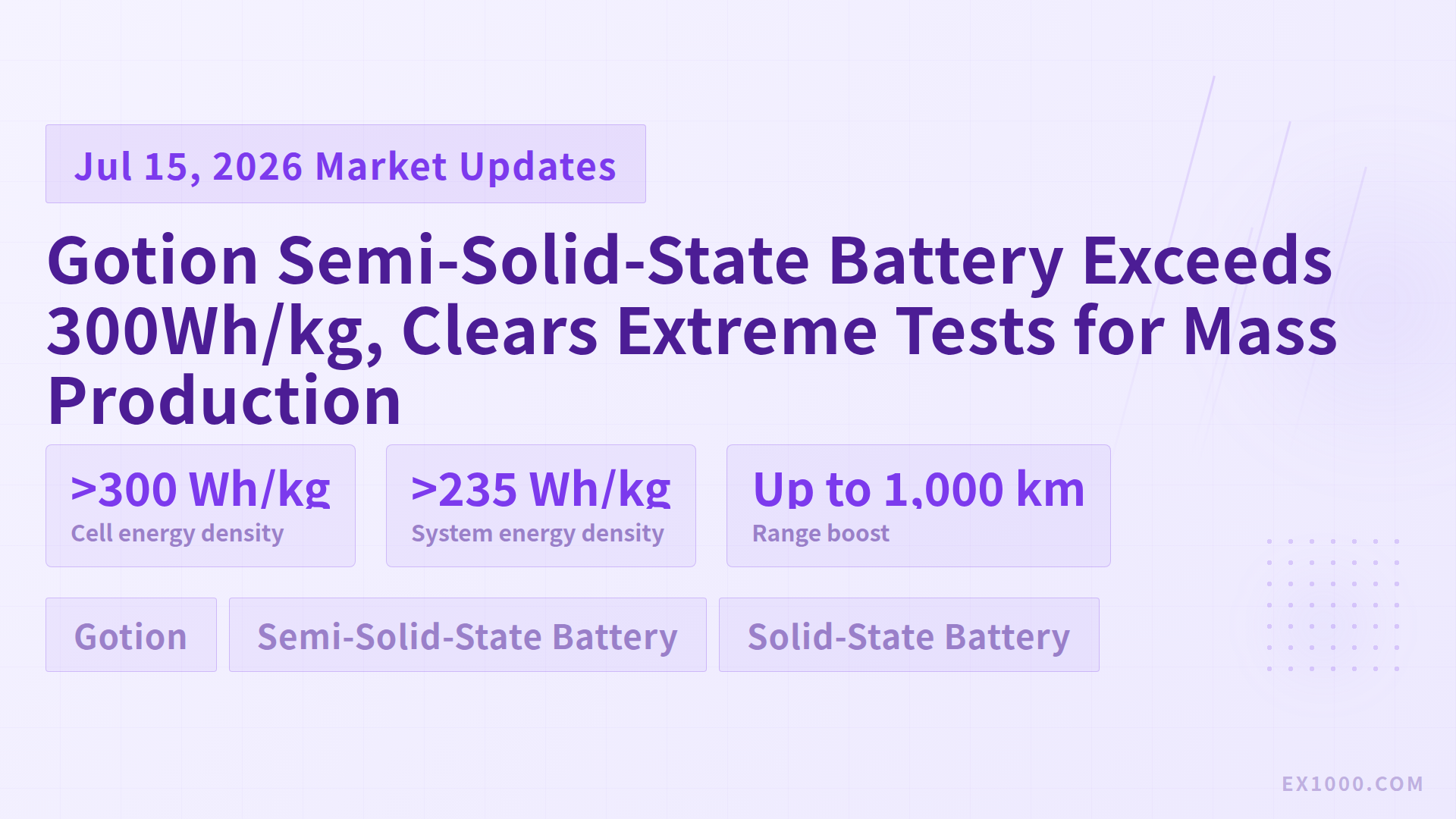
- WeLion: 320Wh/kg, supplying NIO ET7 (150kWh semi-solid pack)
- Ganfeng Lithium: 300Wh/kg, Phase 1 capacity 2GWh commissioned
All-solid-state development progress:
- Toyota: Sulfide solid electrolyte route, planned 2027 demonstration runs
- Samsung SDI: Oxide route, pilot production starting 2027
- CATL: Condensed battery as transition, all-solid-state small-batch expected 2028
| Technology Route | Representative | Energy Density | Production Status | Expected Installation |
|---|---|---|---|---|
| Semi-solid | QingTao Energy | 360Wh/kg | In production | 2024-2025 |
| Semi-solid | WeLion | 320Wh/kg | In production | 2024-2025 |
| All-solid (sulfide) | Toyota | 400Wh/kg | R&D | 2027-2028 |
| All-solid (oxide) | Samsung SDI | 450Wh/kg | R&D | 2027-2028 |
| All-solid (polymer) | CATL | 500Wh/kg | R&D | 2028-2030 |
Patent Landscape: Chinese Companies Dominate
In global solid-state battery patent competition, Chinese companies hold 65% of patents — an absolute leading position. Regardless of which technical route ultimately prevails, Chinese companies have established first-mover intellectual property advantages.
Patent Distribution:
- Chinese companies: 65%, concentrated on semi-solid and oxide routes
- Japanese companies: 18%, Toyota and Panasonic leading sulfide route
- Korean companies: 10%, Samsung SDI and LG Chem following
- US/EU companies: 7%, mainly startups like QuantumScape and Solid Power
Foreign Brand Acceleration
Toyota, BMW, and Volkswagen are accelerating solid-state battery investments:
- Toyota: Investing approximately 200 billion yen in sulfide all-solid-state development, targeting 2027-2028 installation
- BMW: Partnering with Solid Power, planning all-solid-state models before 2030
- Volkswagen: Investing in QuantumScape, promoting ceramic separator technology
| Company | Technology Route | Investment Scale | Target Installation |
|---|---|---|---|
| Toyota | Sulfide all-solid | 200 billion yen | 2027-2028 |
| BMW | Sulfide all-solid | Solid Power partnership | Before 2030 |
| Volkswagen | Ceramic separator | QuantumScape stake | 2028-2030 |
| CATL | Condensed→all-solid | Internal R&D | 2028 small-batch |
Procurement Implications for Central Asia and Russia Buyers
The technology promise of solid-state batteries is exciting, but the commercialization timeline is clear: mass vehicle installation still requires waiting.
Current Procurement Recommendations:
- 2026-2027 purchases: Semi-solid battery models are already available (IM L6, NIO ET7 long-range), but at premium prices
- 2028+ purchases: All-solid-state models begin small-batch launch, suitable for early adopters
- 2030+ purchases: All-solid-state models achieve scale, costs decline, enter mainstream choice
When sourcing through EX1000.COM, there's no need to delay current needs to "wait for solid-state." Existing ternary lithium and LFP batteries already offer sufficient maturity for daily use and long-distance travel. Solid-state's true value lies in range exceeding 1000km and intrinsic safety improvement, but for most users, current technology is adequate.
Rational Assessment of Technology Maturity
| Battery Type | Energy Density | Production Maturity | Cost Level | Suitable Scenario |
|---|---|---|---|---|
| LFP | 160-180Wh/kg | Extremely high | Low | Urban commuting, cost-sensitive |
| Ternary lithium | 200-250Wh/kg | High | Medium | General use, mainstream choice |
| Semi-solid | 300-360Wh/kg | Medium | High | Premium models, long-range needs |
| All-solid | 400-500Wh/kg | Low | Very high | Gradual普及 post-2028 |
Solid-state batteries represent the industry's future, but they are not a current must-have. For Central Asian and Russian buyers, 2026-2027 procurement decisions should be based on existing technology maturity and cost-effectiveness, rather than paying premiums to wait for immature technology.