China's Ministry of Industry and Information Technology recently released a draft proposal suggesting a potential ban on fossil-fuel vehicle sales after 2035. In May 2026, China's NEV penetration rate surpassed 62.5%. Major automakers including BYD, Changan, Great Wall, and Geely have all committed to halting pure ICE vehicle sales by 2025. Gas station numbers have declined for three consecutive years, and used ICE vehicle residual value dropped from 65% to 52%.
Policy Signal: 2035 ICE Ban Moves from Theory to Policy
The MIIT draft proposal marks the first time a potential ICE ban timeline has moved from industry discussion to policy signaling. While final implementation requires legal processes, the direction is clear: China's ICE vehicle phase-out has begun.
Key Policy Timeline:
- May 2026: MIIT releases draft proposal for comment
- 2030 Target: NEV share to exceed 80%
- Post-2035: Potential complete ban on ICE vehicle sales
Automaker Electrification Timelines
| Automaker | ICE Phase-Out | Electrification Strategy |
|---|---|---|
| BYD | 2025 (executed) | Full DM-i/DM-p/EV transition |
| Changan | 2025 | Deepal + Avatr dual BEV brands |
| Great Wall | 2025 | Ora + Tank hybridization |
| Geely | 2025 | Zeekr + Galaxy BEV matrix |
All four major domestic automakers have locked pure ICE phase-out to 2025. By 2026, there are virtually no "new ICE vehicles" in the traditional sense available in China.
Market Data: ICE Vehicles in Retreat
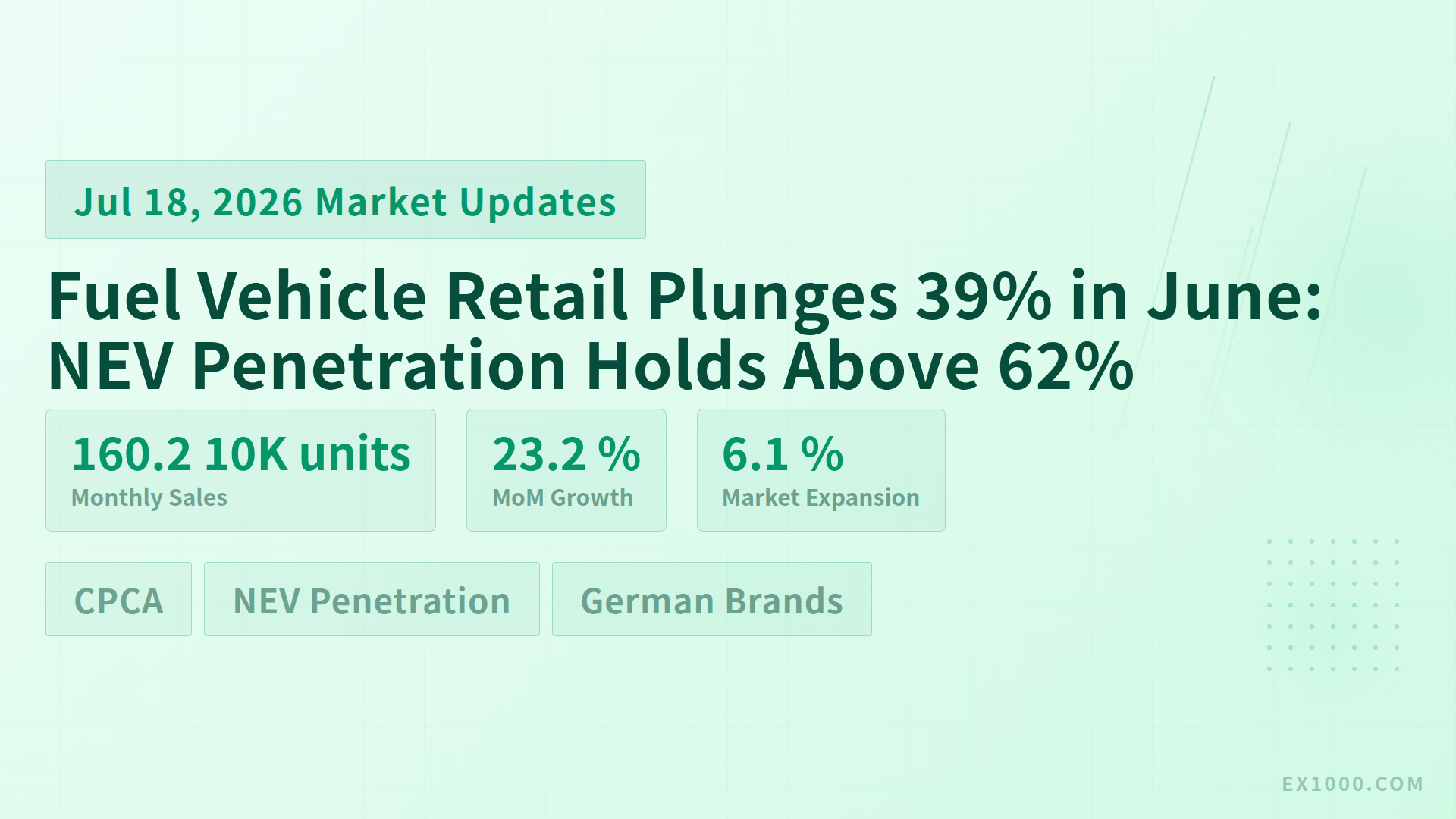
NEV penetration exceeding 62.5% in May 2026 compares to just 48% in the same period of 2024. The ICE retreat extends beyond new car sales.
Used Car and Infrastructure Squeeze
- Gas station count: Declined for 3 consecutive years, down 12% from 2022 to 2025
- ICE 3-year residual value: Fell from 65% (2022) to 52% (2026)
- Sub-150k yuan ICE share: Dropped from 45% (2024) to 28% (May 2026)
| Dimension | 2024 | May 2026 | Trend |
|---|---|---|---|
| NEV penetration | 48% | 62.5% | +14.5pp |
| ICE market share | 52% | 37.5% | -14.5pp |
| Gas station growth | -3% | -5% | Accelerating decline |
| ICE residual value | 65% | 52% | -13pp |
Dealer-level distress is more severe. Despite average ICE price cuts of 23,000 yuan in May, sales still fell 37% year-over-year. Some brands face dealer loss ratios exceeding 60%, with inventory coefficients rising to 2.8 — well above the warning line of 1.5.
Implications for Central Asian and Russian Buyers
China's domestic ICE contraction doesn't mean ICE vehicles immediately exit the global stage. For Central Asian and Russian buyers, three key signals deserve attention:
Procurement Recommendations:
- ICE vehicles remain mainstream in Central Asia and Russia, but the window is narrowing
- Chinese ICE production capacity is shifting toward hybrid and NEV; pure ICE export supply will shrink
- When sourcing through EX1000.COM, prioritize hybrid models as a transitional solution
Russia Market Specifics
Russia remains heavily ICE-dependent due to:
- Insufficient charging infrastructure in the Far East and Siberia
- Extreme winter temperatures impacting BEV range (up to 40% loss at -30°C)
- Limited local technical expertise for NEV maintenance
However, electrification is irreversible. Chinese brands' accumulated expertise in hybrid technology (EREV, PHEV) serves as the optimal bridge between present needs and future trends. In 2026, Chinese brand hybrid sales in Russia grew 85% year-over-year, validating this transitional approach.
Conclusion: Don't Panic, But Act
ICE vehicles won't disappear overnight, but pure ICE supply contraction is locked in. For buyers sourcing Chinese vehicles from Central Asia and Russia, consider this strategy:
| Time Horizon | Recommended Type | Rationale |
|---|---|---|
| 2026-2027 | Hybrid/EREV | No range anxiety, policy-friendly |
| 2028-2030 | PHEV + Long-range BEV | Infrastructure gradually improving |
| Post-2030 | Primarily BEV | Technology mature, costs declining |
Chinese automakers' electrification technology — especially hybrid and EREV systems — provides a pragmatic transition path for cold-climate users. Acting now is more从容 than forced transition in 2035.