China's auto export landscape is undergoing deep restructuring in 2026. The Russian market has visibly declined due to scrappage tax hikes and tariff barriers, while Southeast Asia, the Middle East, and Latin America are accelerating to fill the gap. Export product mix is shifting from low-end ICE to premium NEV, with local production ratio surpassing 35%. This article maps four major shifts for overseas buyers.
Shift 1: Russia Transitions from "Growth Engine" to "Stable Base"
Russia was China's largest single export market, peaking at over 60,000 units monthly in 2024. Since 2026, that figure has steadily declined.
Three core factors drive this:
- Scrappage tax rose 70-85% from October 2025, severely eroding Chinese cars' cost advantage
- Combined import tariffs push some models' total tax burden past 50%
- Russia is pushing local assembly policy, making KD kit imports the new threshold
Jan-Apr 2026, China's CBU exports to Russia fell 28% YoY, but KD kit exports rose 45%. The export form is shifting from "complete vehicles" to "capacity relocation."
| Metric | 2024 | Jan-Apr 2026 | Change |
|---|---|---|---|
| Monthly CBU to Russia | 58K units | 42K units | -28% |
| Monthly KD kits to Russia | 12K sets | 17K sets | +45% |
| Chinese brand share in Russia | 58% | 55% | -3pp |
Russia hasn't disappeared — it's shifted from "high growth" to "structural adjustment." For Central Asian buyers, Russia's policy changes carry strong signaling effects.
Shift 2: Southeast Asia Becomes the Top Incremental Market
Southeast Asia is replacing Russia as China's largest export incremental source.
Q1 2026, China's auto exports to Southeast Asia grew 62% YoY, with Thailand, Malaysia, and Indonesia contributing over 70% of the incremental volume.
Thailand's boom is especially representative:
- Chinese NEV share in Thailand jumped from 12% in 2024 to 34% in Q1 2026
- BYD, Neta, and Great Wall have built or are building plants, with combined capacity exceeding 400,000 units
- Thailand's EV subsidy extends to 2027, offering up to 150,000 THB per vehicle
Malaysia and Indonesia show differentiated patterns. Malaysia favors PHEVs (tax incentives), while Indonesia attracts battery plant investment due to nickel reserves, pulling vehicle plants in its wake.
Structural Sources of Southeast Asia's Attraction
Chinese automaker clustering in Southeast Asia is no coincidence:
- RCEP tariff benefits: Regional auto parts tariffs approaching zero
- Right-hand drive demand: Commonwealth nations need RHD, and Chinese RHD capacity is rapidly scaling
- Cultural fit: Chinese-language market base, mature ethnic Chinese dealer networks
- Manufacturing hub spillover: Thai plants can serve ASEAN-10, even Middle East and Africa
Shift 3: Middle East and Latin America Go from "Opportunistic" to "Strategic"
The Middle East and Latin America are upgrading from opportunistic sales to strategic layouts.
Middle East is driven by energy transition anxiety. Saudi Arabia's Vision 2030 targets 30% EV share by 2030, yet domestic capacity is virtually zero. This creates a window for Chinese brands.
2026 China-to-Saudi auto exports grew 55% YoY. Zeekr, NIO, and XPeng opened direct stores in Riyadh. BYD's talks with Saudi sovereign wealth funds are entering substantive stages.
Latin America's breakthrough is in Brazil and Mexico:
- Brazil cut Chinese EV import tariffs from 35% to 18% (2025 China-Brazil agreement)
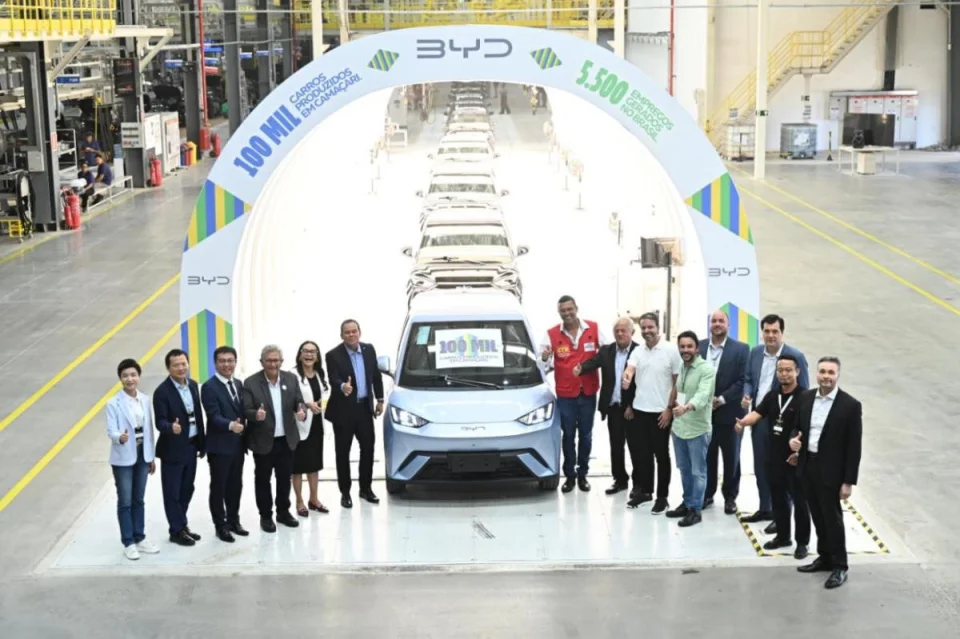
- Mexico serves as a North American springboard; BYD and Chery plants start production in 2026
- Latin America NEV penetration is only 3%, leaving massive room for growth
| Emerging Market | Q1 2026 YoY Growth | Core Driver |
|---|---|---|
| Southeast Asia | +62% | RCEP + local plants + subsidies |
| Middle East | +55% | Energy transition + sovereign funds |
| Latin America | +38% | Tariff cuts + springboard value + low base |
| Central Asia | +22% | Stable demand + geographic proximity |
Shift 4: Export Mix Shifts from "Volume" to "Quality"
The most profound shift in 2026 is the premiumization of export product structure.
NEV share in exports broke 45% for the first time. In 2024 this was below 25%. BEV + PHEV combinations are replacing traditional ICE as the export mainstream.
Average unit price rose from $18,000 in 2024 to $26,000 in Q1 2026. Chinese exports are no longer just "cheap alternatives" but "high-value options."
Drivers of this shift:
- Domestic NEV supply chain maturity enables high-end features at lower cost
- Overseas markets are awakening to smart + electric demand, where Chinese brands lead by one lap
- Traditional ICE export tax rebates are shrinking, policy nudging NEV exports
For Central Asian and Russian buyers, these shifts mean two things. First, the range of available Chinese models is expanding — from entry-level at 50K yuan to flagship at 500K yuan, full category coverage. Second, when sourcing through platforms like EX1000.COM, Chinese models' configuration richness and technological advancement at equivalent prices have significantly pulled ahead of Japanese and Korean rivals.
Chinese automakers' globalization has upgraded from "selling cars overseas" to "relocating the industrial chain." For overseas buyers, this is not a short-term promotion but the starting point of a long-term value reassessment.